Surgical Performance of 3D-Printed Polyetheretherketone (PEEK) Patient-Specific Implants and Titanium Mesh in Clinically Matched Orbital Reconstruction: A Cadaveric Study
Jokin Zubizarreta Oteiza, Dominik Haenggi, Yannick Simon Krieger, Lukas Schuebel, Daniel Seiler, Florian Markus Thieringer, Neha Sharma

TL;DR
A study compared 3D-printed PEEK implants and titanium mesh in simulated orbital reconstructions, finding PEEK implants faster and more stable for complex cases.
Contribution
The study introduces a novel comparison of 3D-printed PEEK implants and titanium mesh in cadaveric orbital reconstruction, highlighting PEEK's advantages in complex cases.
Findings
3D-printed PEEK PSIs showed faster procedure times and better fit quality and mechanical stability compared to titanium mesh.
Surgeons could not distinguish between native and radiopaque PEEK formulations, indicating no handling compromise.
Most surgeons preferred material selection based on defect complexity, with titanium mesh having a lower learning curve for simple cases.
Abstract
Orbital reconstruction following trauma remains challenging due to complex three-dimensional (3D) anatomy and limited surgical access. While pre-fabricated titanium mesh is standard, it requires extensive intraoperative manipulation and produces imaging artifacts. The 3D-printed polyetheretherketone (PEEK) patient-specific implants (PSIs) offer potential advantages; however, limited data exists for the acceptance of PEEK PSIs by surgeons compared to other established techniques. Fourteen surgeons performed simulated orbital reconstructions on nine cadaveric heads comparing titanium mesh and the 3D-printed PEEK PSIs. Titanium mesh was used for Class II orbital floor fractures, while the 3D-printed PEEK PSIs (native and radiopaque formulations) were used for Class IV defects. Surgeons were blinded to the PEEK formulation type. Outcomes included operative efficiency, handling…
Genes, proteins, chemicals, diseases, species, mutations and cell lines named across the full text — each resolved to its canonical identifier and authoritative record.
Click any figure to enlarge with its caption.
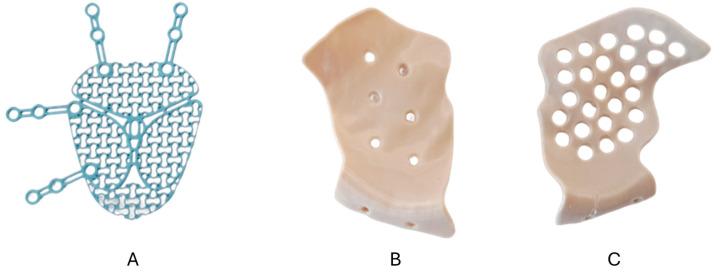 Figure 1
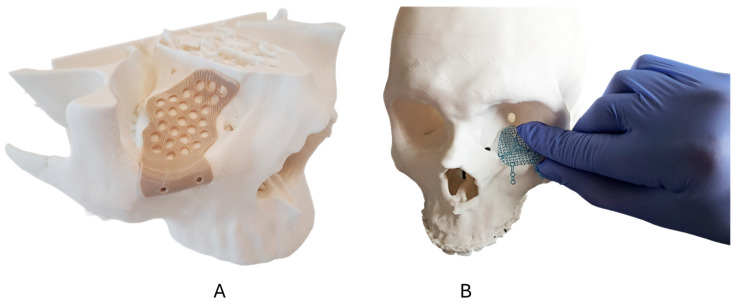 Figure 2
Peer Reviews
No public reviews on file for this paper yet. If you reviewed it on a platform where reviews are public (OpenReview, ICLR, NeurIPS, ICML), you can paste yours below so the community can read it here.
Videos
No videos yet. Explain this paper in a talk, walkthrough, or lecture? Add one.
Taxonomy
TopicsFacial Trauma and Fracture Management · Traumatic Ocular and Foreign Body Injuries · Ocular Disorders and Treatments