The Wild Plants from the Family Asteraceae That Are Traditionally Used for Food in Sicily and Bulgaria and Their Health Benefits
Ekaterina Kozuharova, Giuseppe Antonio Malfa, Rosaria Acquaviva, Vivienne Spadaro, Iliana Ionkova, Giancarlo Statti, Francesco M. Raimondo

TL;DR
This study explores wild Asteraceae plants used in Sicilian and Bulgarian diets, highlighting their nutritional value and health benefits.
Contribution
The study identifies regional differences in Asteraceae species usage and evaluates their bioactive compounds and potential toxicity.
Findings
36 wild Asteraceae species were analyzed for their ethnobotanical and nutritional significance in Sicily and Bulgaria.
Common culinary practices like boiling and blanching affect the concentration and safety of bioactive compounds in these plants.
Some species contain potentially toxic alkaloids, such as pyrrolizidine alkaloids in Tussilago farfara, requiring toxicological evaluation.
Abstract
This study examines 36 wild Asteraceae species that are traditionally used as food in Sicily and Bulgaria, highlighting their ethnobotanical, nutritional, and pharmacological relevance. Some taxa, such as Cichorium intybus, Silybum marianum, Artemisia vulgaris, Taraxacum officinale, and Tussilago farfara, are integral to the Mediterranean and Balkan diets, enhancing nutrition through their fiber, minerals, and bioactive compounds. This ethnobotanical survey revealed a clear geographic pattern in species usage: 13 species were found to be consumed solely in Bulgaria, 18 solely in Sicily, and five species in both regions. The distribution highlights the existence of shared culinary traditions that have been distinctly adapted to the unique ecological conditions present in each locale. The main metabolite classes identified include flavonoids, phenolic acids, lignans, and sesquiterpene…
Genes, proteins, chemicals, diseases, species, mutations and cell lines named across the full text — each resolved to its canonical identifier and authoritative record.
Click any figure to enlarge with its caption.
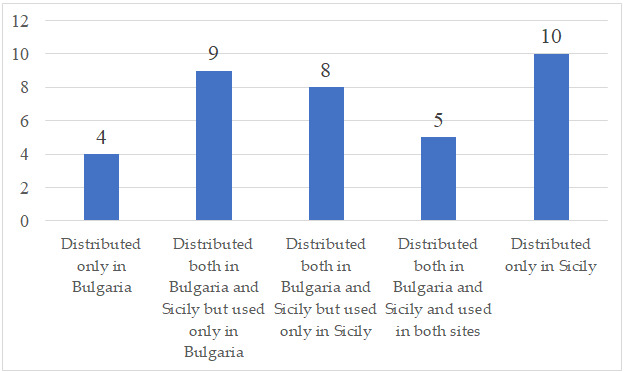 Figure 1
Peer Reviews
No public reviews on file for this paper yet. If you reviewed it on a platform where reviews are public (OpenReview, ICLR, NeurIPS, ICML), you can paste yours below so the community can read it here.
Videos
No videos yet. Explain this paper in a talk, walkthrough, or lecture? Add one.
Taxonomy
TopicsPlant Toxicity and Pharmacological Properties · Sesquiterpenes and Asteraceae Studies · Silymarin and Mushroom Poisoning