From High-Density Genomic Mapping to Precision Molecular Breeding: A Comprehensive Review of Capsicum Genomic Resources
Luyao Wang, Junhu Kan, Weiting Zhong, Shuo Zhang, Yanghe Zhao, Yingke Hou, Luke R. Tembrock, Xiaolin Gu, Yan Cheng

TL;DR
This review discusses recent advances in Capsicum genomics, enabling better understanding and breeding of pepper crops through high-quality genome resources.
Contribution
The paper provides a comprehensive review of Capsicum genomic resources and their application in precision molecular breeding.
Findings
High-quality and telomere-to-telomere Capsicum genomes have been produced using long-read sequencing and Hi-C scaffolding.
Omics resources have enhanced understanding of agronomically and environmentally relevant traits in peppers and their wild relatives.
The review outlines future integrated breeding strategies for genetic improvement in pepper.
Abstract
The genus Capsicum comprises several species that are vital vegetable and spice crops cultivated worldwide, possessing significant economic, nutritional, and ornamental value due to their diverse fruit morphologies, colors, spiciness levels, and stress resistance. Historically, the large genome size (approximately 3 Gb) and high proportion of repetitive sequences (over 80% transposable elements) have constrained in-depth analysis of structural variations and functional genes within Capsicum species. However, recent advances in long-read sequencing, Hi-C scaffolding, and genome assembly have enabled the production of multiple high-quality and telomere-to-telomere (T2T) Capsicum genomes, which have ushered in a new era of research at the nuclear, organellar, and pan-genome levels. The publication of these omics resources has greatly expanded our understanding of the evolution of…
Genes, proteins, chemicals, diseases, species, mutations and cell lines named across the full text — each resolved to its canonical identifier and authoritative record.
Click any figure to enlarge with its caption.
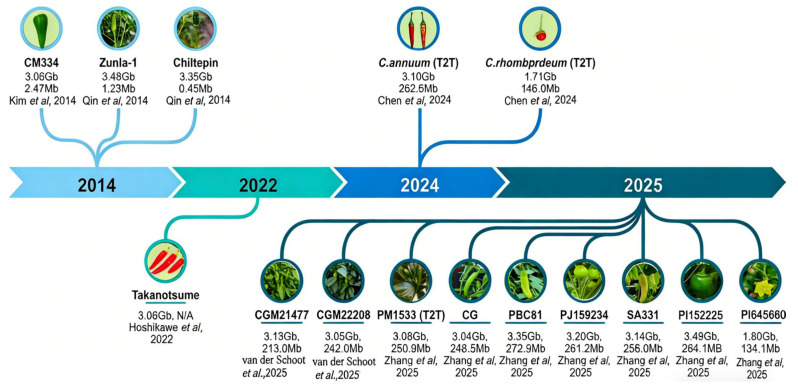 Figure 1
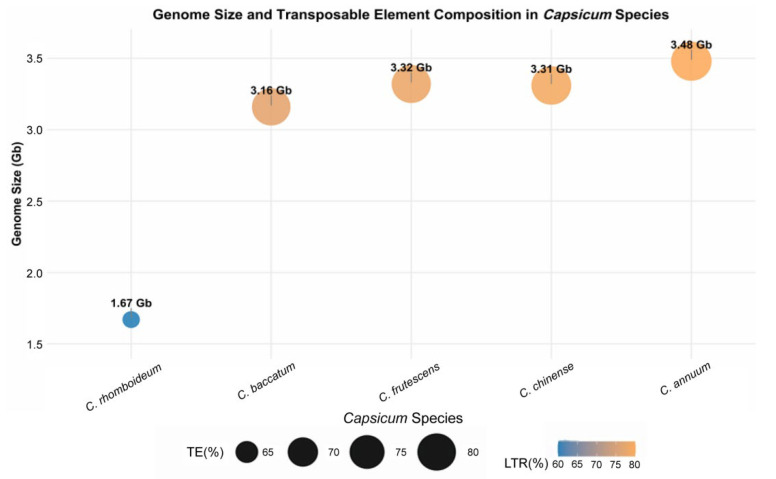 Figure 2
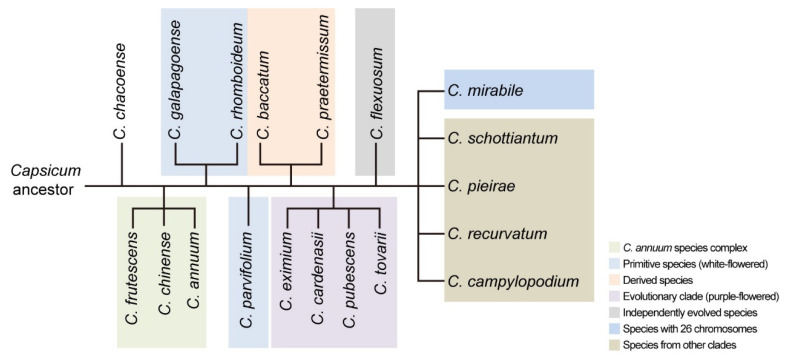 Figure 3
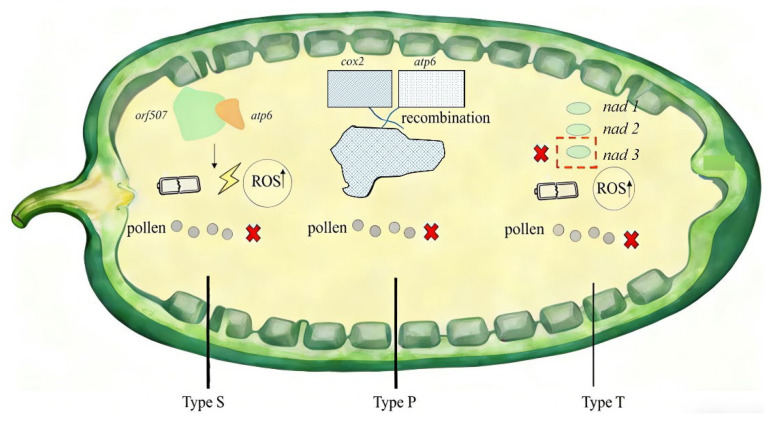 Figure 4
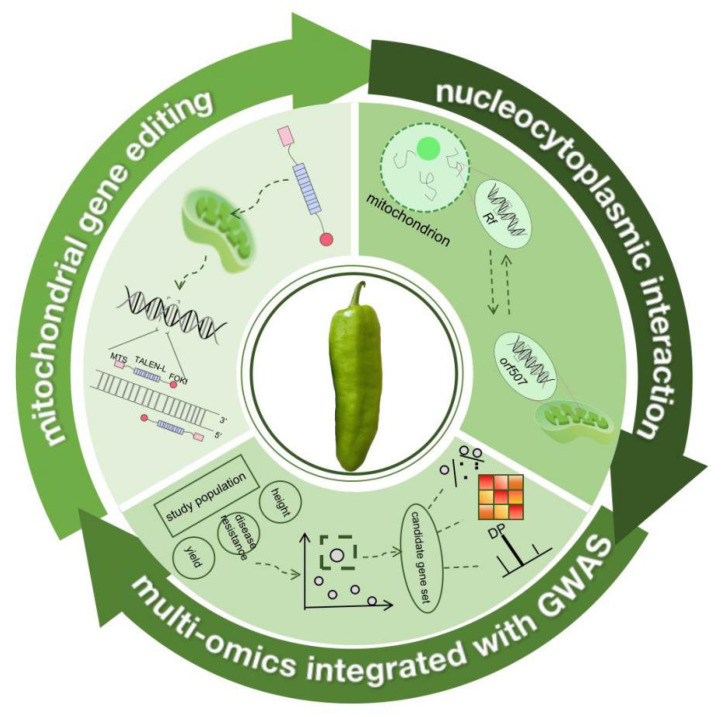 Figure 5
Peer Reviews
No public reviews on file for this paper yet. If you reviewed it on a platform where reviews are public (OpenReview, ICLR, NeurIPS, ICML), you can paste yours below so the community can read it here.
Videos
No videos yet. Explain this paper in a talk, walkthrough, or lecture? Add one.
Taxonomy
TopicsIon Channels and Receptors · Plant Molecular Biology Research · Genetic and Environmental Crop Studies