Multiantenna NOMA with Finite Blocklength: A Pragmatic Paradigm for Ultra-Dense Networking
Haoming Wang, Zhenzhen Zhang, Xinhao Wu, Bing Li

TL;DR
This paper proposes a new NOMA system for IoT networks with many low-power sensors, using multiple antennas and FEC codes to enable efficient communication.
Contribution
A new NOMA design with FEC codes for ultra-dense IoT networks is proposed, showing near-capacity performance with reduced complexity.
Findings
Three FEC codes (CCs, polar codes, LDPCs) achieve near-capacity performance in finite-blocklength scenarios.
Convolutional codes offer comparable performance with lower complexity, suitable for IoT sensor networks.
Large dimensional analysis provides deterministic SINR expressions for massive connectivity scenarios.
Abstract
This paper addresses the design and performance analysis of nonorthogonal multiple access (NOMA) for ultra-dense networking of the Internet of Things (IoT) based on low-power sensors. The proposed NOMA schemes consist of an Nr-antenna access point and K single antenna sensors given K≫Nr. A power allocation technique and forward error correction (FEC) are combined to enable concurrent uplink transmission and the successful separation of all K sensors at the access point. In scenarios where K≫Nr, large dimensional analysis is employed to derive a deterministic expression for the received signal-to-interference-plus-noise ratio (SINR) within the finite blocklength regime. Three distinct Forward Error Correction (FEC) codes—convolutional codes (CCs), polar codes, and low-density parity-check codes (LDPCs)—are assessed. These evaluations indicate that all three codes achieve near-capacity…
Click any figure to enlarge with its caption.
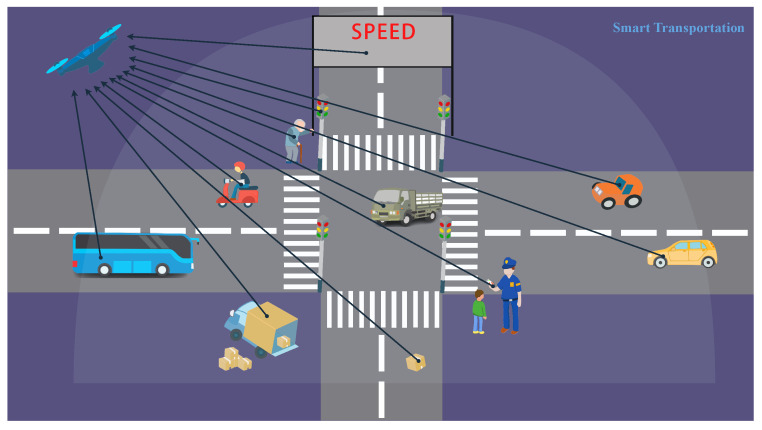 Figure 1
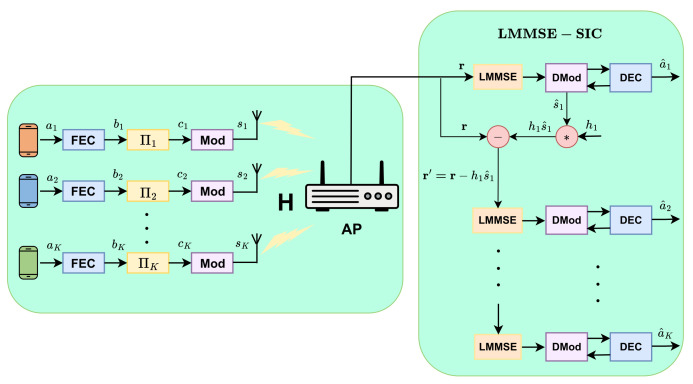 Figure 2
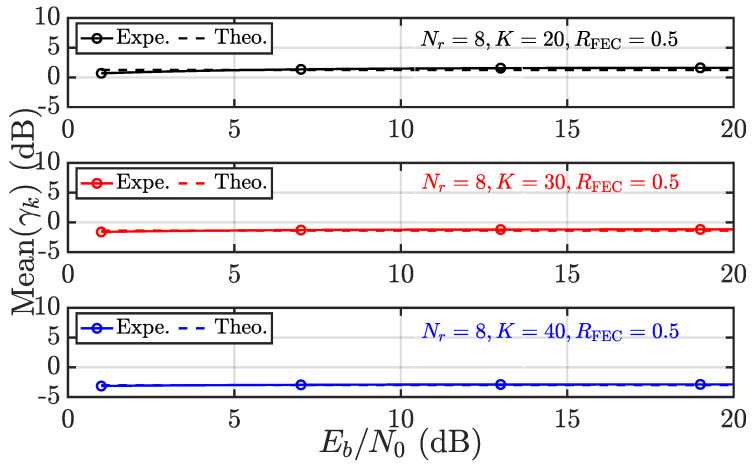 Figure 3
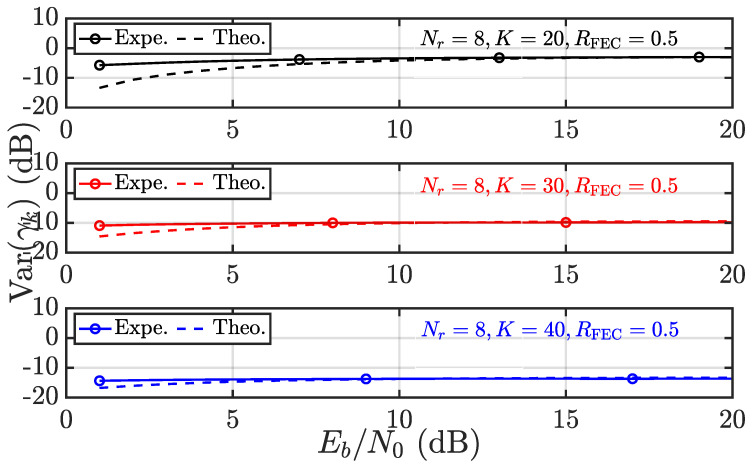 Figure 4
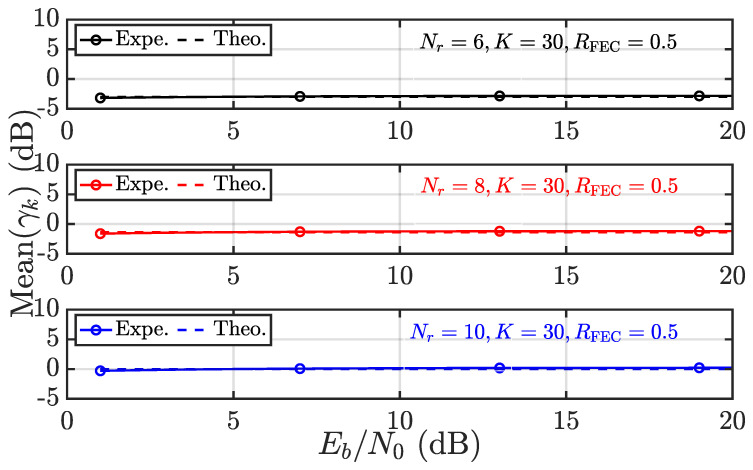 Figure 5
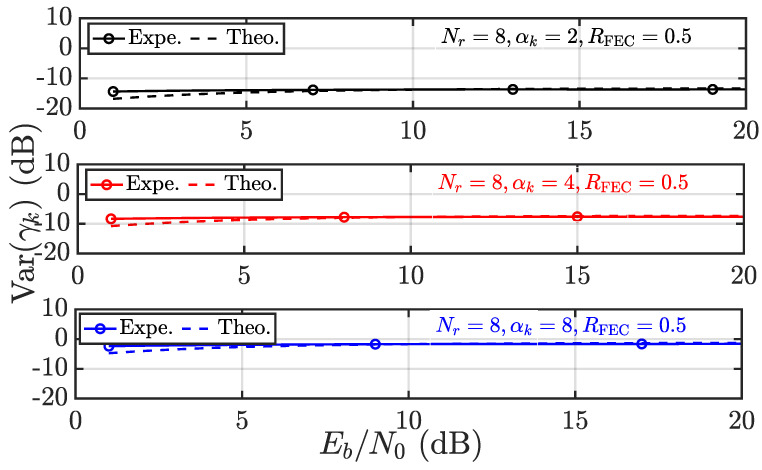 Figure 6
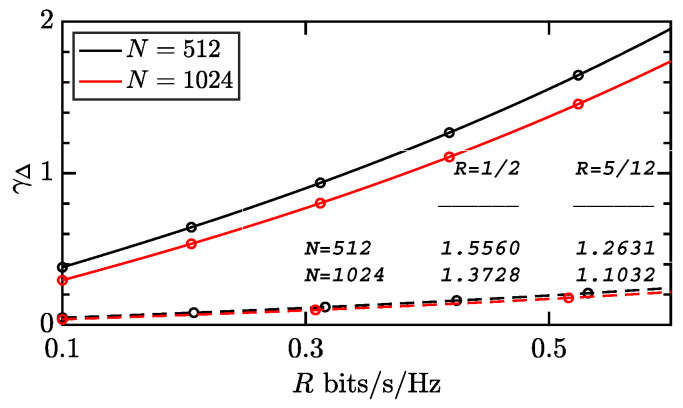 Figure 7
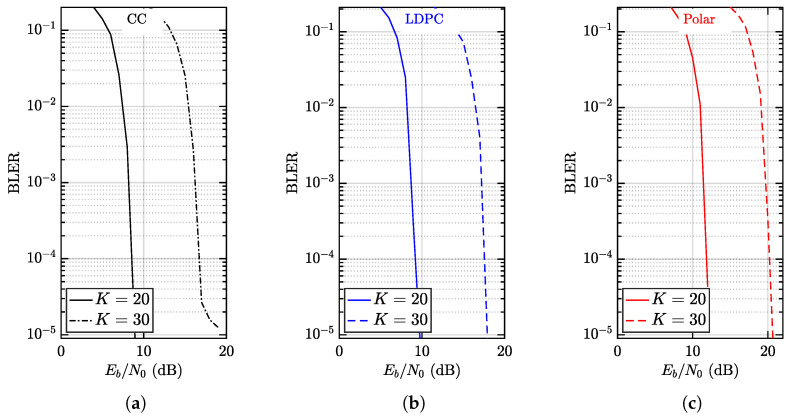 Figure 8
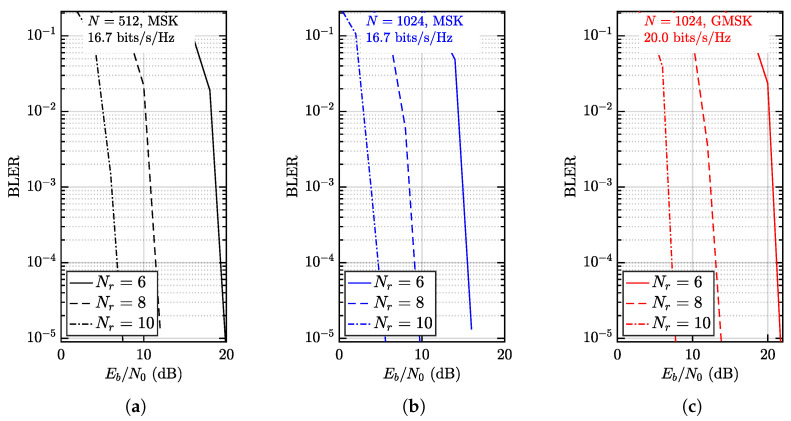 Figure 9
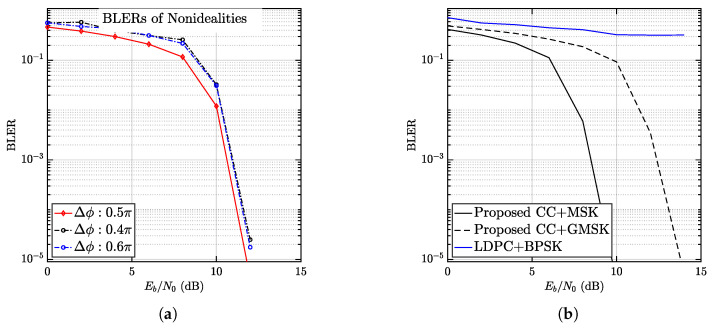 Figure 10
Peer Reviews
No public reviews on file for this paper yet. If you reviewed it on a platform where reviews are public (OpenReview, ICLR, NeurIPS, ICML), you can paste yours below so the community can read it here.
Videos
No videos yet. Explain this paper in a talk, walkthrough, or lecture? Add one.
Taxonomy
TopicsAdvanced Wireless Communication Technologies · IoT Networks and Protocols · PAPR reduction in OFDM