Dual-Energy CT-Derived Parameters: A Promising Tool for Noninvasive Prediction of Glypican-3 in Hepatocellular Carcinoma
Yiwan Guo, Fan Pu, Jinrong Yang, Aiping Yang, Ying Yang, Ruiyao Tang, Xin Li, Fan Yang

TL;DR
This study shows that dual-energy CT scans can noninvasively predict GPC3 expression in liver cancer, potentially reducing the need for invasive tests.
Contribution
The study introduces a noninvasive method using DECT parameters to predict GPC3 expression in hepatocellular carcinoma.
Findings
GPC3-positive tumors showed higher DECT parameters in the arterial phase compared to GPC3-negative tumors.
A model combining NID-AP and peritumoral enhancement achieved 78% specificity and 68% sensitivity in predicting GPC3 expression.
All DECT parameters demonstrated excellent interobserver reproducibility with ICC values above 0.75.
Abstract
Background/Objectives: Glypican-3 (GPC3), a membrane-bound heparan sulfate proteoglycan, has been identified as a promising target for both the diagnosis and treatment of hepatocellular carcinoma (HCC). However, the diagnosis of GPC3 expression mainly depended on invasive procedures. This study aimed to investigate the potential of dual-energy computed tomography (DECT)-derived parameters for noninvasive prediction of GPC3 expression in HCC. Methods: This retrospective study included 79 HCC patients with confirmed GPC3 immunohistochemistry and pretreatment contrast-enhanced DECT. Qualitative imaging features and quantitative DECT parameters, including iodine density of HCC (IDCa), normalized iodine density (NID), slope of spectral attenuation curve (λHU), and effective atomic number (Zeff), were evaluated in both arterial and portal venous phases. Univariate and multivariate logistic…
Genes, proteins, chemicals, diseases, species, mutations and cell lines named across the full text — each resolved to its canonical identifier and authoritative record.
Click any figure to enlarge with its caption.
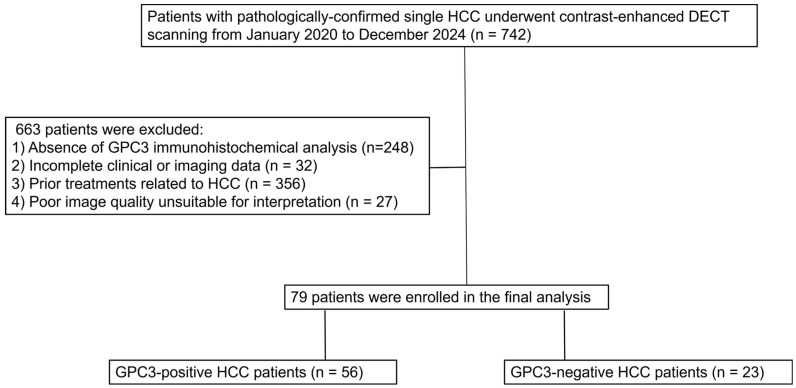 Figure 1
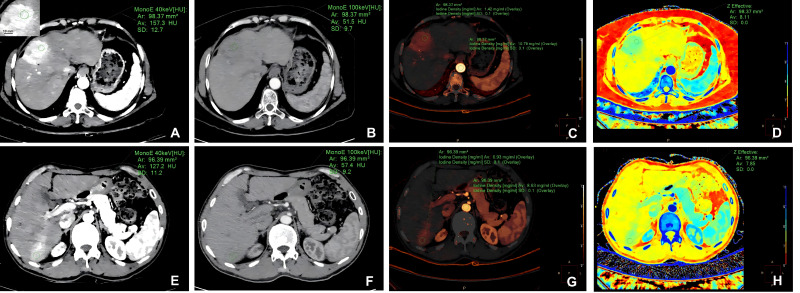 Figure 2
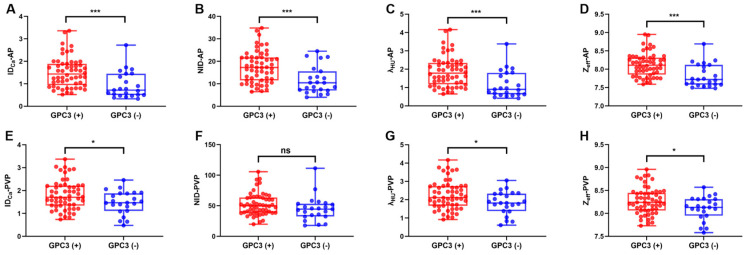 Figure 3
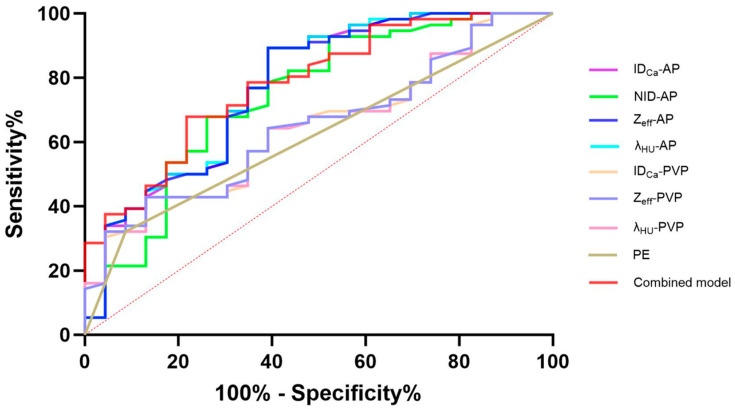 Figure 4
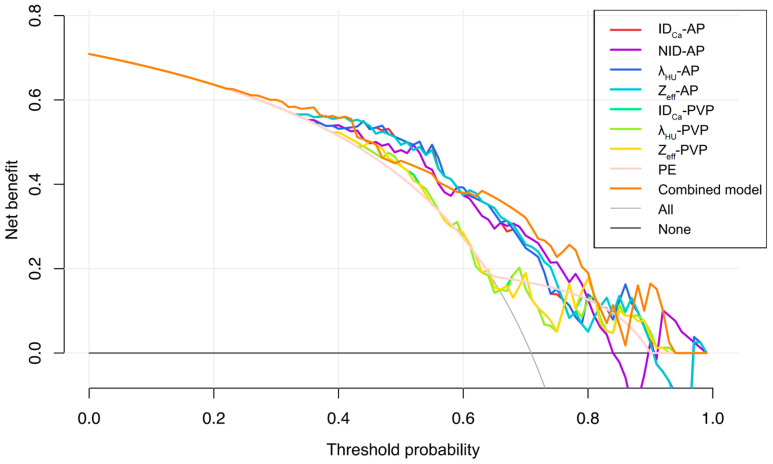 Figure 5
Peer Reviews
No public reviews on file for this paper yet. If you reviewed it on a platform where reviews are public (OpenReview, ICLR, NeurIPS, ICML), you can paste yours below so the community can read it here.
Videos
No videos yet. Explain this paper in a talk, walkthrough, or lecture? Add one.
Taxonomy
TopicsAdvanced X-ray and CT Imaging · Advanced X-ray Imaging Techniques · Hepatocellular Carcinoma Treatment and Prognosis