Molecular Profiling and Treatment Outcomes in Uterine Serous Carcinoma: Prognostic Role of Estrogen Receptor Expression
Anna Svarna, Michalis Liontos, Kallirroi Goula, Konstantina Pardali, Konstantinos Koutsoumpogeras, Katerina Aravantinou, Konstantina Christina Perdikari, Ioanna Kollarou, Maria Kaparelou, Dimitrios Haidopoulos, Constantine Dimitrakakis, Meletios Athanasios Dimopoulos

TL;DR
This study explores how estrogen receptor expression affects survival in uterine serous carcinoma, a rare and aggressive cancer.
Contribution
The study identifies estrogen receptor (ER) expression as a potential prognostic marker for improved disease-free survival in uterine serous carcinoma.
Findings
ER-positive tumors were associated with improved disease-free survival after initial treatment.
TP53 mutations were common in 88% of cases, and HER2 amplification was observed in 18%.
Advanced stage remained an independent predictor of worse overall survival.
Abstract
Uterine serous carcinoma is a rare and aggressive form of endometrial cancer often diagnosed at an advanced stage. In this retrospective single-institution study, we analyzed the clinical characteristics, treatments, molecular markers, and outcomes of 83 patients. Most tumors showed TP53 mutations, while estrogen receptor (ER) expression and HER2 amplification were also observed. ER-positive tumors were associated with improved disease-free survival after initial treatment, although no association was observed with progression-free or overall survival. These results highlight the biological heterogeneity of uterine serous carcinoma and the potential prognostic role of ER expression in this population. Background: Uterine serous carcinoma (USC) represents a rare but aggressive subtype of endometrial cancer, accounting for a disproportionate number of disease-related deaths. Although…
Genes, proteins, chemicals, diseases, species, mutations and cell lines named across the full text — each resolved to its canonical identifier and authoritative record.
Click any figure to enlarge with its caption.
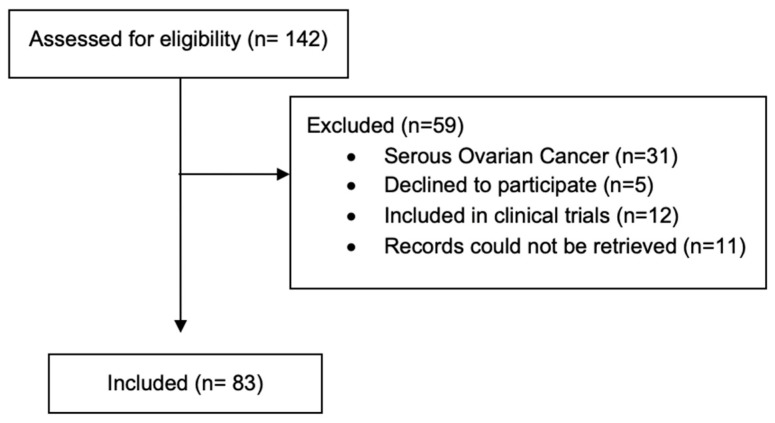 Figure 1
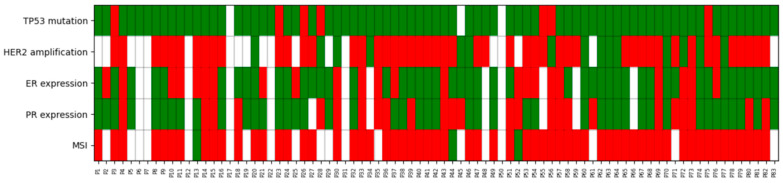 Figure 2
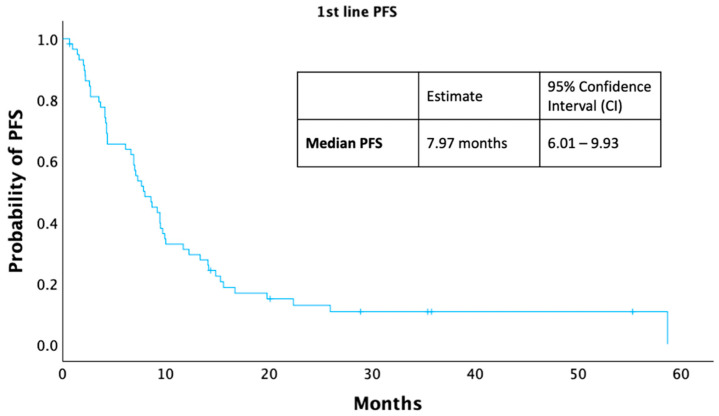 Figure 3
Peer Reviews
No public reviews on file for this paper yet. If you reviewed it on a platform where reviews are public (OpenReview, ICLR, NeurIPS, ICML), you can paste yours below so the community can read it here.
Videos
No videos yet. Explain this paper in a talk, walkthrough, or lecture? Add one.
Taxonomy
TopicsEndometrial and Cervical Cancer Treatments · Estrogen and related hormone effects · HER2/EGFR in Cancer Research