Can Tc-99m-PSMA SPECT/CT Be Used as Accessible Alternative for Diagnosis of Biochemically Recurrent Prostate Cancer? A Prospective Study
Veljković Miloš, Beatović Slobodanka, Pejčić Tomislav, Bukumirić Zoran, Odalović Strahinja, Grozdić Milojević Isidora, Stojiljković Milica, Petrović Jelena, Ivanovski Ana, Šobić Šaranović Dragana, Artiko Vera

TL;DR
This study shows that Tc-99m-PSMA SPECT/CT can effectively detect prostate cancer recurrence, especially at higher PSA levels, and may serve as a practical alternative when PSMA PET/CT is unavailable.
Contribution
The study evaluates Tc-99m-PSMA SPECT/CT as a feasible alternative to PSMA PET/CT for prostate cancer recurrence detection in resource-limited settings.
Findings
Detection rates of prostate cancer recurrence increased with higher PSA levels in both radical prostatectomy and radiation therapy groups.
PSA doubling time independently predicted scan positivity and metastatic disease in both patient cohorts.
Seminal vesicle invasion was a predictor of metastatic spread in post-prostatectomy patients.
Abstract
Objective: To evaluate Tc-99m-PSMA SPECT/CT detection of biochemical recurrence (BCR) of prostate cancer across serum PSA levels in patients treated with radical prostatectomy or radiation therapy, to explore clinical/pathologic predictors of scan positivity and metastatic disease, and to assess its potential role as a pragmatic alternative when PSMA PET/CT is unavailable in resource-limited settings. Materials and Methods: In this prospective single-center study, we included 132 men with biochemical recurrence who underwent Tc-99m-PSMA SPECT/CT between January 2024 and December 2025 after predefined inclusion and exclusion criteria were applied, and they were further stratified by primary treatment (radical prostatectomy or radiation therapy). Patients were followed up for up to 6 months after imaging to verify observed findings (histopathology, confirmatory imaging and PSA response)…
Genes, proteins, chemicals, diseases, species, mutations and cell lines named across the full text — each resolved to its canonical identifier and authoritative record.
Click any figure to enlarge with its caption.
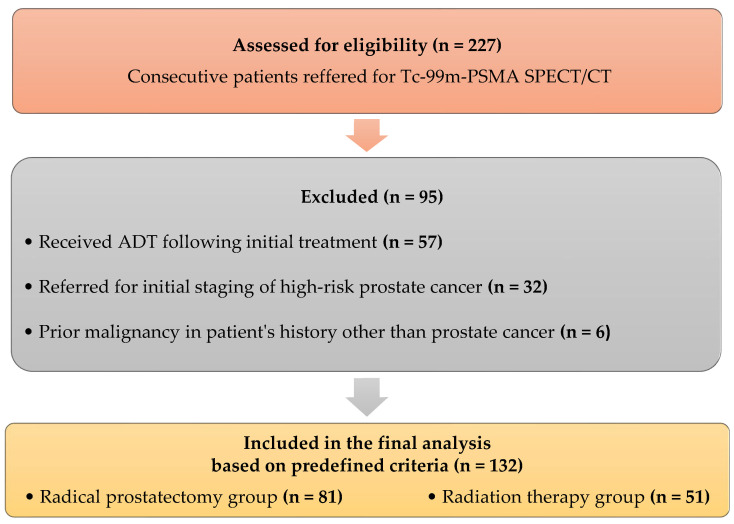 Figure 1
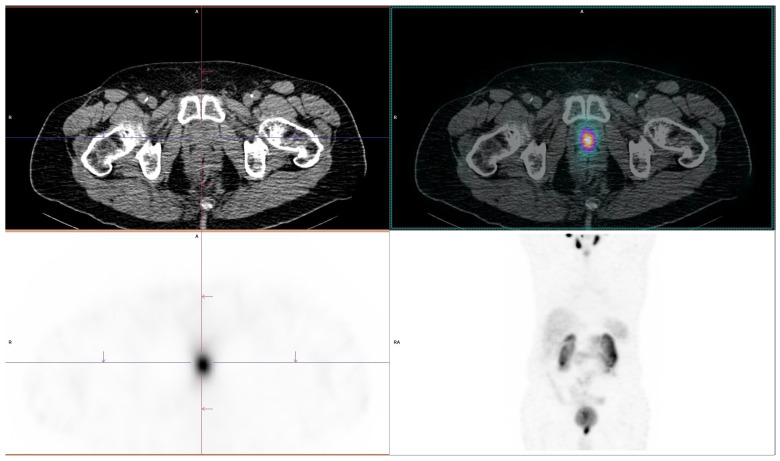 Figure 2
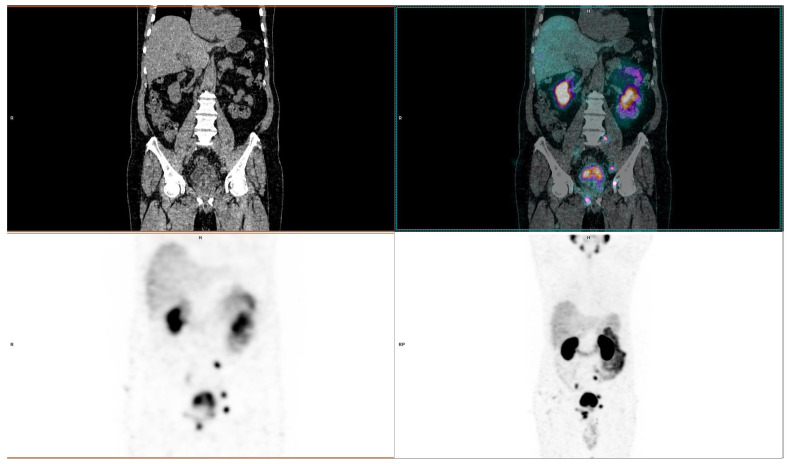 Figure 3
Peer Reviews
No public reviews on file for this paper yet. If you reviewed it on a platform where reviews are public (OpenReview, ICLR, NeurIPS, ICML), you can paste yours below so the community can read it here.
Videos
No videos yet. Explain this paper in a talk, walkthrough, or lecture? Add one.
Taxonomy
TopicsProstate Cancer Treatment and Research · Prostate Cancer Diagnosis and Treatment · Radiopharmaceutical Chemistry and Applications