Radiation Dose-Dependent and -Independent Pulmonary Infiltrates in Patients with High-Grade Pneumonitis After Radiochemotherapy and Durvalumab Consolidation for Stage III NSCLC
Andreas Herz, Aymane Khouya, Maja Guberina, Martin Metzenmacher, Marcel Opitz, Christoph Pöttgen, Gerrit Fischedick, Hubertus Hautzel, Thomas Gauler, Ken Herrmann, Erik Büscher, Servet Bölükbas, Fabian Doerr, Natalie Baldes, Laura Valentina Klüner, Benedikt M. Schaarschmidt

TL;DR
This study finds that lung inflammation in cancer patients after combined radiotherapy and immunotherapy has both radiation-related and unrelated components.
Contribution
The study identifies dose-dependent and dose-independent mechanisms contributing to high-grade pneumonitis after multimodal cancer treatment.
Findings
A significant dose-response relationship was found for partial lung infiltrate volumes per dose and density bin.
High-grade pneumonitis patients showed higher infiltrate volumes in low-dose regions compared to lower-grade cases.
The proportion of infiltrate volume attributable to dose-response averaged 16.6% per patient.
Abstract
Background/Objectives: Analysis of the density and spatial distribution of pulmonary infiltrates of patients with high-grade (≥3) pneumonitis after radiochemotherapy and durvalumab consolidation (RT/CTx + IO) was performed in order to define dosimetric hallmarks of the development of infiltrates following this multimodality treatment. Methods: Consecutive patients treated with RT/CTx + IO for stage III NSCLC were retrospectively reviewed with respect to the occurrence of grade ≥ 3 pneumonitis. Lung infiltrates were contoured on follow-up CT scans acquired around the time of maximum pneumonitis expression. The applied dose distribution was overlaid with the follow-up CT using elastic deformation, and infiltrates were binned according to their density in density strata of 50 HU. The dose and density dependence of partial infiltrate volumes per unit lung volume was analyzed using a mixed…
Genes, proteins, chemicals, diseases, species, mutations and cell lines named across the full text — each resolved to its canonical identifier and authoritative record.
Click any figure to enlarge with its caption.
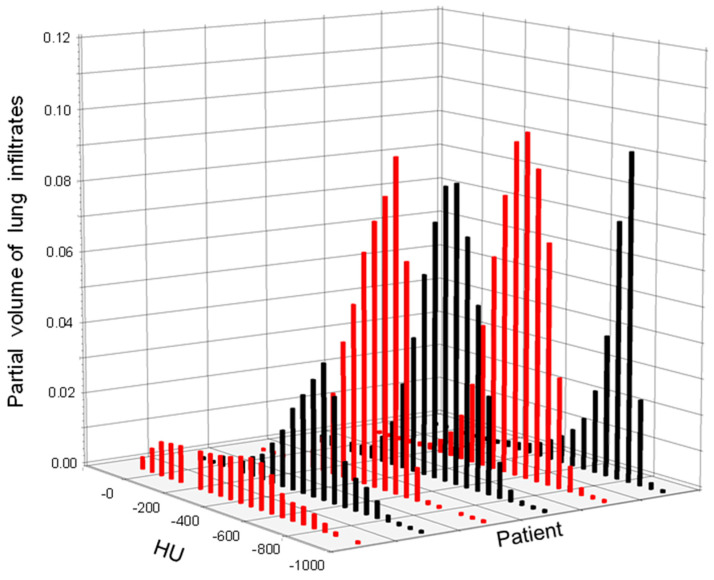 Figure 1
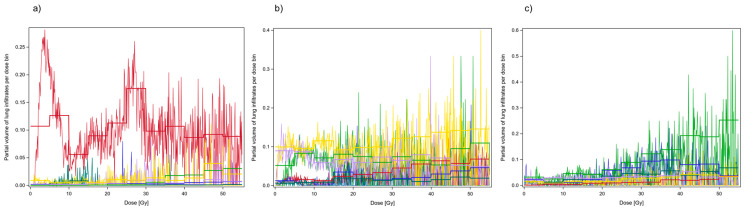 Figure 2
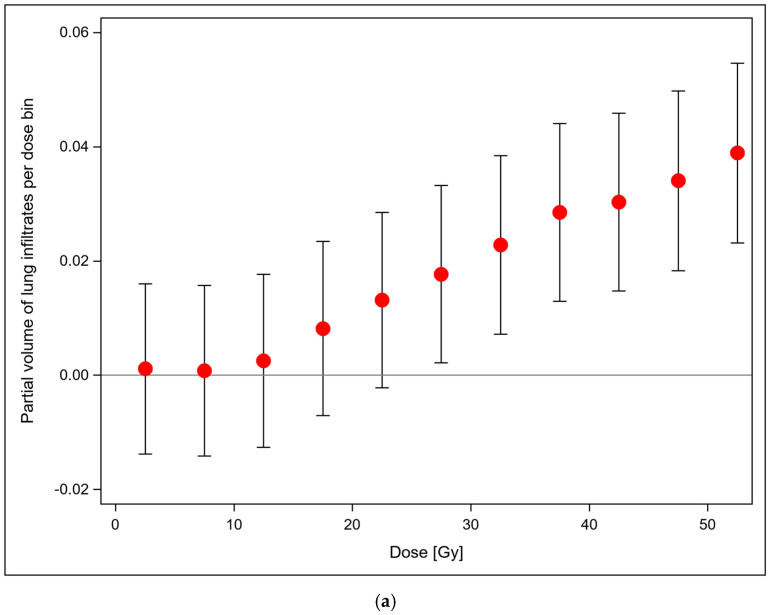 Figure 3
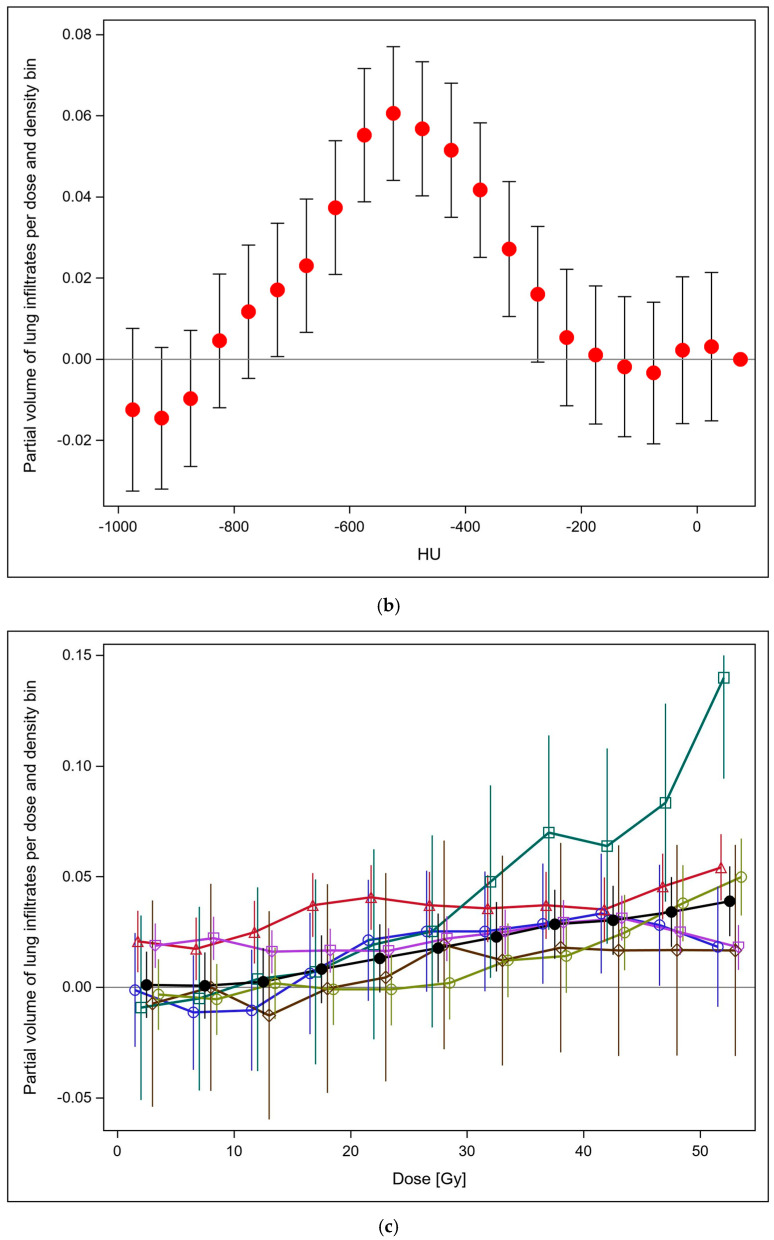 Figure 4
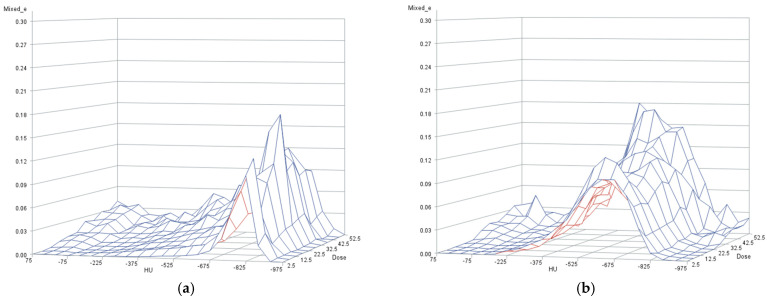 Figure 5
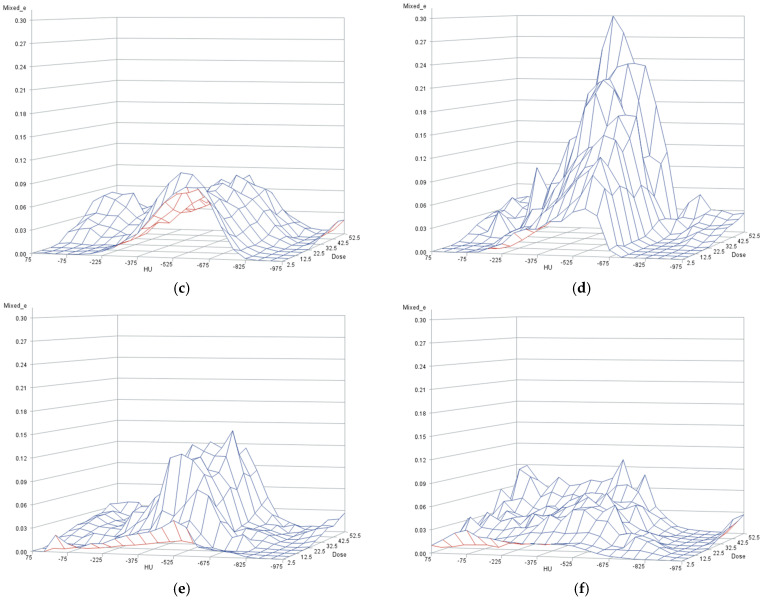 Figure 6
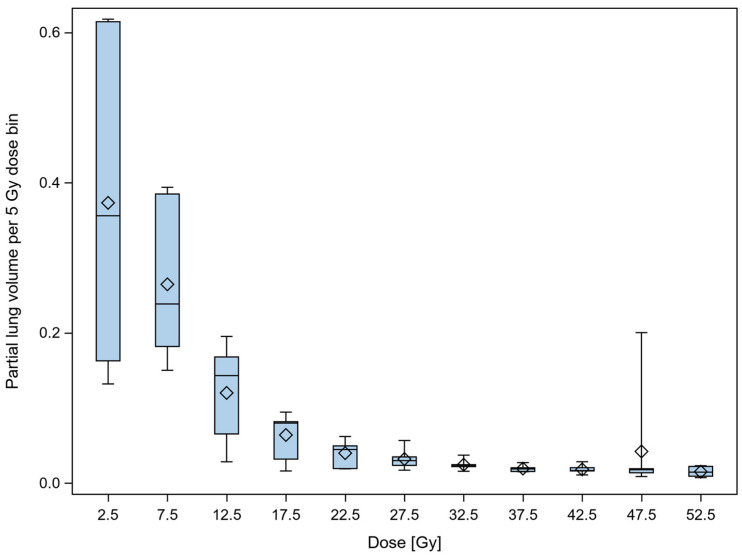 Figure 7
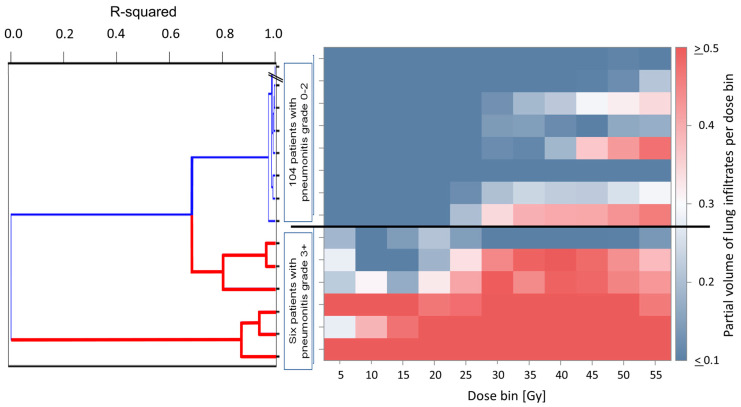 Figure 8
Peer Reviews
No public reviews on file for this paper yet. If you reviewed it on a platform where reviews are public (OpenReview, ICLR, NeurIPS, ICML), you can paste yours below so the community can read it here.
Videos
No videos yet. Explain this paper in a talk, walkthrough, or lecture? Add one.
Taxonomy
TopicsLung Cancer Diagnosis and Treatment · Effects of Radiation Exposure · Radiomics and Machine Learning in Medical Imaging