Robust 2D Human Pose Estimation with Parallel Graph–Attention Modeling and Entropy-Aware Feature Decoding
Jiayuan Zhao, Dingyao Yu, Chunjia Han, Yingcheng Xu, Chunlei Shi

TL;DR
This paper introduces PMNet, a new method for 2D human pose estimation that improves accuracy by reducing uncertainty from occlusion and background interference.
Contribution
PMNet combines parallel graph-attention modeling with entropy-aware decoding to enhance robustness in pose estimation.
Findings
PMNet achieves 92.42% [email protected] on the MPII benchmark and 77.3% AP on COCO.
Ablation studies confirm the effectiveness of components like criss-cross attention and error-compensated decoding.
The method improves signal-to-noise ratios and heatmap concentration for better keypoint localization.
Abstract
Robust 2D human pose estimation remains challenging due to occlusion and background interference, which introduce substantial uncertainty into visual representations. This paper proposes PMNet, a Parallel Modeling Network that integrates explicit graph-based structural modeling and implicit self-attention-based semantic modeling through parallel pathways to jointly capture local dependencies and global contextual relationships among keypoints. From an information-theoretic perspective, occlusion and clutter can be interpreted as sources of increased representational entropy, and PMNet addresses this issue by progressively reducing uncertainty through complementary structural reasoning and attention-based information selection. The framework incorporates a criss-cross attention module to suppress irrelevant features, an adaptive nonlinear fusion strategy to balance complementary…
Genes, proteins, chemicals, diseases, species, mutations and cell lines named across the full text — each resolved to its canonical identifier and authoritative record.
Click any figure to enlarge with its caption.
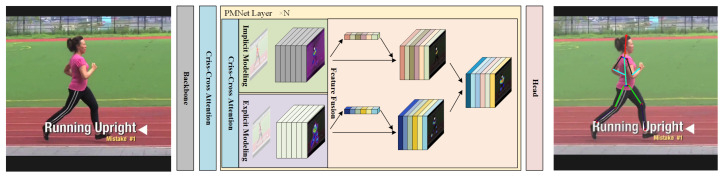 Figure 1
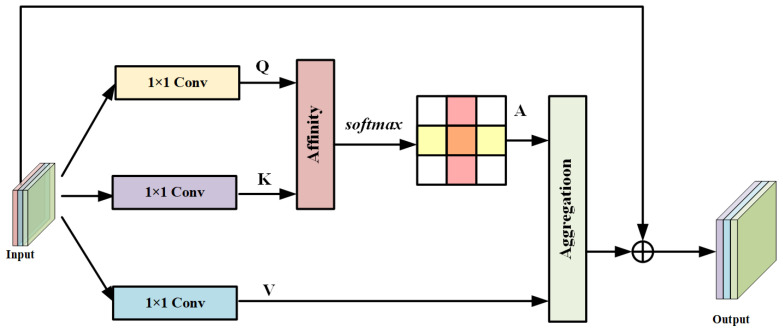 Figure 2
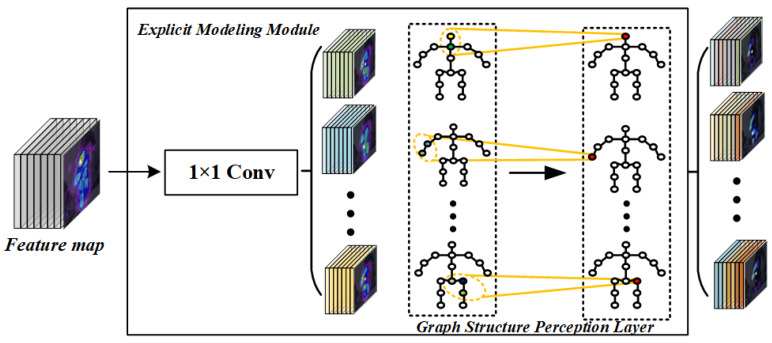 Figure 3
 Figure 4
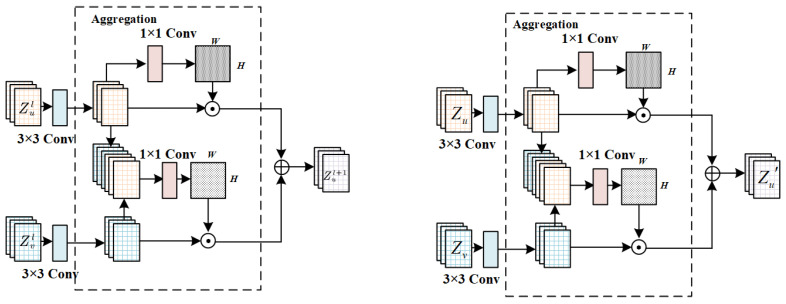 Figure 5
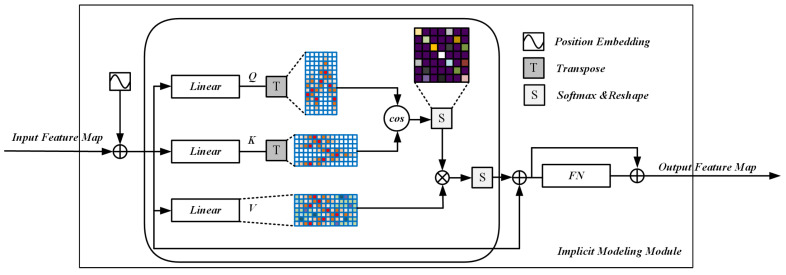 Figure 6
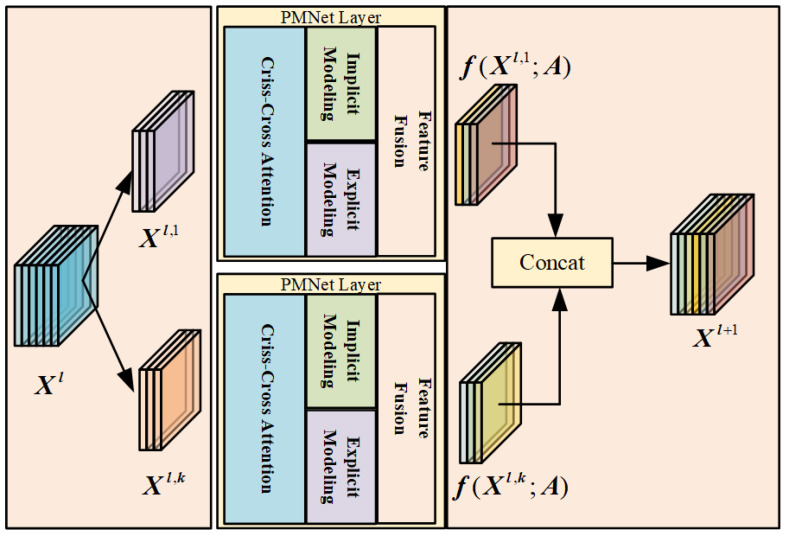 Figure 7
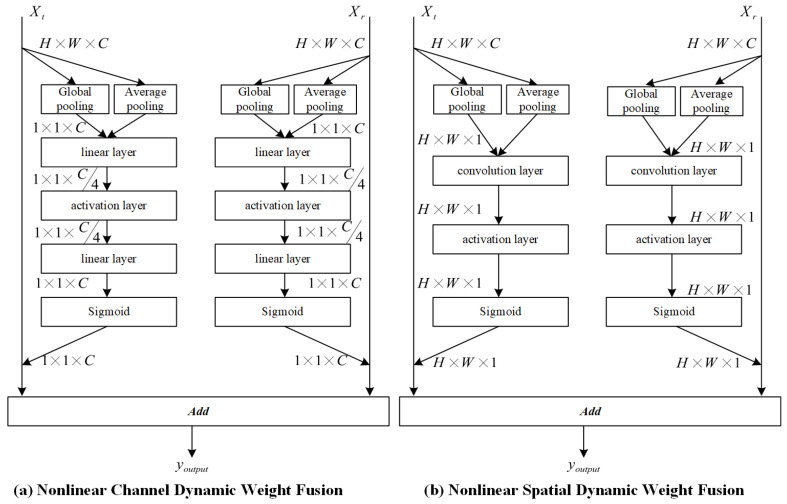 Figure 8
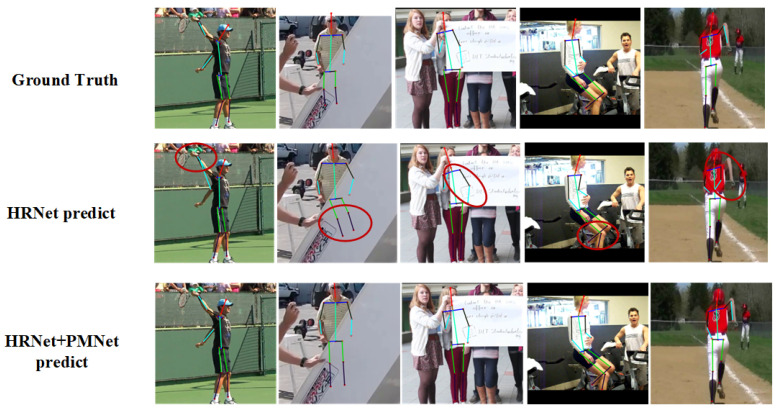 Figure 9
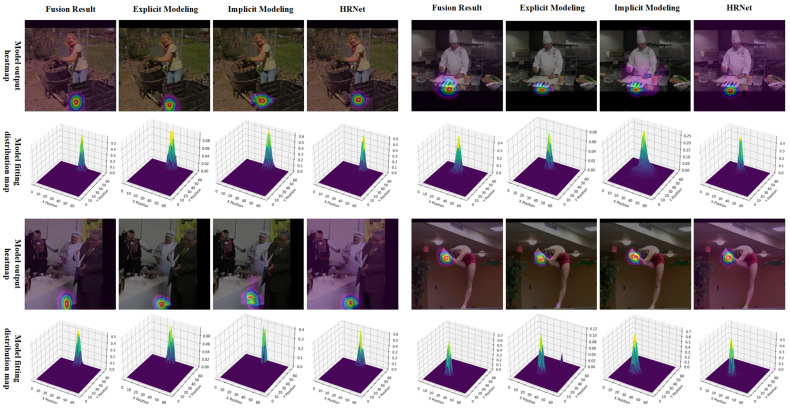 Figure 10
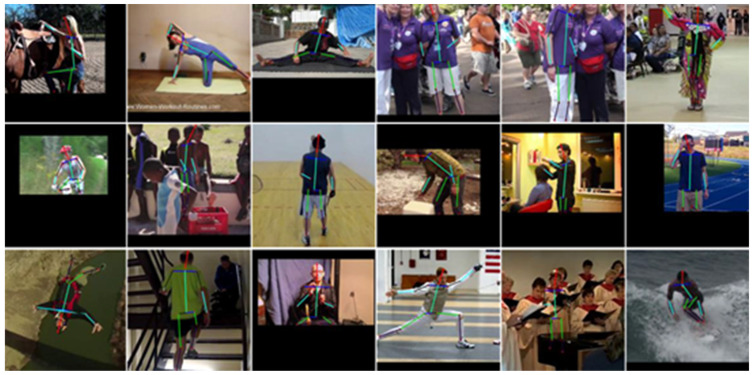 Figure 11
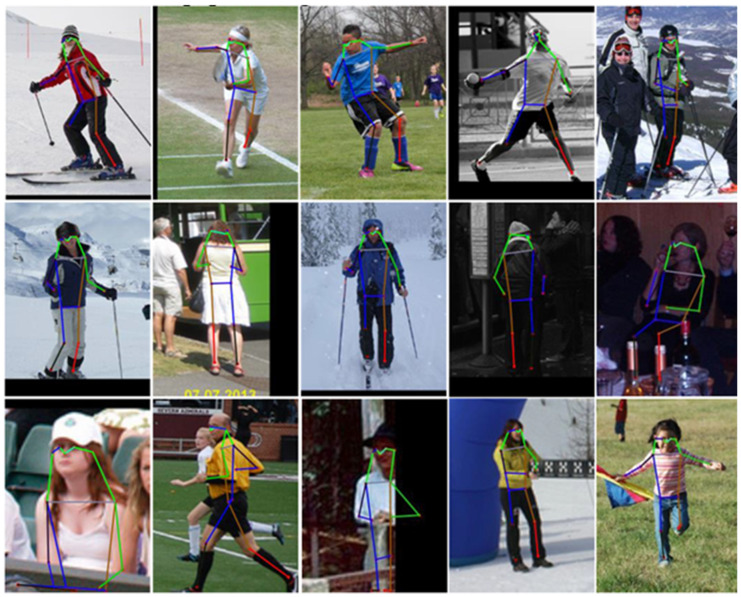 Figure 12
Peer Reviews
No public reviews on file for this paper yet. If you reviewed it on a platform where reviews are public (OpenReview, ICLR, NeurIPS, ICML), you can paste yours below so the community can read it here.
Videos
No videos yet. Explain this paper in a talk, walkthrough, or lecture? Add one.
Taxonomy
TopicsHuman Pose and Action Recognition · Gait Recognition and Analysis · Robot Manipulation and Learning