The Impact of Follow-Up on Etiological Classification of Pediatric Vertigo
Nina Božanić Urbančič, Dejan Mladenov, Saba Battelino

TL;DR
Long-term follow-up helps identify causes of vertigo in children that were initially unknown, reducing uncertainty from 43% to 10%.
Contribution
The study demonstrates that longitudinal follow-up is a critical diagnostic tool for identifying the causes of pediatric vertigo.
Findings
Extended follow-up reduced unclassified pediatric vertigo cases from 44% to 10%.
Migraine-related vertigo was the most common identifiable cause after reassessment.
Diagnostic tests like cranial computed tomography had low yield in identifying causes.
Abstract
What are the main findings? Extended longitudinal follow-up dramatically reduced the proportion of pediatric vertigo with initially unknown etiology, from 43% at first evaluation to 10% after diagnostic reassessment.Many cases initially classified as unexplained vertigo evolved into identifiable clinical entities, most commonly migraine-related vertigo, as well as central, hemodynamic, psychogenic, and peripheral vestibular disorders. Extended longitudinal follow-up dramatically reduced the proportion of pediatric vertigo with initially unknown etiology, from 43% at first evaluation to 10% after diagnostic reassessment. Many cases initially classified as unexplained vertigo evolved into identifiable clinical entities, most commonly migraine-related vertigo, as well as central, hemodynamic, psychogenic, and peripheral vestibular disorders. What are the implications of the main…
Genes, proteins, chemicals, diseases, species, mutations and cell lines named across the full text — each resolved to its canonical identifier and authoritative record.
Click any figure to enlarge with its caption.
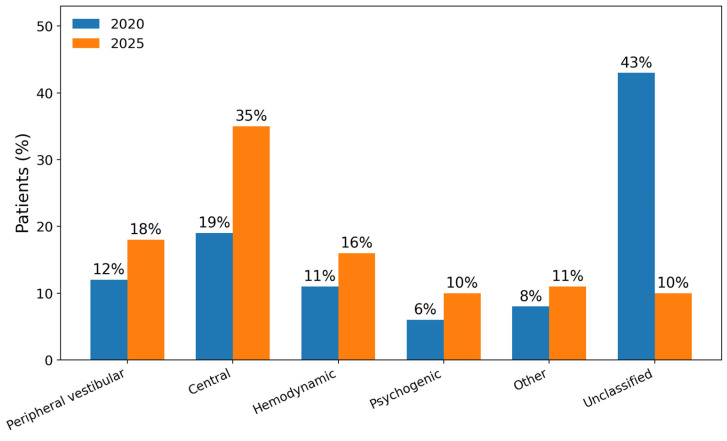 Figure 1
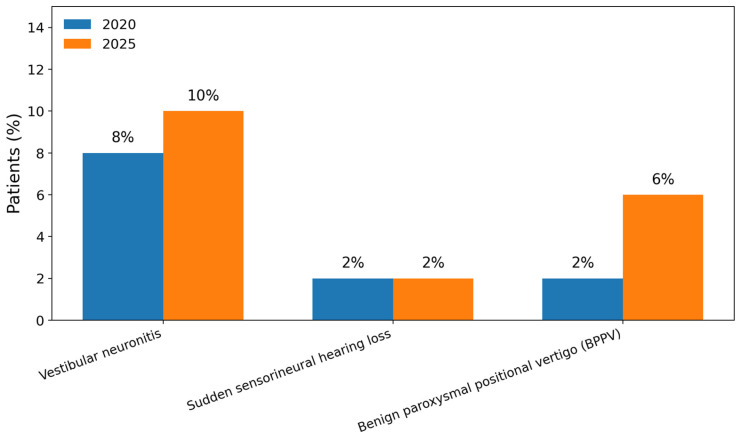 Figure 2
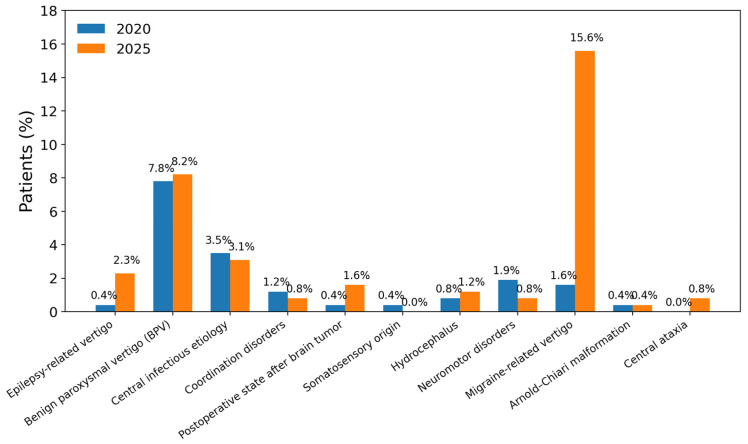 Figure 3
Peer Reviews
No public reviews on file for this paper yet. If you reviewed it on a platform where reviews are public (OpenReview, ICLR, NeurIPS, ICML), you can paste yours below so the community can read it here.
Videos
No videos yet. Explain this paper in a talk, walkthrough, or lecture? Add one.
Taxonomy
TopicsVestibular and auditory disorders · Hearing, Cochlea, Tinnitus, Genetics · Spinal Cord Injury Research