MCMC Correction of Score-Based Diffusion Models for Model Composition
Anders Sjöberg, Jakob Lindqvist, Magnus Önnheim, Mats Jirstrand, Lennart Svensson

TL;DR
This paper introduces a new way to improve sampling in score-based diffusion models by combining them with MCMC techniques, enabling better performance in model composition.
Contribution
A novel MH-like acceptance rule for score-based diffusion models using line integration of the score function is introduced.
Findings
The proposed MH-like samplers achieve similar improvements in sampling quality as energy-based models.
Existing score-based diffusion models can be reused with MCMC techniques without explicit energy parameterization.
Abstract
Diffusion models can be parameterized in terms of either score or energy function. The energy parameterization is attractive as it enables sampling procedures such as Markov Chain Monte Carlo (MCMC) that incorporates a Metropolis–Hastings (MH) correction step based on energy differences between proposed samples. Such corrections can significantly improve sampling quality, particularly in the context of model composition, where pre-trained models are combined to generate samples from novel distributions. Score-based diffusion models, on the other hand, are more widely adopted and come with a rich ecosystem of pre-trained models. However, they do not, in general, define an underlying energy function, making MH-based sampling inapplicable. In this work, we address this limitation by retaining score parameterization and introducing a novel MH-like acceptance rule based on line integration…
Click any figure to enlarge with its caption.
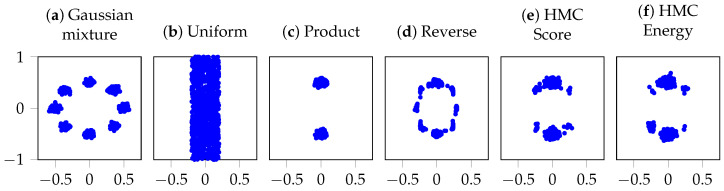 Figure 1
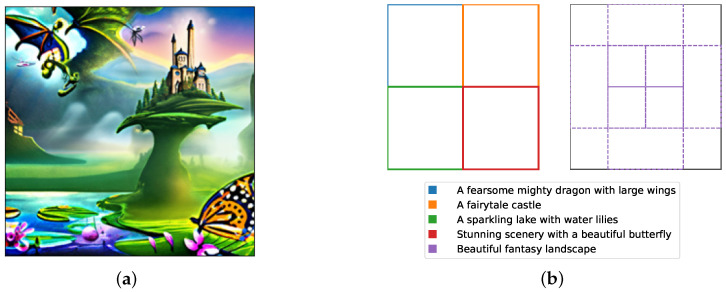 Figure 2
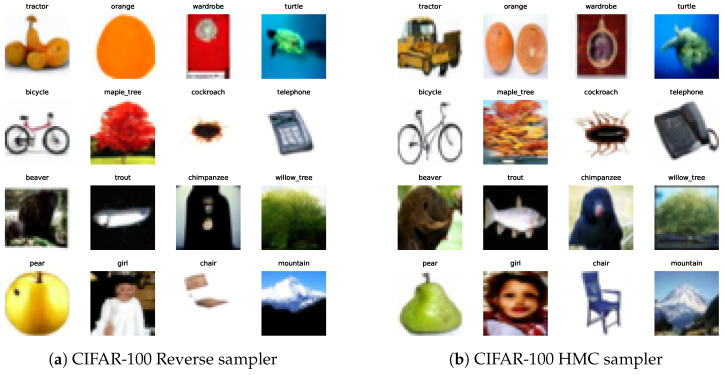 Figure 3
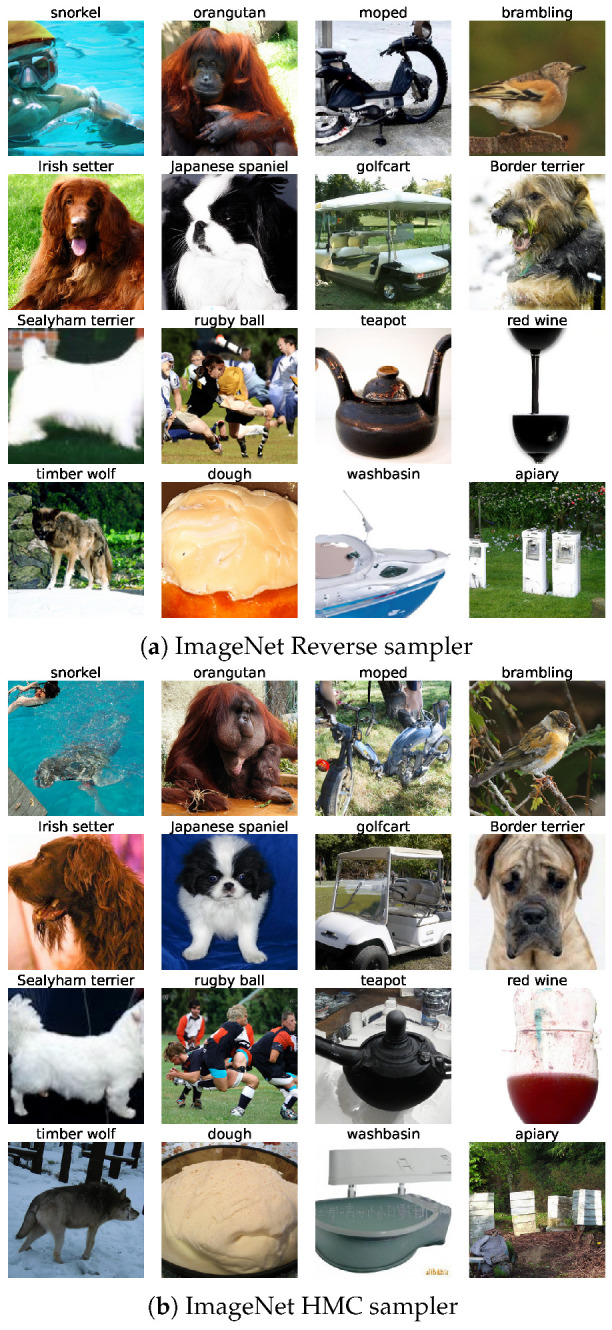 Figure 4
Peer Reviews
No public reviews on file for this paper yet. If you reviewed it on a platform where reviews are public (OpenReview, ICLR, NeurIPS, ICML), you can paste yours below so the community can read it here.
Videos
No videos yet. Explain this paper in a talk, walkthrough, or lecture? Add one.
Taxonomy
TopicsMarkov Chains and Monte Carlo Methods · Generative Adversarial Networks and Image Synthesis · Bayesian Methods and Mixture Models