Correlation Between Dosimetric Parameters and Hematologic Toxicity in Cervical Cancer Patients Undergoing Intensity-Modulated Pelvic Radiotherapy
Shuang Zhao, Xi Yang, Lu Zhang, Duan Yang, Xuejiao Yang, Rui Wang, Shuangzheng Jia, Jusheng An, Manni Huang

TL;DR
This study finds that chemotherapy, rather than radiation dose to bone marrow, is the main cause of severe blood-related side effects in cervical cancer patients.
Contribution
The study introduces AI-based bone marrow delineation to assess dosimetric parameters and identifies chemotherapy as a stronger predictor of hematologic toxicity than radiation dose.
Findings
75.8% of patients developed grade ≥ 2 hematologic toxicity, and 23.4% developed grade ≥ 3 toxicity.
Chemotherapy, especially when combined with neoadjuvant and concurrent treatment, is a stronger predictor of severe toxicity than most bone marrow radiation doses.
Femoral head radiation doses were identified as independent predictors of severe hematologic toxicity.
Abstract
This study investigated the relationship between radiation dose to the pelvic bone marrow and the development of hematologic toxicity (HT) in 141 patients with cervical cancer undergoing radiotherapy and chemotherapy. Using artificial intelligence to precisely delineate bone marrow regions, the researchers analyzed dose-volume parameters and clinical factors associated with HT. The results showed that 75.8% of patients developed grade ≥ 2 HT, and 23.4% developed grade ≥ 3 HT. Notably, patients receiving both neoadjuvant and concurrent chemotherapy had a threefold higher risk of severe HT compared to those receiving radiotherapy alone or with concurrent chemotherapy alone, making chemotherapy a stronger predictor of HT than most bone marrow radiation doses. Femoral head dose was also identified as an independent predictor. These findings highlight that the systemic effects of…
Genes, proteins, chemicals, diseases, species, mutations and cell lines named across the full text — each resolved to its canonical identifier and authoritative record.
Click any figure to enlarge with its caption.
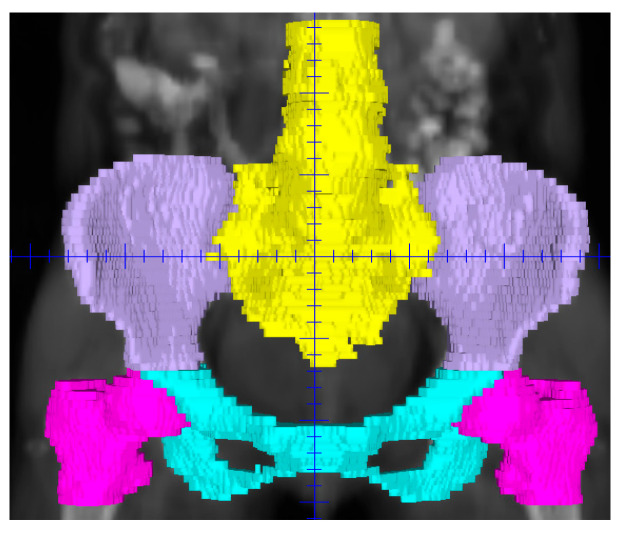 Figure 1
Peer Reviews
No public reviews on file for this paper yet. If you reviewed it on a platform where reviews are public (OpenReview, ICLR, NeurIPS, ICML), you can paste yours below so the community can read it here.
Videos
No videos yet. Explain this paper in a talk, walkthrough, or lecture? Add one.
Taxonomy
TopicsEndometrial and Cervical Cancer Treatments · Advanced Radiotherapy Techniques · Prostate Cancer Diagnosis and Treatment