Preparation, Characterization, and Anti-Colitis Activity of Low-Viscosity EDTA-Soluble Polysaccharides from Almond Gum
Munisa Dilixiati, Zumrat Abudureyim, Nuermaimaiti Abudukelimu, Ahmidin Wali, Yanhua Gao, Abulimiti Yili

TL;DR
Researchers improved almond gum's usability by reducing its viscosity and showed it can help treat colitis by altering gut bacteria and boosting beneficial metabolites.
Contribution
The study introduces an EDTA-based method to reduce almond gum viscosity and reveals its anti-colitis mechanism via gut microbiota and metabolite modulation.
Findings
EDTA treatment reduced almond gum viscosity from 640.8 to 238.7 mPa·s.
EAGP-W1 alleviated DSS-induced colitis by reducing colonic shortening and histopathological damage.
EAGP-W1 modulated gut microbiota to increase probiotics and short-chain fatty acids.
Abstract
Almond gum is a resource-rich natural polysaccharide; however, its high viscosity and low solubility severely limit industrial applications in separation, purification, and functional development. This study aimed to overcome these bottlenecks by optimizing an ethylenediaminetetraacetic acid (EDTA) preparation process and evaluating its protective efficacy against colitis. Using response surface methodology, optimal conditions were identified (1% EDTA, 3 h reaction, 10 h extraction), resulting in a modified polysaccharide (EAGP) with significantly reduced viscosity (from 640.8 to 238.7 mPa·s). SEM-EDX confirmed that EDTA efficiently removed cross-linking metal ions (K, Ca, Mg), creating a porous structure that facilitates purification. The purified fraction, EAGP-W1, was characterized as an arabinogalactan primarily composed of galactose (40.51%) and arabinose (38.38%). In vivo…
Genes, proteins, chemicals, diseases, species, mutations and cell lines named across the full text — each resolved to its canonical identifier and authoritative record.
Click any figure to enlarge with its caption.
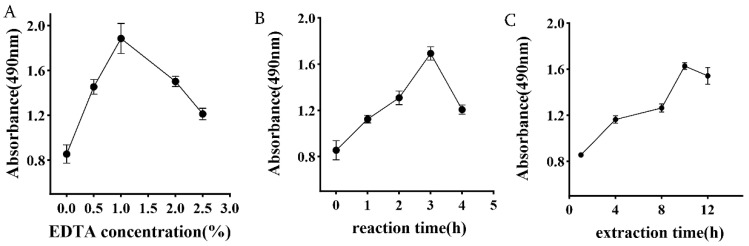 Figure 1
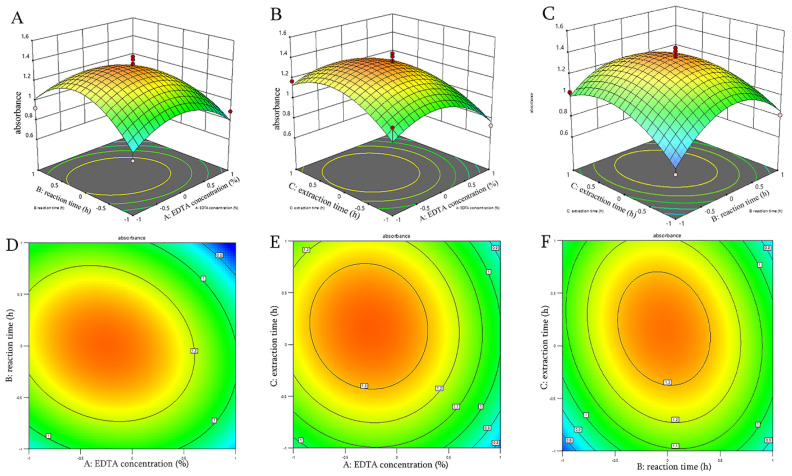 Figure 2
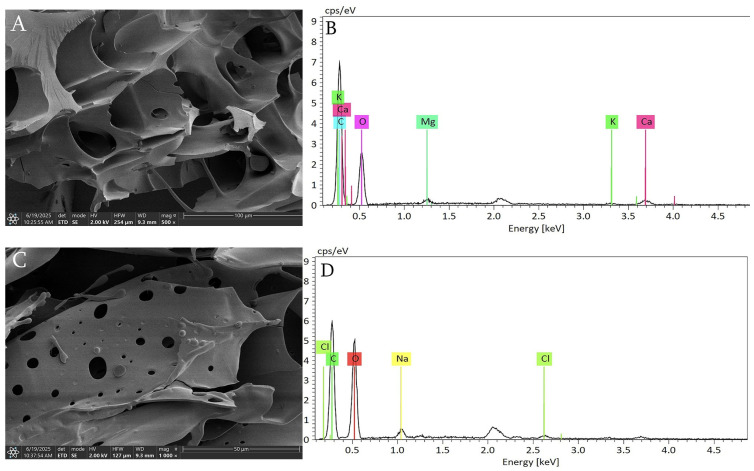 Figure 3
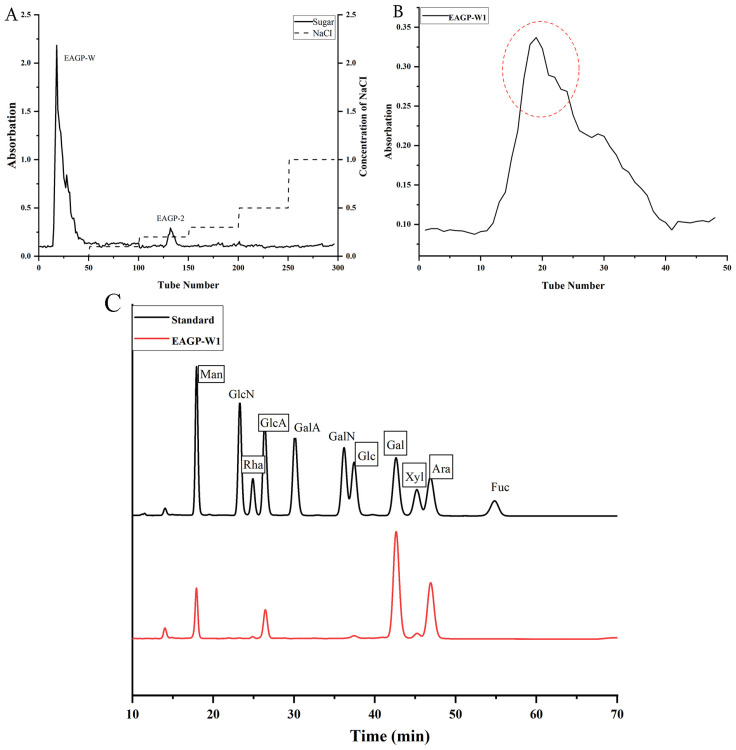 Figure 4
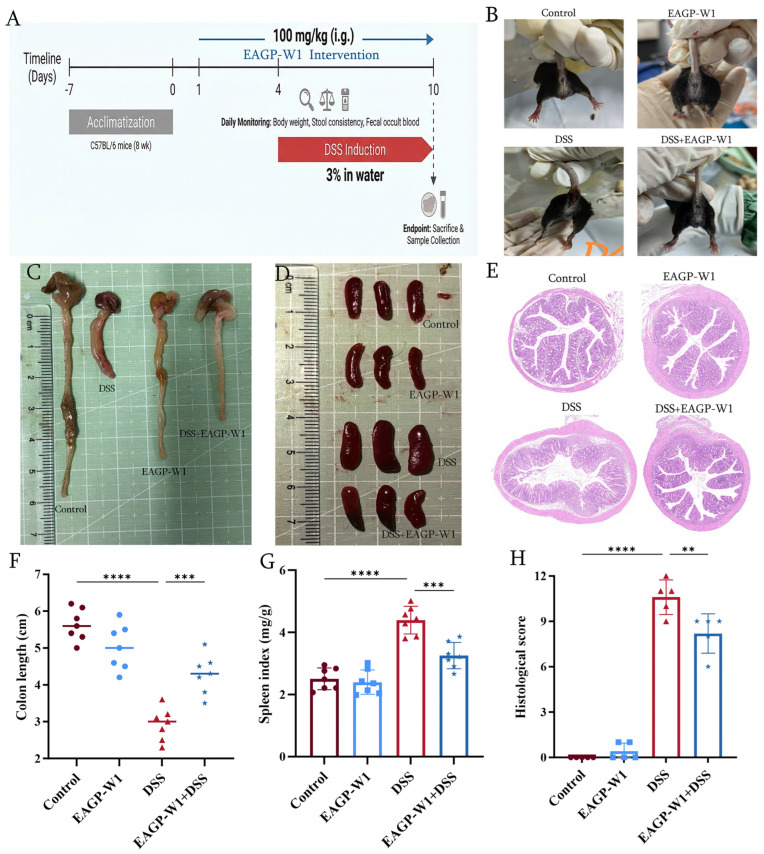 Figure 5
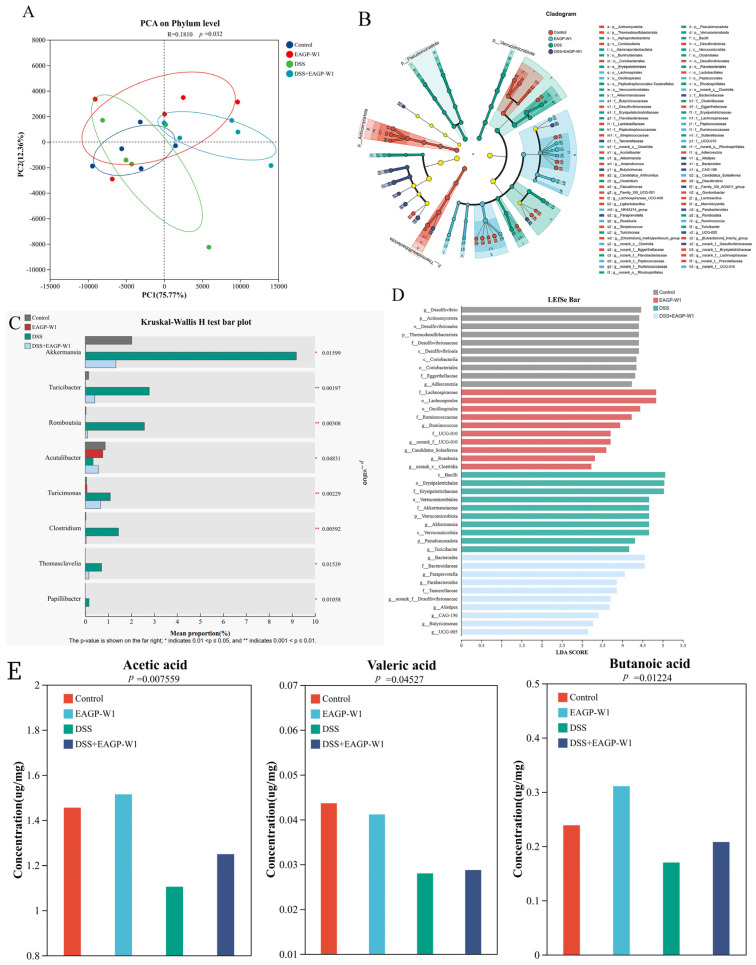 Figure 6
Peer Reviews
No public reviews on file for this paper yet. If you reviewed it on a platform where reviews are public (OpenReview, ICLR, NeurIPS, ICML), you can paste yours below so the community can read it here.
Videos
No videos yet. Explain this paper in a talk, walkthrough, or lecture? Add one.
Taxonomy
TopicsPolysaccharides and Plant Cell Walls · Polysaccharides Composition and Applications · Food composition and properties