Histone Modifications in the Cell Cycle of C. elegans Embryogenesis: A Comparative Review
Anati Alyaa Azhar, Hector Mendoza

TL;DR
This review explores how specific histone modifications influence the cell cycle during C. elegans embryogenesis.
Contribution
The paper provides a comparative analysis of key histone modifications in C. elegans mitotic cell cycles.
Findings
Five histone modifications are highlighted as critical during C. elegans embryogenesis.
These modifications are well-documented in the context of mitotic cell cycle regulation.
The review emphasizes the role of epigenetic marks in chromosome dynamics.
Abstract
Cell division is a highly regulated process that actively involves dynamic changes to the genetic material within the nucleus. DNA is faithfully replicated in the S-Phase of the cell cycle, being converted from loose, relaxed chromatin into tight, condensed chromosomes to be segregated in mitosis. In addition to scaffolding proteins that shape these mitotic chromosomes, post-translational modifications of histones within nucleosomes modulate chromosome dynamics throughout the cell cycle. In this review, we use a comparative approach to highlight some of the major epigenetic marks affected by the cell cycle during embryogenesis of Caenorhabditis elegans: H4K20me1, H3S10ph, H4S1ph, H2AS1ph, and H3T118ph. These five histone post-translational modifications will be specifically highlighted in the context of the mitotic cell cycle, as they are well documented in the C. elegans literature.
Genes, proteins, chemicals, diseases, species, mutations and cell lines named across the full text — each resolved to its canonical identifier and authoritative record.
Click any figure to enlarge with its caption.
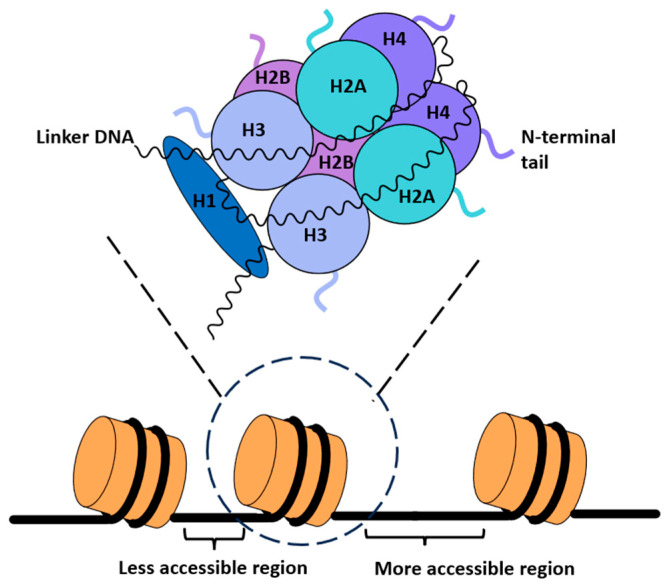 Figure 1
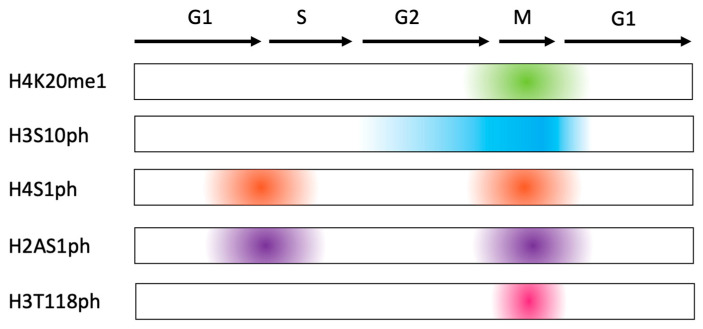 Figure 2
Peer Reviews
No public reviews on file for this paper yet. If you reviewed it on a platform where reviews are public (OpenReview, ICLR, NeurIPS, ICML), you can paste yours below so the community can read it here.
Videos
No videos yet. Explain this paper in a talk, walkthrough, or lecture? Add one.
Taxonomy
TopicsGenetics, Aging, and Longevity in Model Organisms · DNA Repair Mechanisms · Genomics and Chromatin Dynamics