Current Applications and Future Directions of Artificial Intelligence in Prostate Cancer Diagnosis: A Narrative Review
Cong-Yi Zhu, Rui Qu, Yi Dai, Luo Yang

TL;DR
This review explores how artificial intelligence is improving prostate cancer diagnosis through better imaging, pathology, and data integration, while highlighting challenges and future directions.
Contribution
The paper provides a comprehensive narrative review of AI applications in prostate cancer diagnosis, emphasizing novel approaches and future research priorities.
Findings
AI models for MRI can improve risk stratification and reduce unnecessary biopsies.
Deep learning algorithms in digital pathology show high agreement with expert pathologists for Gleason grading.
AI-powered liquid biopsy models support non-invasive risk stratification for patients with borderline PSA levels.
Abstract
Artificial intelligence is rapidly reshaping how prostate cancer is detected and characterized. Current diagnostic tools, including prostate-specific antigen testing, digital rectal examination, and magnetic resonance imaging, can lead to missed clinically significant cancers, unnecessary biopsies, and inconsistent interpretations across clinicians and institutions. This review summarizes recent applications of artificial intelligence in five diagnostic domains: medical imaging, digital pathology, liquid biopsy, multi-omics integration, and analysis of clinical information. Across selected tasks and clinical settings, artificial intelligence methods have been reported to improve diagnostic consistency, automate time-consuming tasks such as lesion detection and tumor grading, and support non-invasive risk stratification, particularly for men with borderline test results where biopsy…
Genes, proteins, chemicals, diseases, species, mutations and cell lines named across the full text — each resolved to its canonical identifier and authoritative record.
Click any figure to enlarge with its caption.
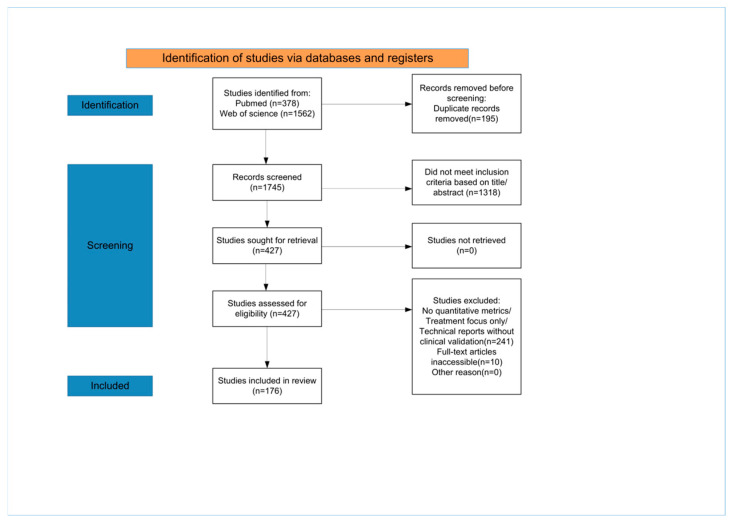 Figure 1
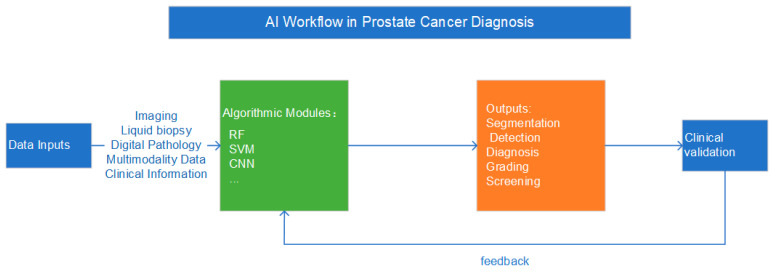 Figure 2
Peer Reviews
No public reviews on file for this paper yet. If you reviewed it on a platform where reviews are public (OpenReview, ICLR, NeurIPS, ICML), you can paste yours below so the community can read it here.
Videos
No videos yet. Explain this paper in a talk, walkthrough, or lecture? Add one.
Taxonomy
TopicsProstate Cancer Diagnosis and Treatment · AI in cancer detection · Artificial Intelligence in Healthcare and Education