The Health-Related Quality of Life and Putative Factors of Icelandic and American Youth with Multiple Disabilities Including Visual Impairments: A Preliminary Investigation
Ali Brian, Andrea Taliaferro, Pamela Beach, Benjamin Lytle, Adam Pennell, Lauren Lieberman, Ingi Einarsson

TL;DR
This study compares health-related quality of life and influencing factors among youth with multiple disabilities in Iceland and the U.S., highlighting differences in physical and self-reported health indicators.
Contribution
The study provides preliminary insights into cross-cultural differences in health indicators among youth with multiple disabilities.
Findings
Icelandic boys and girls showed significant differences in BMI and STS performance.
American boys and girls differed significantly in physical activity and perceived physical competence.
Context-specific patterns in health indicators suggest the need for culturally tailored assessments.
Abstract
Background/Objectives: Health-related quality of life (HRQoL) is a critical indicator of developmental progress, educational engagement, and psychosocial resilience. By identifying both shared and context-specific differences in HRQoL, we aim to contribute to a more nuanced understanding of well-being that can inform the development of assessment approaches and future research tailored to the diverse contexts in which children with disabilities live and learn. Thus, the purpose of this study is to explore HRQoL and its putative influencing factors among youth with multiple disabilities across two distinct cultural settings, the United States and Iceland. Methods: Participants (N = 26; Icelandic = 50%; Mage = 16.34 ± 2.33 years) completed height, weight, the Test of Perceived Physical Competence (TPPC), Supine-to-Stand (STS), Rapid Assessment of Physical Activity (RAPA), and VISIONS QL.…
Genes, proteins, chemicals, diseases, species, mutations and cell lines named across the full text — each resolved to its canonical identifier and authoritative record.
Click any figure to enlarge with its caption.
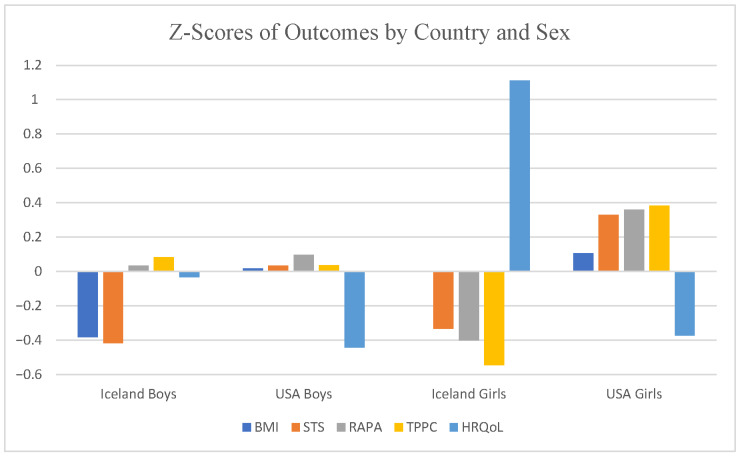 Figure 1
Peer Reviews
No public reviews on file for this paper yet. If you reviewed it on a platform where reviews are public (OpenReview, ICLR, NeurIPS, ICML), you can paste yours below so the community can read it here.
Videos
No videos yet. Explain this paper in a talk, walkthrough, or lecture? Add one.
Taxonomy
TopicsCerebral Palsy and Movement Disorders · Down syndrome and intellectual disability research · Inclusion and Disability in Education and Sport