Perceived Complexity as Normalized, Integrated, Localized Shannon Entropy
Sébastien Berquet, Norberto M. Grzywacz

TL;DR
The paper explores how perceived complexity in visual stimuli can be measured using localized Shannon entropy integrated and normalized.
Contribution
The novel approach integrates localized entropy across spatial scales to better capture perceived complexity.
Findings
Normalized, integrated localized entropy at low spatial scales aligns with perceived complexity.
The method reveals aesthetic choices of artists through complexity measurements.
Measurements were validated using natural, urban, and synthetic images.
Abstract
Perceived complexity is a key component of sensory brain function as it indicates the number of resources necessary to process incoming information. A recently proposed measure of perceived complexity defined it as normalized Shannon entropy. However, the proposal used probability distributions estimated from the entire sensory signal at once. Here, we first used synthetically created images and abstract expressionism art to show that using such distributions seemed incompatible with perceived complexity. This incompatibility persisted even if we performed the calculations at different scales, that is, in multiple image resolutions. We then proposed an alternate theory that postulated that perceived complexity arose from the integration of localized Shannon entropy. The outcome of this integration was then normalized to define an index of complexity. We measured this index and…
Click any figure to enlarge with its caption.
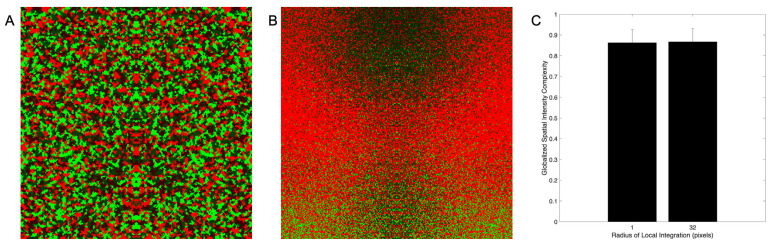 Figure 1
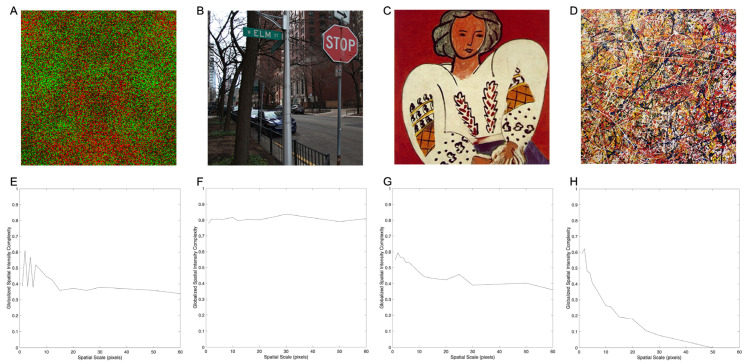 Figure 2
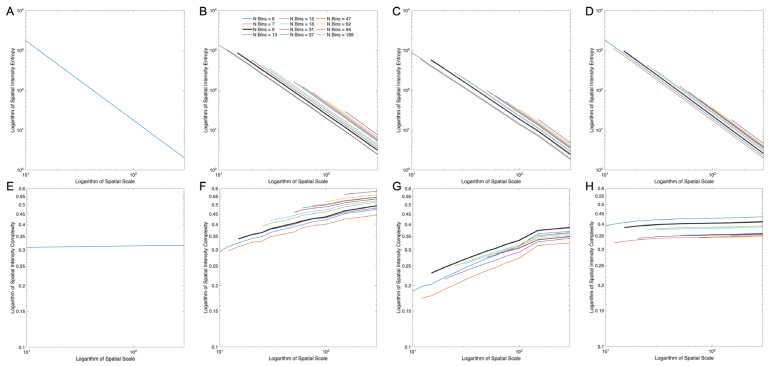 Figure 3
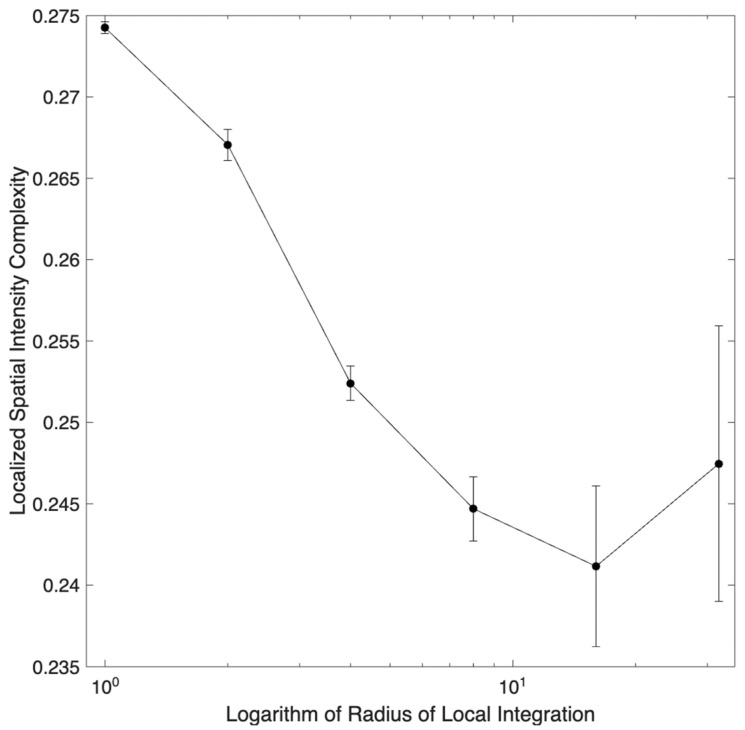 Figure 4
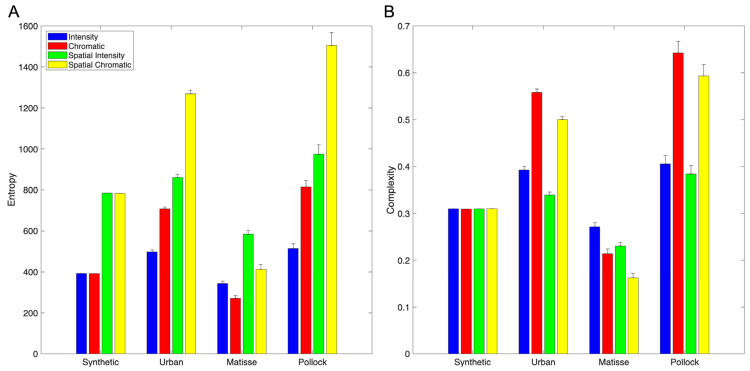 Figure 5
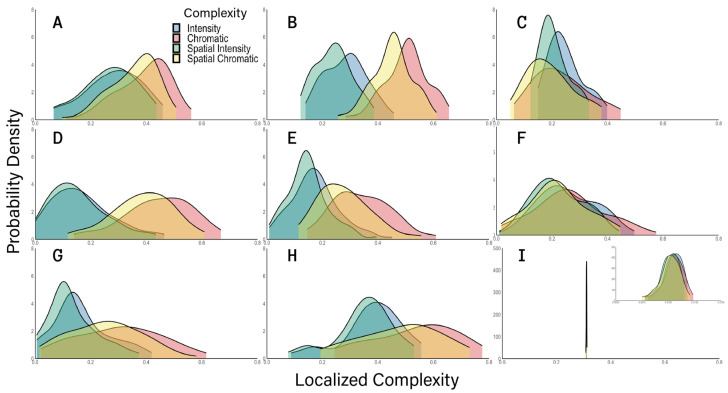 Figure 6
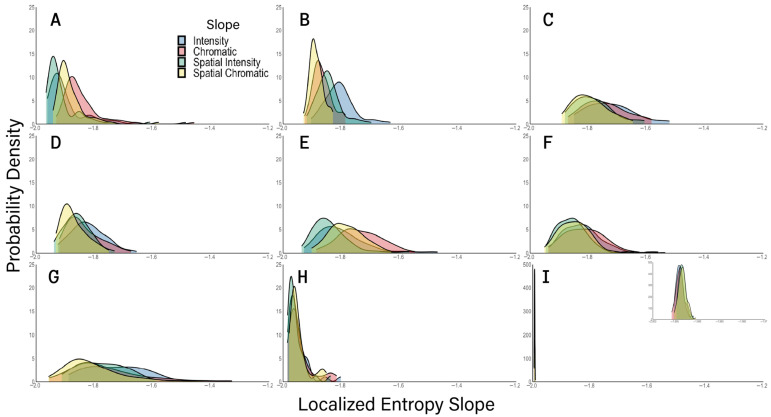 Figure 7
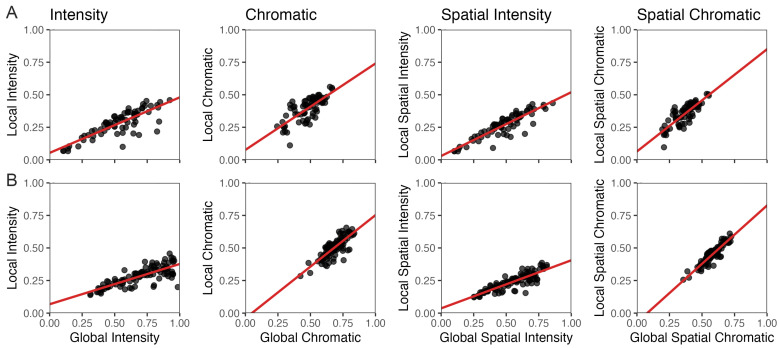 Figure 8
Peer Reviews
No public reviews on file for this paper yet. If you reviewed it on a platform where reviews are public (OpenReview, ICLR, NeurIPS, ICML), you can paste yours below so the community can read it here.
Videos
No videos yet. Explain this paper in a talk, walkthrough, or lecture? Add one.
Taxonomy
TopicsAesthetic Perception and Analysis · Multisensory perception and integration · Creativity in Education and Neuroscience