Wigner Functions of Time-Dependent Cat-like Even/Odd Superpositions of Nonlinear Coherent States
Miguel Citeli de Freitas, Viktor V. Dodonov

TL;DR
This paper explores how certain quantum states can resemble Schrödinger cat states by analyzing their Wigner functions.
Contribution
The study identifies the number distribution function's localization as key to forming cat-like quantum states.
Findings
Well-localized number distribution functions in the Fock basis lead to cat-like structures in Wigner functions.
Superpositions without localized peaks do not exhibit Schrödinger cat characteristics.
The analysis is based on 2D slices of Wigner functions for nonlinear coherent states.
Abstract
We calculate and plot 2D slices of the Wigner functions of several families of highly excited even and odd superpositions of nonlinear coherent states, looking for conditions under which such superpositions can be interpreted as models of the “Schrödinger cat” states. The decisive factor seems to be the form of the number distribution function over the Fock basis: it must have well localized peaks. Otherwise, no “cat-like” structures are observed.
Click any figure to enlarge with its caption.
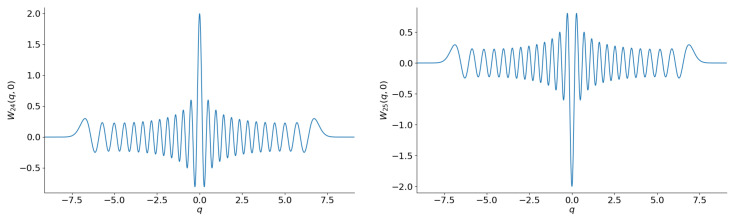 Figure 1
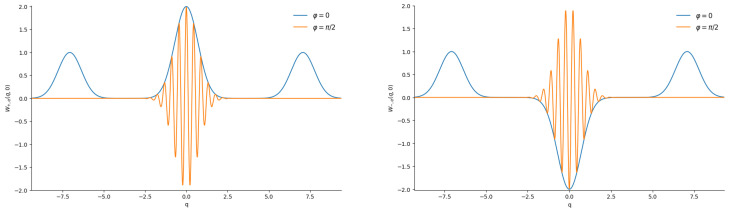 Figure 2
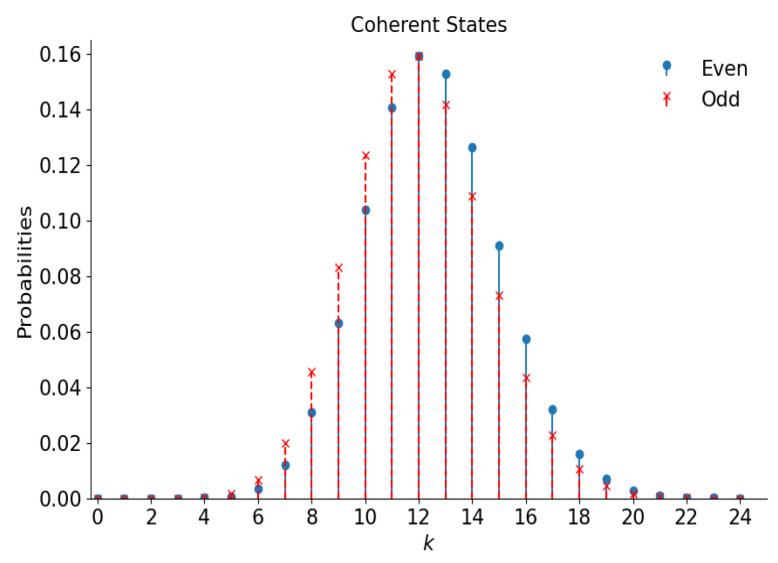 Figure 3
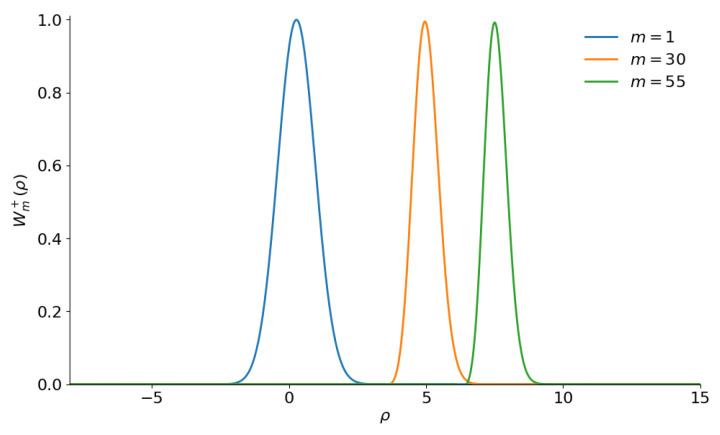 Figure 4
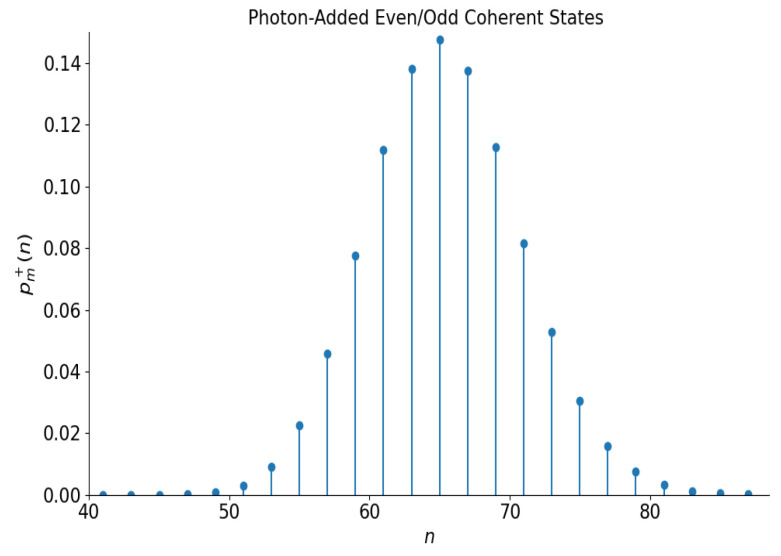 Figure 5
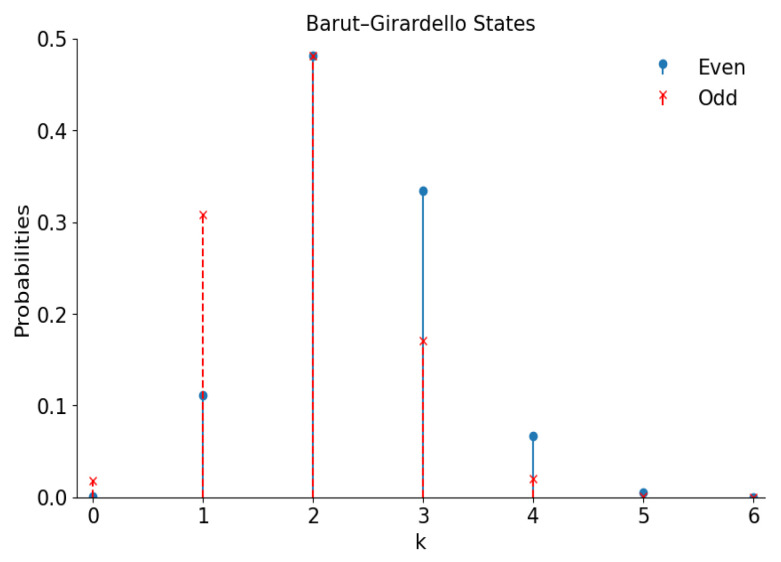 Figure 6
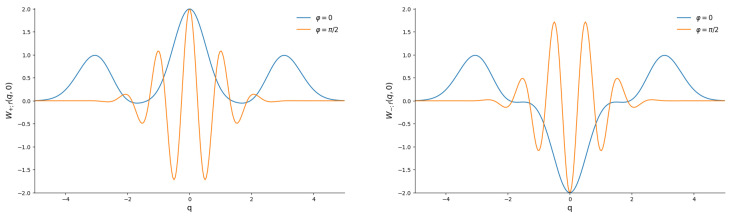 Figure 7
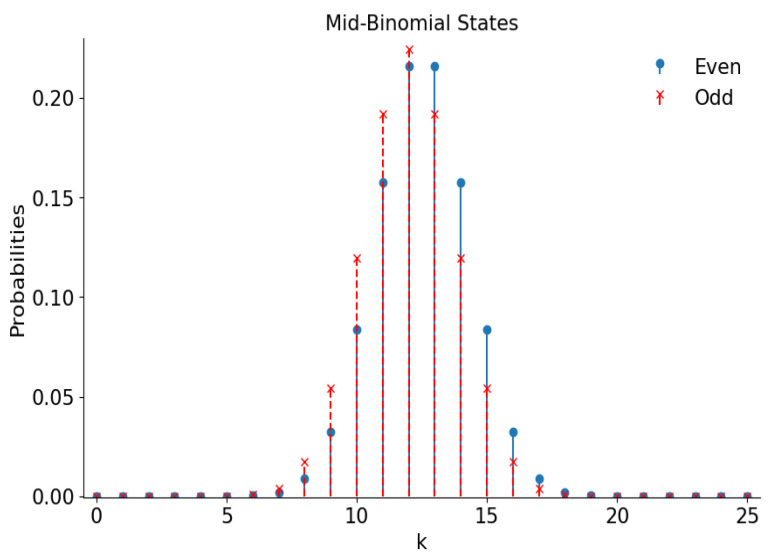 Figure 8
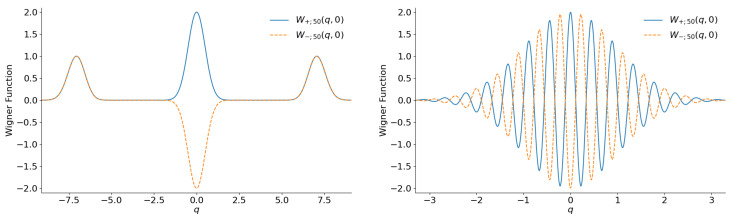 Figure 9
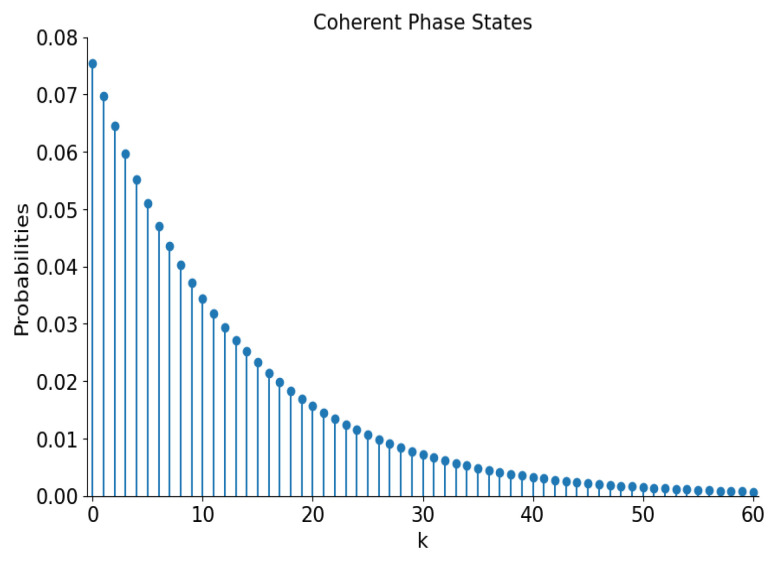 Figure 10
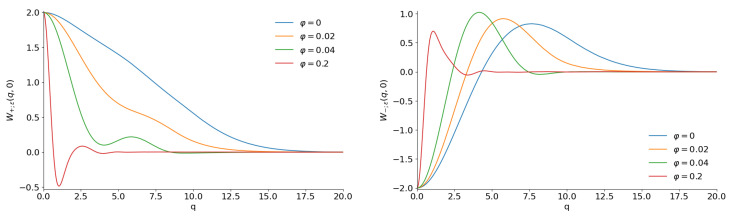 Figure 11
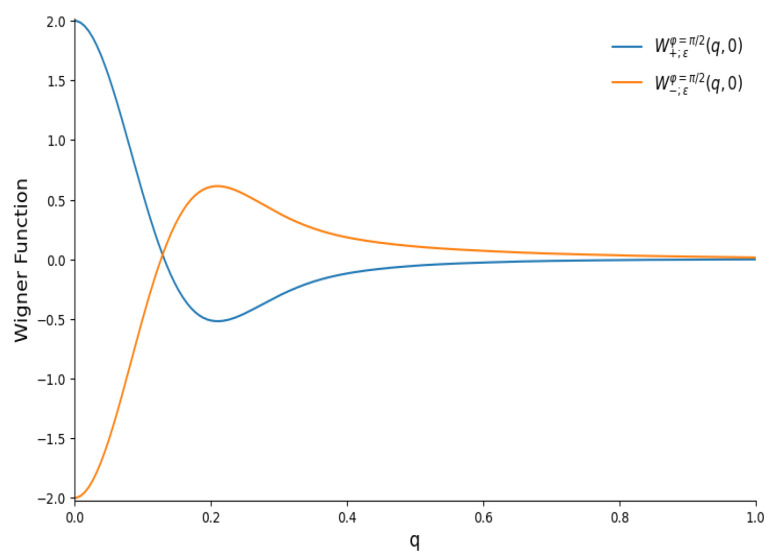 Figure 12
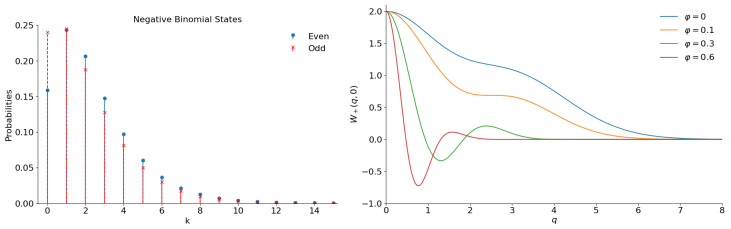 Figure 13
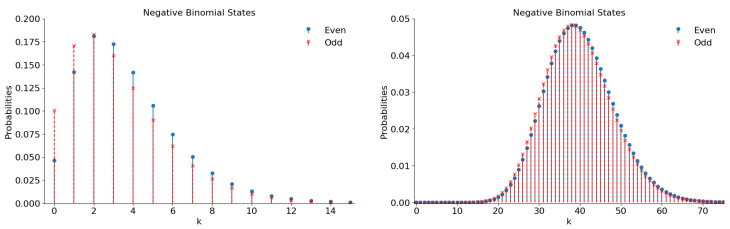 Figure 14
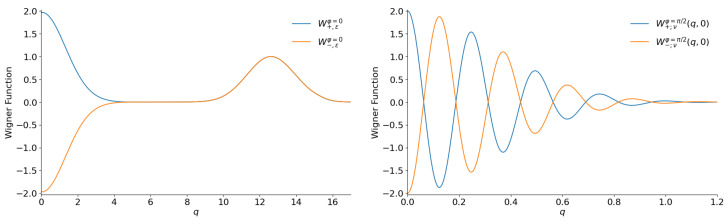 Figure 15
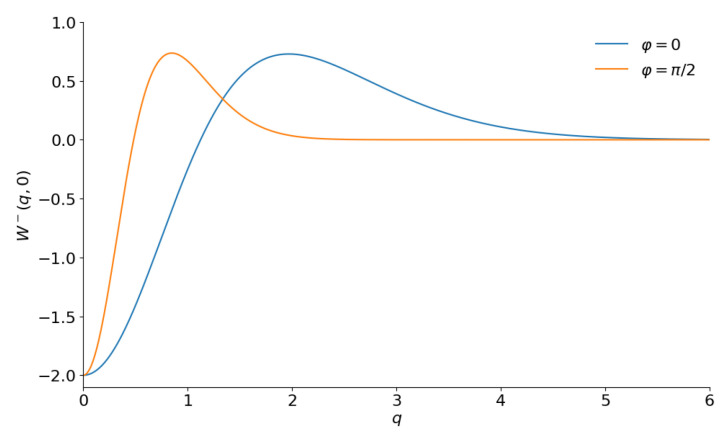 Figure 16
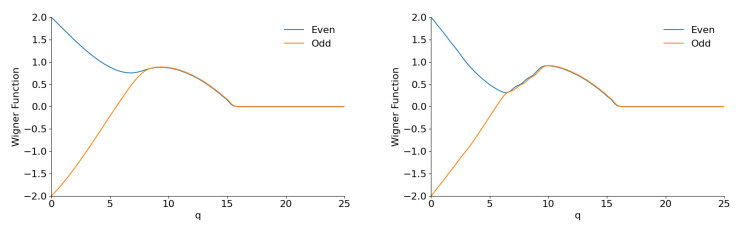 Figure 17
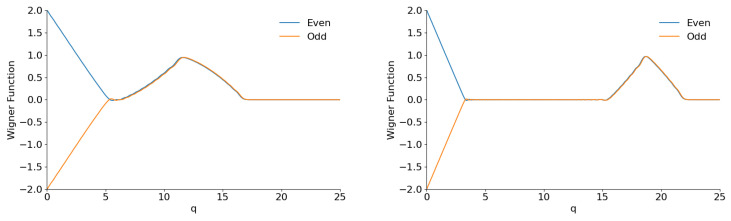 Figure 18
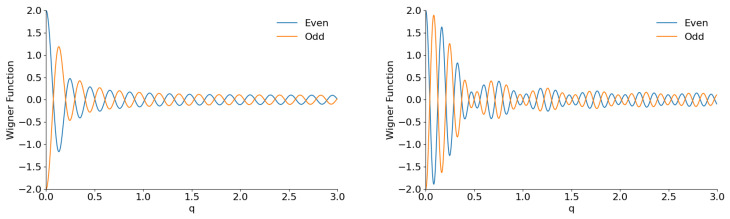 Figure 19
Peer Reviews
No public reviews on file for this paper yet. If you reviewed it on a platform where reviews are public (OpenReview, ICLR, NeurIPS, ICML), you can paste yours below so the community can read it here.
Videos
No videos yet. Explain this paper in a talk, walkthrough, or lecture? Add one.
Taxonomy
TopicsNonlinear Photonic Systems · Quantum Information and Cryptography · Cold Atom Physics and Bose-Einstein Condensates