Effects of a 6-Week Supervised Multimodal Exercise Program on Cancer-Related Fatigue, Quality of Life and Physical Function During Active Treatment: A Randomized Controlled Trial
Arturo Cano-Uceda, Paloma Pareja-García, Esther Sánchez-Rodríguez, David Fraguas-Ramos, Laura Martín-Álvarez, Rebeca Asencio-Vicente, Amaya Rivero-de la Villa, María del Mar Pérez-Pérez, Berta María Obispo-Portero, Laura Morales-Ruiz, Rosalía de Dios-Álvarez

TL;DR
A 6-week supervised exercise program significantly improved fatigue, quality of life, and physical function in cancer patients undergoing treatment.
Contribution
This study demonstrates the clinical effectiveness of a brief, supervised multimodal exercise program during active cancer treatment.
Findings
The exercise group showed significant improvements in fatigue, quality of life, and muscle strength compared to the control group.
63.3% of the intervention group achieved clinically meaningful improvements in fatigue, versus 13.3% in the control group.
Only insomnia among symptoms showed a significant reduction in the intervention group.
Abstract
Reduced quality of life, cancer-related fatigue, and functional impairment are common problems during and after cancer treatment. To examine this issue, a randomized clinical trial was conducted with 110 patients with stage I–III cancer. Participants were randomly assigned either to an intervention group, which completed a six-week supervised exercise program, or to a control group that received usual care. The exercise program included cardiorespiratory training, strength exercises, and stretching, with intensity monitored through perceived exertion. Quality of life, fatigue, functional capacity, and muscle strength were assessed. The group that completed the exercise program showed significant and clinically meaningful improvements in fatigue, global quality of life, functional capacity, and muscle strength compared with the control group. Furthermore, a higher percentage of…
Genes, proteins, chemicals, diseases, species, mutations and cell lines named across the full text — each resolved to its canonical identifier and authoritative record.
Click any figure to enlarge with its caption.
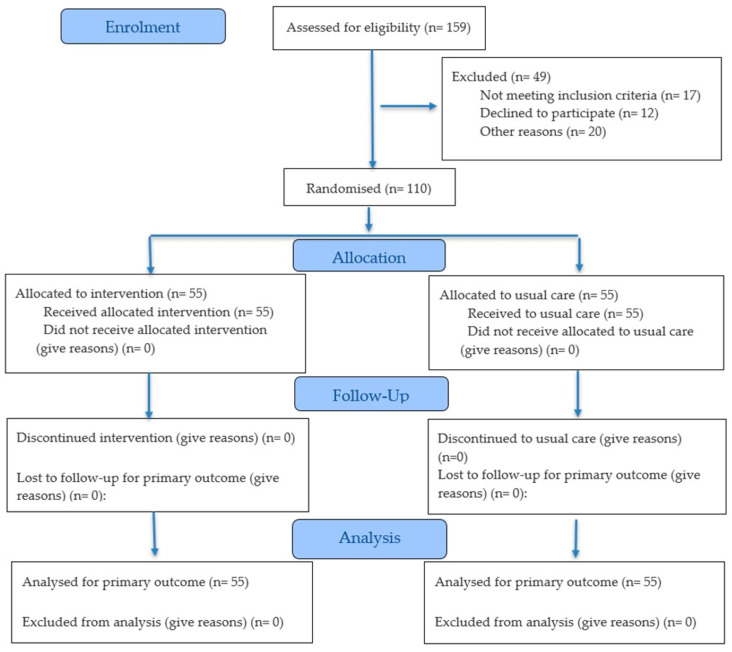 Figure 1
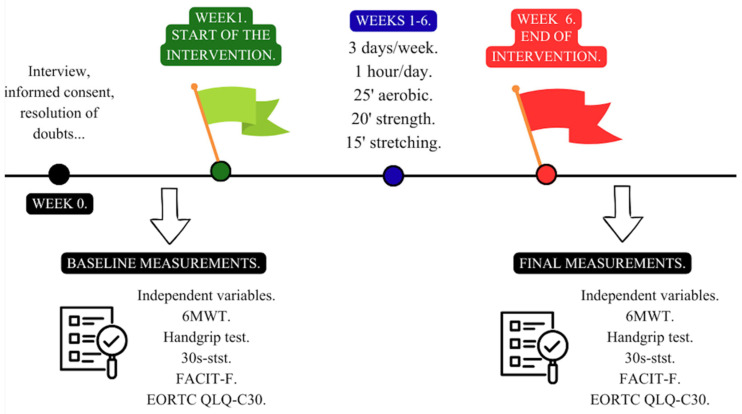 Figure 2
Peer Reviews
No public reviews on file for this paper yet. If you reviewed it on a platform where reviews are public (OpenReview, ICLR, NeurIPS, ICML), you can paste yours below so the community can read it here.
Videos
No videos yet. Explain this paper in a talk, walkthrough, or lecture? Add one.
Taxonomy
TopicsCancer survivorship and care · Oral health in cancer treatment · Exercise and Physiological Responses