Difference in Occlusal Contacts Obtained with Conventional Orthodontic and Clear Aligner Therapy: A Pilot Study
Giorgio Oliva, Roberta Maddaluno, Roberto Rongo, Gerarda Buonocore, Rosa Valletta, Ambrosina Michelotti, Vincenzo D’Antò

TL;DR
This study compares how well traditional braces and clear aligners create stable bite contacts in young patients, finding that braces perform better in certain aspects.
Contribution
The study provides new empirical evidence comparing occlusal contact outcomes between fixed orthodontic therapy and clear aligner therapy in growing patients.
Findings
Fixed orthodontic therapy (FAT) produced higher total occlusal contact values in the occlusal contact surface (OCS) compared to clear aligner therapy (CAT).
FAT showed fewer anterior contacts in OCS, NOCS, half-mm, and one-mm measurements compared to CAT.
FAT resulted in higher contacts specifically at the second premolar tooth compared to CAT.
Abstract
Background/Objectives: The achievement of stable and functional occlusal contacts represents a key objective of orthodontic treatment, particularly in growing patients. Evidence comparing the effectiveness of these two modalities in establishing adequate occlusal contacts in growing patients remains limited. This study aimed to evaluate and compare occlusal contact characteristics following clear aligner therapy (CAT) and fixed orthodontic therapy (FAT). Methods: Twenty-four growing patients (<18 years with permanent dentition) were included in the study and divided into two groups: 12 patients treated with fixed appliances and 12 treated with clear aligners. Post-treatment digital dental scans were analyzed to assess occlusal contacts. Contacts were calculated as the minimum distance between upper and lower arches using a color-map analysis. The following outcomes were evaluated:…
Genes, proteins, chemicals, diseases, species, mutations and cell lines named across the full text — each resolved to its canonical identifier and authoritative record.
Click any figure to enlarge with its caption.
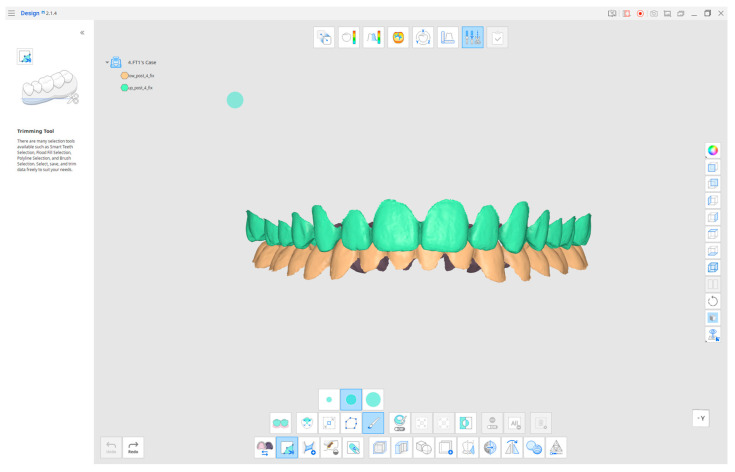 Figure 1
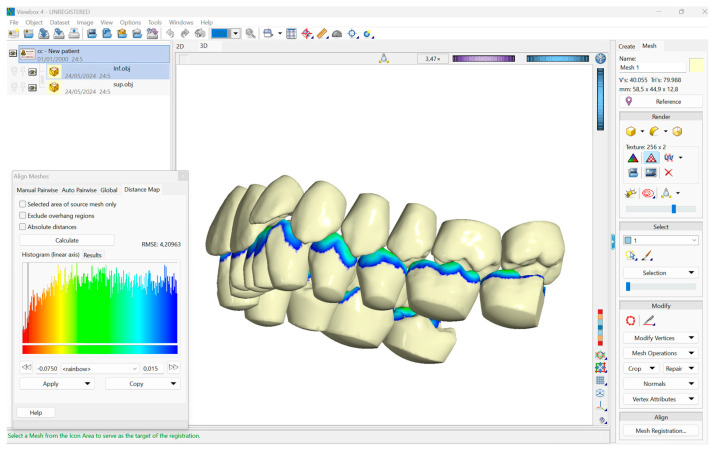 Figure 2
Peer Reviews
No public reviews on file for this paper yet. If you reviewed it on a platform where reviews are public (OpenReview, ICLR, NeurIPS, ICML), you can paste yours below so the community can read it here.
Videos
No videos yet. Explain this paper in a talk, walkthrough, or lecture? Add one.
Taxonomy
TopicsOrthodontics and Dentofacial Orthopedics · Temporomandibular Joint Disorders · dental development and anomalies