Plasminogen Activator Inhibitor 1, Cell Senescence, and Aging-Related Diseases
Rui-Ming Liu, Mary F. Nakamya

TL;DR
This paper reviews how plasminogen activator inhibitor 1 (PAI-1) contributes to cell senescence and aging-related diseases.
Contribution
It highlights PAI-1 as both a marker and mediator of cell senescence in aging and disease.
Findings
PAI-1 expression increases with age and in aging-related diseases.
PAI-1 promotes cell senescence through multiple mechanisms in vitro and in vivo.
PAI-1 is a key player in stress-induced and replicative senescence.
Abstract
Cellular senescence, including replicative senescence (RS) and stress-induced premature senescence (SIPS), is a state of the permanent arrest of cell growth, which can occur in proliferative cells and post-mitotic cells. Cellular senescence is believed to contribute importantly to aging and aging-related diseases. Although several hypotheses, including telomere shortening, oncogene activation, oxidative stress, DNA damage, and mitochondrial dysfunction, have been proposed, the mechanisms underlying cellular senescence in either physiological or pathological conditions remain poorly understood. Plasminogen activator inhibitor 1 (PAI-1), a physiological inhibitor of tissue type and urokinase type of plasminogen activators (tPA and uPA), has multiple functions. PAI-1 expression increases with age and in many aging-related diseases. Importantly, increased PAI-1 expression is not only a…
Genes, proteins, chemicals, diseases, species, mutations and cell lines named across the full text — each resolved to its canonical identifier and authoritative record.
Click any figure to enlarge with its caption.
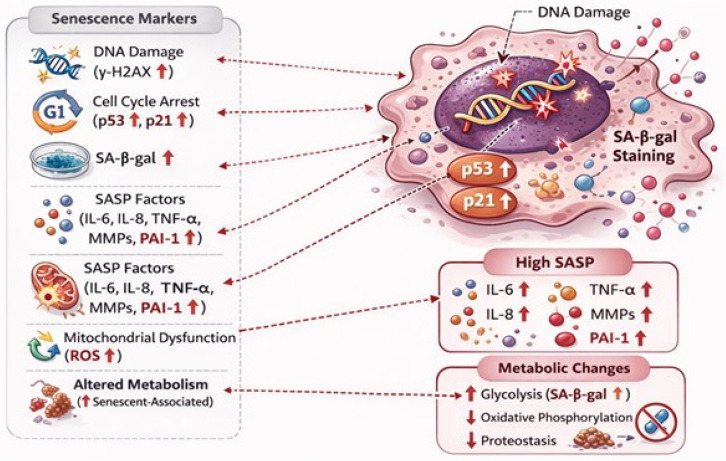 Figure 1
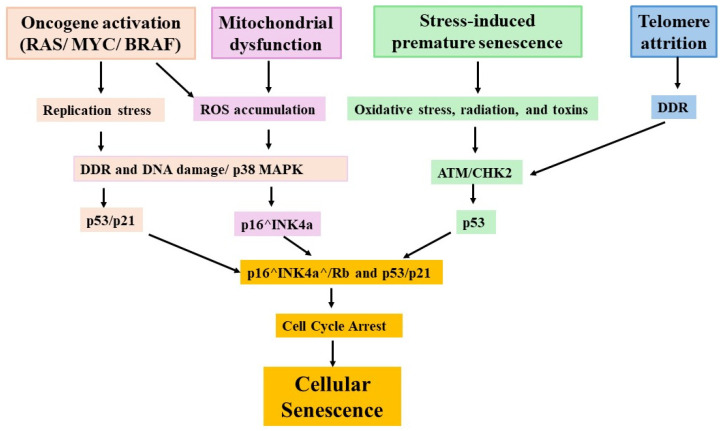 Figure 2
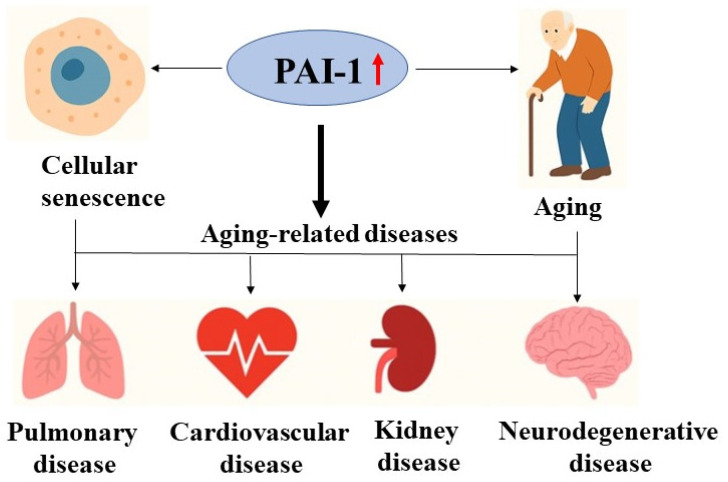 Figure 3
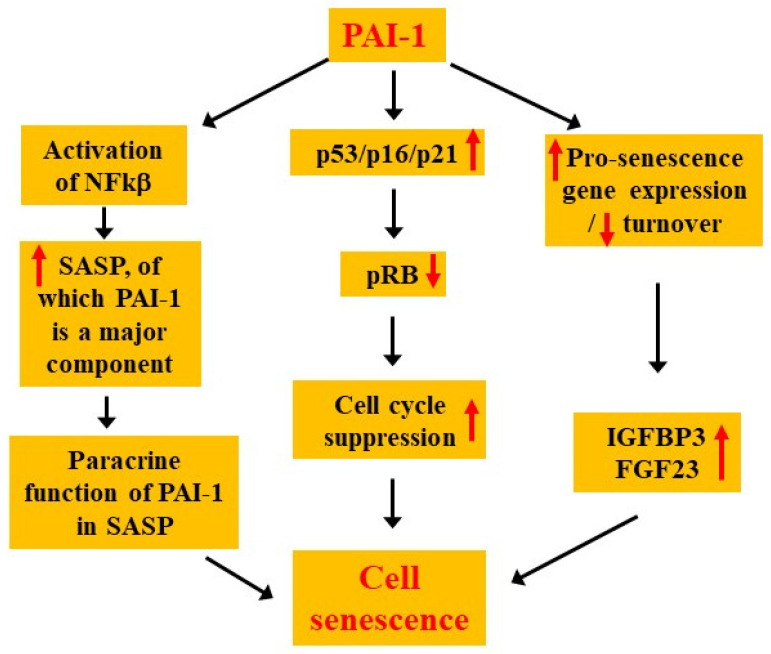 Figure 4
Peer Reviews
No public reviews on file for this paper yet. If you reviewed it on a platform where reviews are public (OpenReview, ICLR, NeurIPS, ICML), you can paste yours below so the community can read it here.
Videos
No videos yet. Explain this paper in a talk, walkthrough, or lecture? Add one.
Taxonomy
TopicsProtease and Inhibitor Mechanisms · Telomeres, Telomerase, and Senescence · Genetics, Aging, and Longevity in Model Organisms