ChemoNETosis in Cancer: A Comprehensive Review of Treatment-Induced NET Formation and Therapeutic Consequences
Bojan Stojanovic, Bojana S. Stojanovic, Milica Dimitrijevic Stojanovic, Aleksandar Cvetkovic, Bojan Milosevic, Vesna Vulovic, Ivana Milivojcevic Bevc, Andra Jevtovic, Danijela Tasic-Uros, Sanja Knezevic, Aleksandar Matic, Marina Markovic, Katarina Milojevic, Verica Vukicevic

TL;DR
ChemoNETosis is a chemotherapy-induced immune response that promotes tumor resistance and could be targeted to improve cancer treatment outcomes.
Contribution
This is the first comprehensive review of chemoNETosis, detailing its mechanisms and therapeutic implications across solid tumors.
Findings
ChemoNETosis involves chemotherapy-induced neutrophil extracellular trap (NET) formation in tumors and metastases.
NETs contribute to chemoresistance by activating TGFβ and promoting tumor cell plasticity.
NET biomarkers like CitH3 and cfDNA may help identify patients who could benefit from NET-targeted therapies.
Abstract
What are the main findings? ChemoNETosis represents a treatment-induced neutrophil extracellular trap (NET) program in which cytotoxic chemotherapy alters the cytokine and chemokine landscape of the tumor microenvironment, including signals such as interleukin 1 beta (IL 1β) and the C X C motif chemokine ligand 1 and 5–C X C chemokine receptor 2 (CXCL1 and CXCL5–CXCR2) axis. These changes facilitate neutrophil recruitment and activation, culminating in NET deposition within primary tumors and metastatic niches.NET-enriched microenvironments can contribute mechanistically to chemoresistance by promoting epithelial to mesenchymal transition and tumor cell plasticity, for example through NET scaffold-associated activation of latent transforming growth factor beta (TGF β) signaling. In selected clinical contexts, this process may also connect therapy-induced inflammatory stress with…
Genes, proteins, chemicals, diseases, species, mutations and cell lines named across the full text — each resolved to its canonical identifier and authoritative record.
Click any figure to enlarge with its caption.
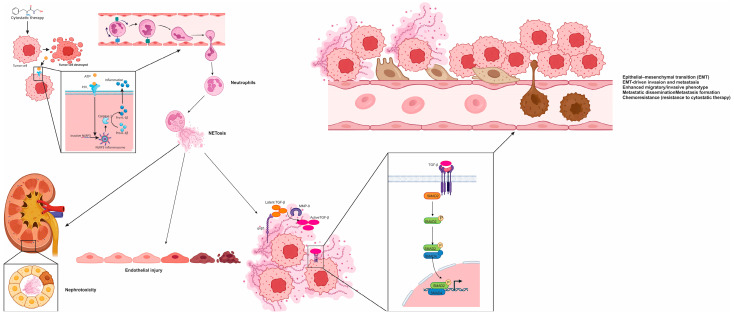 Figure 1
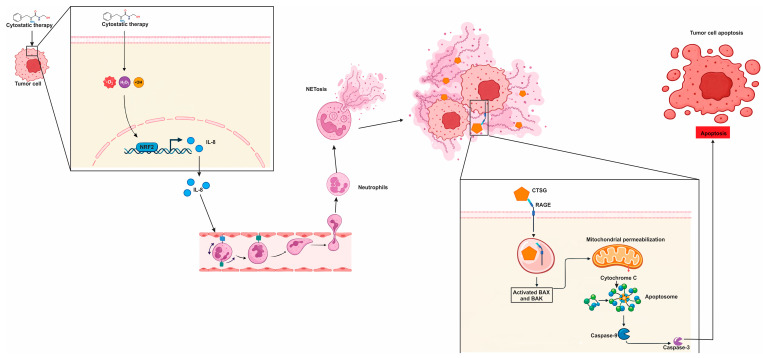 Figure 2
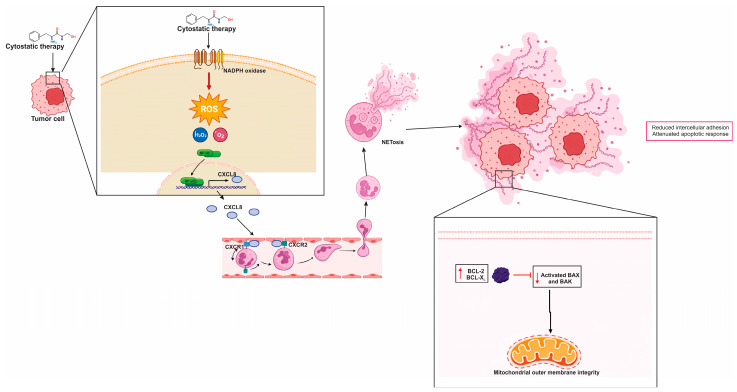 Figure 3
Peer Reviews
No public reviews on file for this paper yet. If you reviewed it on a platform where reviews are public (OpenReview, ICLR, NeurIPS, ICML), you can paste yours below so the community can read it here.
Videos
No videos yet. Explain this paper in a talk, walkthrough, or lecture? Add one.
Taxonomy
TopicsNeutrophil, Myeloperoxidase and Oxidative Mechanisms · Immune cells in cancer · Cancer Research and Treatments