ICTD: Combination of Improved CNN–Transformer and Enhanced Deep Canonical Correlation Analysis for Eye-Movement Emotion Classification
Cong Zhang, Xisheng Li, Jiannan Chi, Ming Cao, Qingfeng Gu, Jiahui Liu

TL;DR
This paper introduces ICTD, a new method combining CNNs and transformers with enhanced deep canonical correlation analysis to improve emotion classification using eye-movement data.
Contribution
The paper introduces an improved CNN-transformer model with an enhanced deep canonical correlation analysis method and an incremental feature feedforward network for emotion classification.
Findings
ICTD achieves 81.8% and 85.2% accuracy for three-category arousal and valence classification on the eSEE-d dataset.
The method reaches 91.2% accuracy for four-category emotion classification on the SEED-IV dataset.
ICTD obtains 85.1% accuracy for five-category emotion classification on the SEED-V dataset.
Abstract
What are the main findings? This paper proposes a deep canonical correlation analysis method based on cosine similarity, non-linearly transforming feature vectors of different modalities into feature vectors with stronger correlation to improve the accuracy of emotion classification.This paper proposes an incremental feature feedforward network (IFFN) to perform feature transformations in enhancement and simplification, replacing the FFN in the original transformer module. This paper proposes a deep canonical correlation analysis method based on cosine similarity, non-linearly transforming feature vectors of different modalities into feature vectors with stronger correlation to improve the accuracy of emotion classification. This paper proposes an incremental feature feedforward network (IFFN) to perform feature transformations in enhancement and simplification, replacing the FFN in…
Genes, proteins, chemicals, diseases, species, mutations and cell lines named across the full text — each resolved to its canonical identifier and authoritative record.
Click any figure to enlarge with its caption.
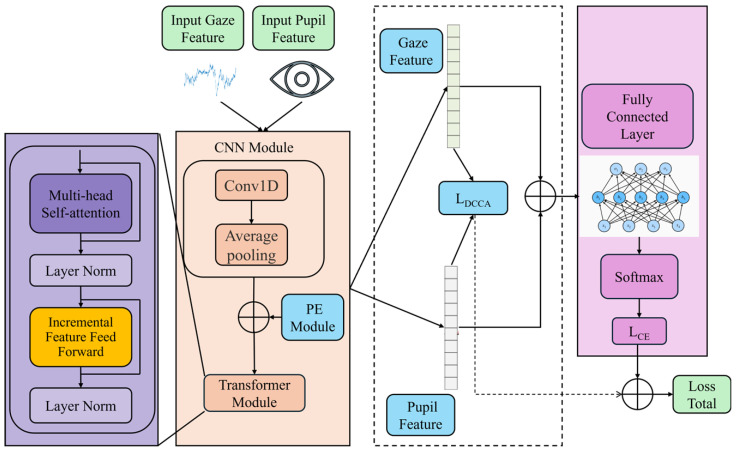 Figure 1
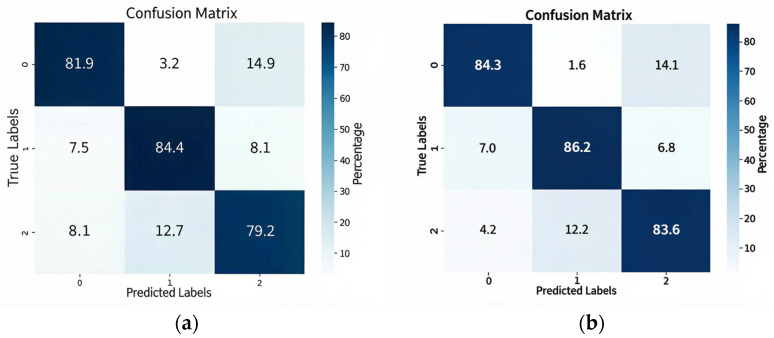 Figure 2
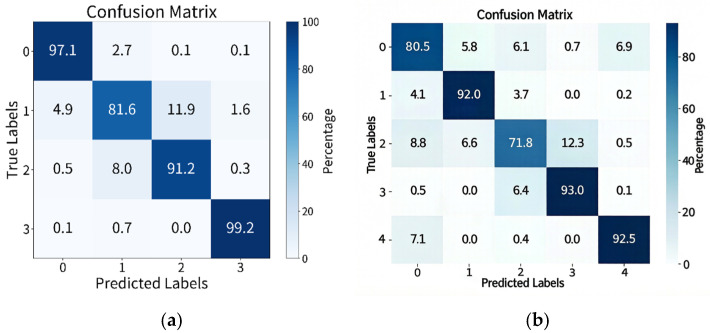 Figure 3
Peer Reviews
No public reviews on file for this paper yet. If you reviewed it on a platform where reviews are public (OpenReview, ICLR, NeurIPS, ICML), you can paste yours below so the community can read it here.
Videos
No videos yet. Explain this paper in a talk, walkthrough, or lecture? Add one.
Taxonomy
TopicsEmotion and Mood Recognition · Gaze Tracking and Assistive Technology · Sleep and Work-Related Fatigue