Global Proteomic Analysis Reveals the Roles of MicX in Biofilm Formation and Quorum Sensing in Vibrio alginolyticus
Huan Liu, Qing Liu, Heyang Jiang, Juanjuan Cao, Jiahao Kou, Junjie Liu, Jie Zhao, Jiangwei Wang

TL;DR
This study explores how the sRNA MicX affects biofilm formation and communication in Vibrio alginolyticus, a seafood-borne pathogen, using proteomic analysis.
Contribution
The study reveals the regulatory role of MicX in biofilm and quorum sensing through a novel proteomic analysis in Vibrio alginolyticus.
Findings
The ΔmicX mutant showed reduced biofilm formation and exopolysaccharide synthesis.
Proteomic analysis identified 900 differentially expressed proteins, with significant changes in quorum sensing and biofilm-related proteins.
MicX influences type VI secretion and MSHA proteins, which are crucial for virulence and adhesion.
Abstract
Vibrio alginolyticus is a foodborne pathogen commonly found in seafood and freshwater products, causing human illness through the consumption of tainted seafood. Small non-coding RNAs (sRNAs) take effect on the stability and translation of their target mRNAs by base-pairing, thereby quickly altering bacterial physiology and pathogenicity at the post-transcriptional level. This work constructed a label-free in-frame deletion mutant and a complement strain of micX, a cell-density-associated sRNA in V. alginolyticus. The ΔmicX mutant exhibited reduced growth and a reduction in the synthesis of exopolysaccharides, biofilm, and alkaline serine protease. A TMT-based quantitative proteomic analysis comparing ΔmicX with the wild-type strain identified 900 differentially expressed proteins, comprising 376 that were upregulated and 524 that were downregulated. The upregulated proteins are…
Genes, proteins, chemicals, diseases, species, mutations and cell lines named across the full text — each resolved to its canonical identifier and authoritative record.
Click any figure to enlarge with its caption.
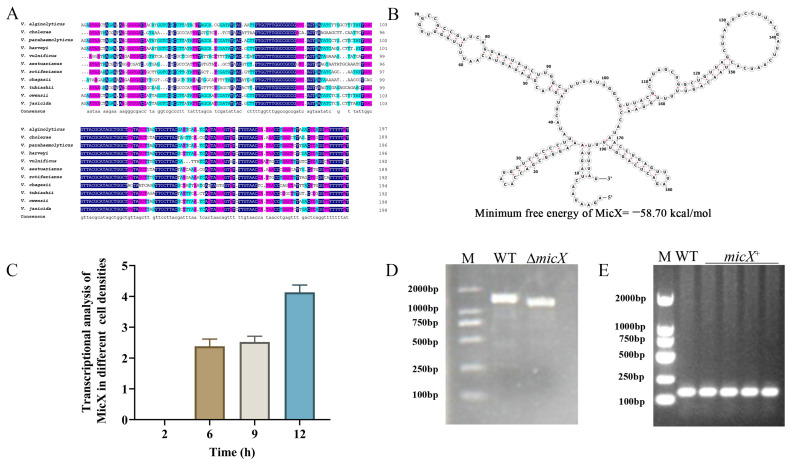 Figure 1
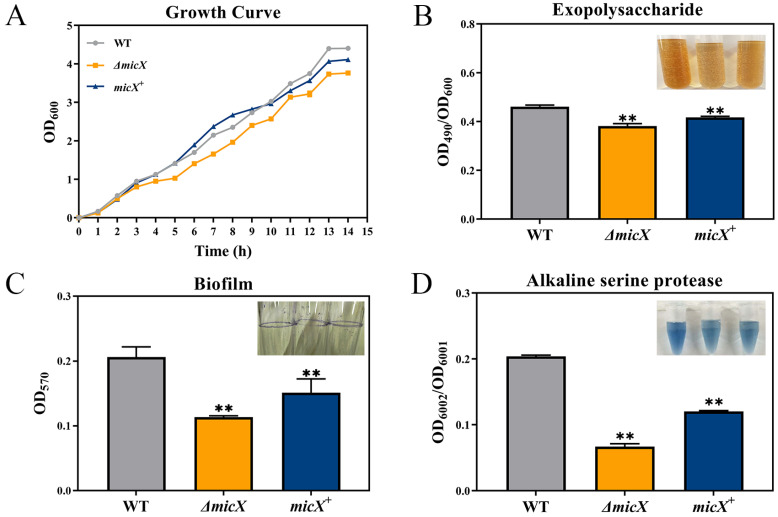 Figure 2
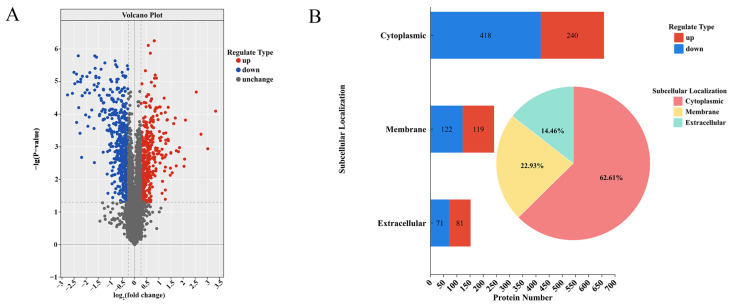 Figure 3
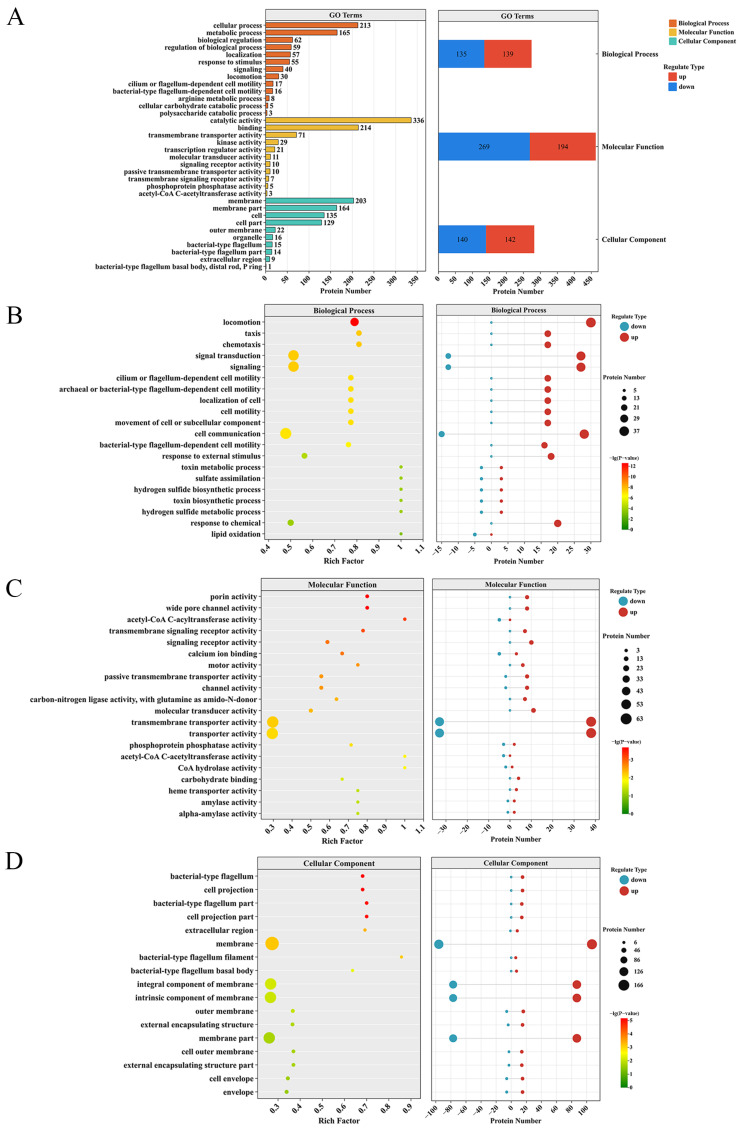 Figure 4
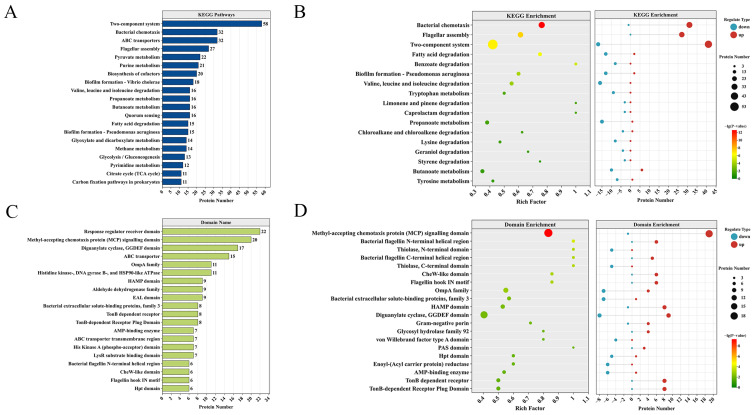 Figure 5
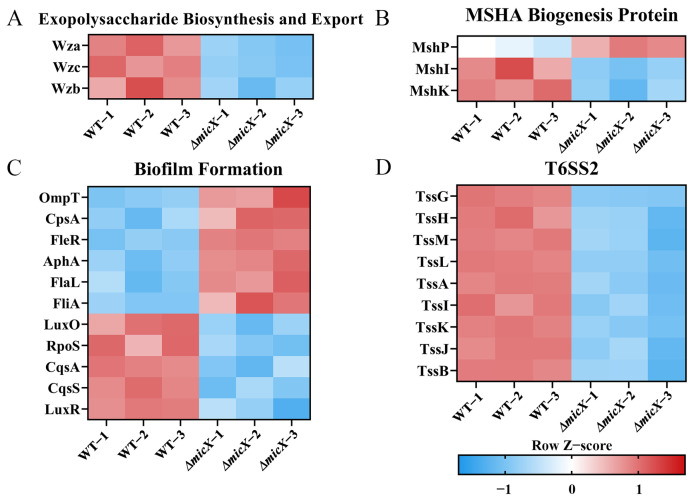 Figure 6
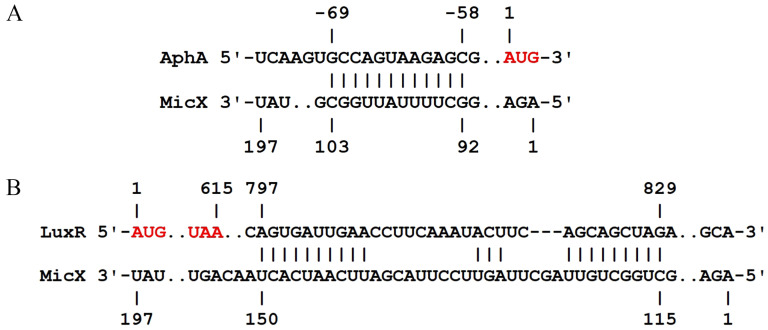 Figure 7
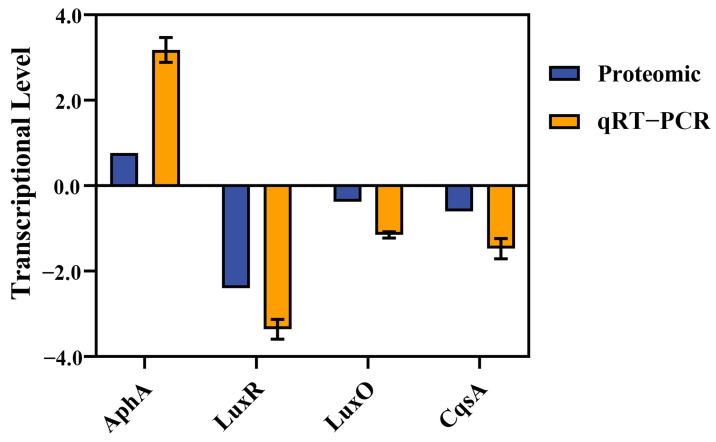 Figure 8
Peer Reviews
No public reviews on file for this paper yet. If you reviewed it on a platform where reviews are public (OpenReview, ICLR, NeurIPS, ICML), you can paste yours below so the community can read it here.
Videos
No videos yet. Explain this paper in a talk, walkthrough, or lecture? Add one.
Taxonomy
TopicsVibrio bacteria research studies · Bacterial biofilms and quorum sensing · Aquaculture disease management and microbiota