The “Radicular Tank”: A Novel Concept in Endodontics Achieved with the MEA Inverse Taper® Technique
Giovanni Messina, Gaia Bonandi, Marta Marchica, Marta Longo, Luigi Stagno d’Alcontres, Lusien Distefano, Antonino Cacioppo, Pier Edoardo Maltagliati, Calogero Bugea, Eugenio Pedullà, Elena Bardellini

TL;DR
A new endodontic technique called MEA Inverse Taper® creates a fluid reservoir in root canals, improving cleaning and preserving tooth structure.
Contribution
The MEA Inverse Taper® technique introduces a reversed taper design that forms a Radicular Tank for better irrigant retention.
Findings
MEA Inverse Taper® retained dye in the coronal and middle thirds of canals, confirming the Radicular Tank formation.
Compared to MTWO, it preserved canal curvature and removed less coronal dentin.
The technique minimized irrigant displacement and created a visually persistent dye environment.
Abstract
Background: Successful root canal treatment depends on the synergy between mechanical instrumentation and chemical disinfection. The internal canal geometry, particularly taper configuration, critically influences irrigant flow and penetration. Conventional taper designs tend to displace irrigants coronally, creating stagnation zones and limiting cleaning efficacy. The MEA Inverse Taper® technique introduces a reversed taper geometry designed to retain irrigant within the canal during shaping, forming a fluid reservoir termed the Radicular Tank (RT). This proof-of-concept study aimed to experimentally demonstrate the formation of the RT generated by the MEA Inverse Taper® design and to compare its qualitative hydrodynamic and shaping behavior with a conventional rotary system (MTWO). Methods: Standardized transparent canal models were instrumented using either the MEA Inverse Taper® or…
Genes, proteins, chemicals, diseases, species, mutations and cell lines named across the full text — each resolved to its canonical identifier and authoritative record.
Click any figure to enlarge with its caption.
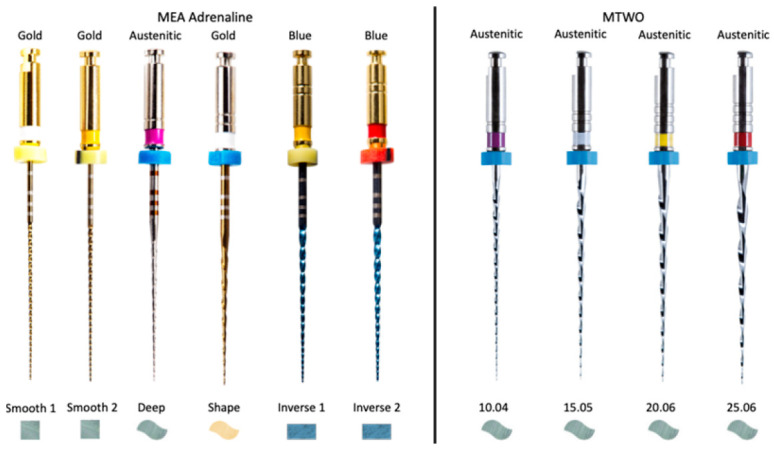 Figure 1
 Figure 2
 Figure 3
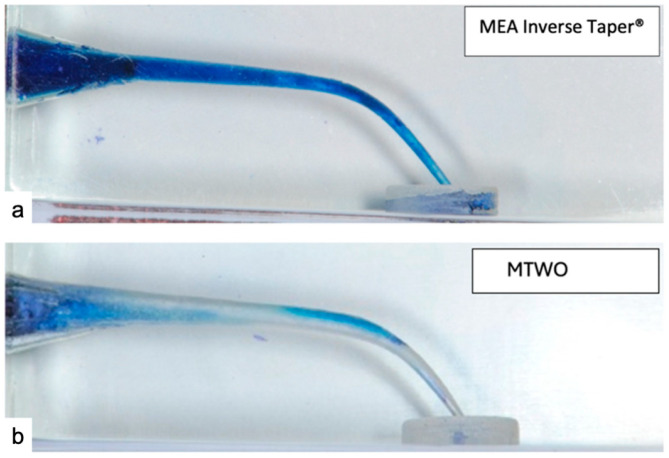 Figure 4
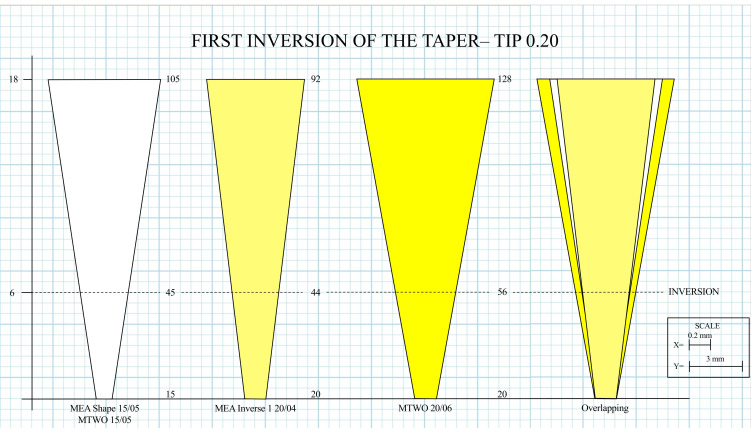 Figure 5
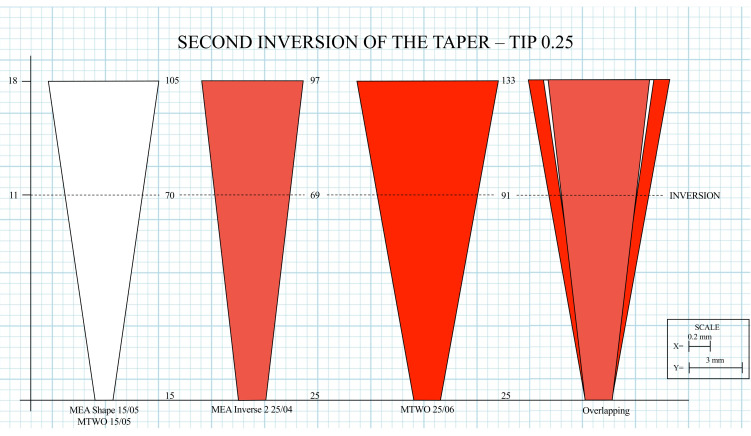 Figure 6
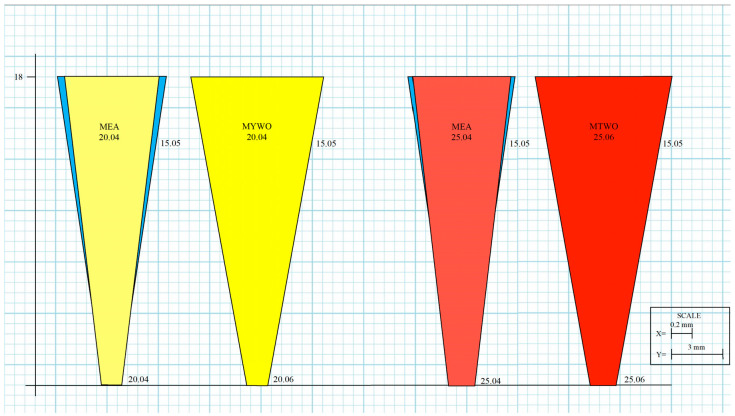 Figure 7
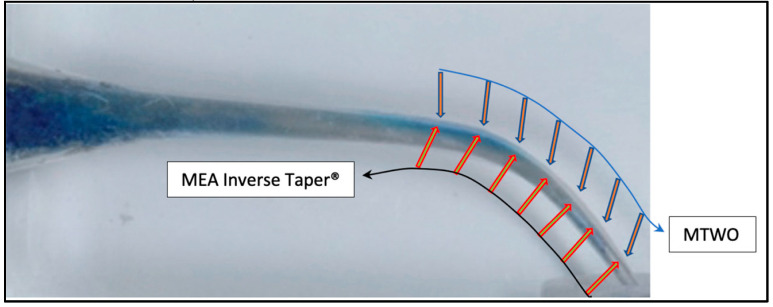 Figure 8
Peer Reviews
No public reviews on file for this paper yet. If you reviewed it on a platform where reviews are public (OpenReview, ICLR, NeurIPS, ICML), you can paste yours below so the community can read it here.
Videos
No videos yet. Explain this paper in a talk, walkthrough, or lecture? Add one.
Taxonomy
TopicsEndodontics and Root Canal Treatments · Dental materials and restorations · Dental Trauma and Treatments