Interpretable Machine Learning for Emergency Department Triage: Clinical Insights from 133,198 Patients Using the Korean Triage and Acuity Scale (KTAS)
MyoungJe Song, Jongsun Kim, Eun-Chul Jang, SoonChan Kwon

TL;DR
This study creates a transparent machine learning model to improve emergency room triage decisions using patient data from over 133,000 cases.
Contribution
The novel contribution is an interpretable machine learning framework for emergency triage that aligns with clinical logic and provides transparent decision-making.
Findings
The Random Forest model was chosen for its balance of accuracy (91.6%) and interpretability.
Pain score, age, and systolic blood pressure were identified as key predictors aligned with clinical logic.
Explainable AI techniques confirmed model transparency and decision consistency in triage assessments.
Abstract
Background/Objectives: Emergency room severity classification (KTAS) is essential for patient safety but has limitations due to its reliance on subjective judgment. Existing machine learning models have not been trusted in clinical settings due to their opaque ‘black box’ nature in decision-making processes. To overcome this, this study aims to develop an explainable machine learning framework that provides a transparent basis for judgment with high accuracy. Method: We retrospectively analyzed 133,198 emergency room visits from 2022 to 2024. We trained Random Forest (RF) and XGBoost models using vital signs and pain scores and applied explainable AI (XAI) techniques to ensure model transparency. Results: Although XGBoost showed the highest predictive performance (94.7% accuracy within a ±1 error margin), we ultimately selected the RF model, which provides a good balance of predictive…
Genes, proteins, chemicals, diseases, species, mutations and cell lines named across the full text — each resolved to its canonical identifier and authoritative record.
Click any figure to enlarge with its caption.
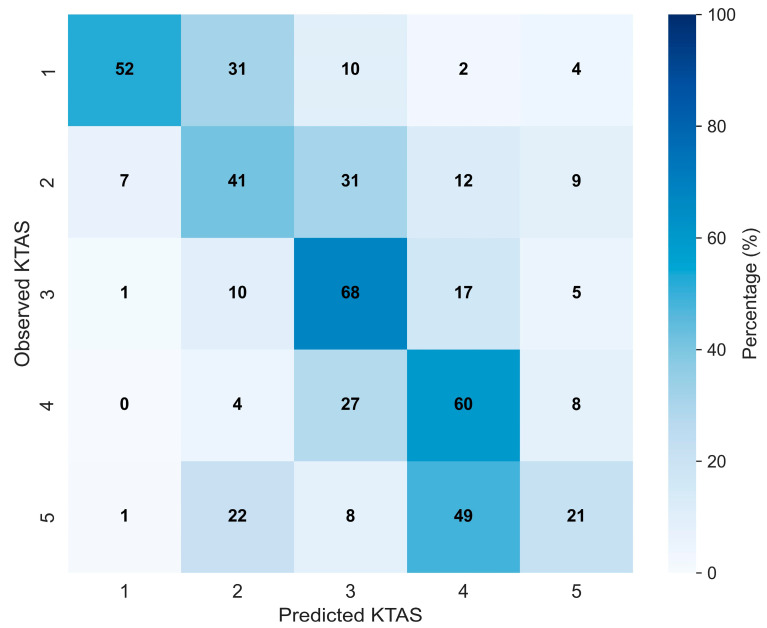 Figure 1
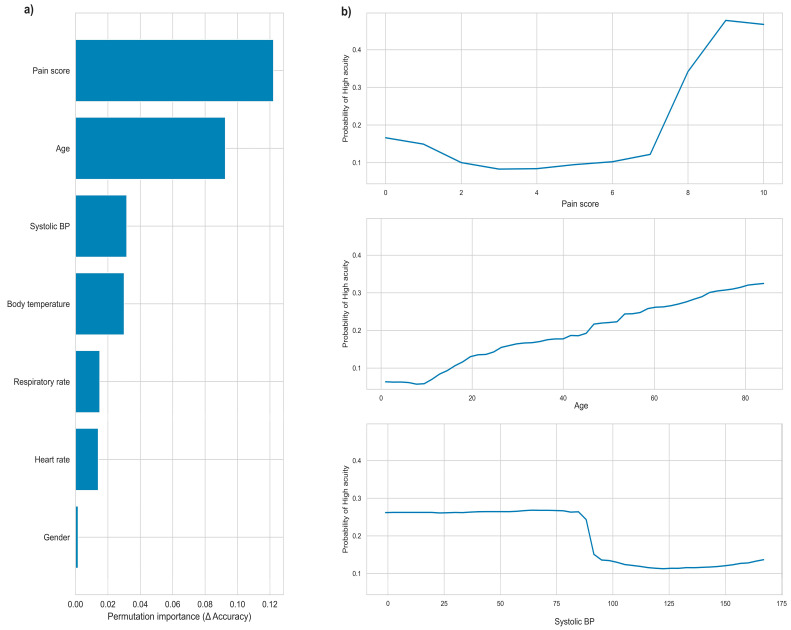 Figure 2
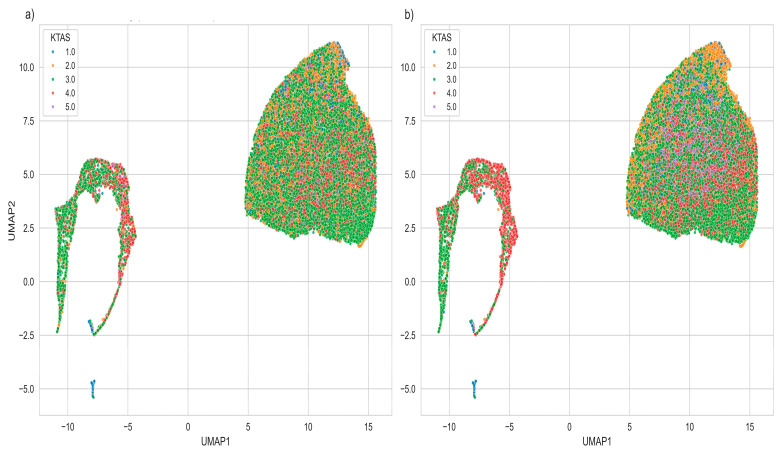 Figure 3
Peer Reviews
No public reviews on file for this paper yet. If you reviewed it on a platform where reviews are public (OpenReview, ICLR, NeurIPS, ICML), you can paste yours below so the community can read it here.
Videos
No videos yet. Explain this paper in a talk, walkthrough, or lecture? Add one.
Taxonomy
TopicsMachine Learning in Healthcare · Emergency and Acute Care Studies · Sepsis Diagnosis and Treatment