Paroxysmal Hemidystonia as the Presenting Manifestation of Previously Undiagnosed Diabetes Mellitus
Subhankar Chatterjee, Samya Sengupta, Ritwik Ghosh, Julián Benito-León, Souvik Dubey

TL;DR
A 72-year-old man with unexplained paroxysmal dystonia was found to have undiagnosed diabetes, showing that dystonia can be a rare early sign of hyperglycemia.
Contribution
This case expands the known movement disorders associated with hyperglycemia to include paroxysmal hemidystonia as a possible initial sign of diabetes.
Findings
The patient's abnormal movements resolved after correcting hyperglycemia.
Brain imaging showed no acute striatal lesion, but subtle hypometabolism in the left cerebellum was observed post-recovery.
The case emphasizes the importance of glucose testing in patients with new-onset paroxysmal hyperkinetic movements.
Abstract
Hyperglycemia-related movement disorders classically present as hemichorea-hemiballismus, whereas dystonia is far less common and may occasionally precede the recognition of diabetes mellitus. A 72-year-old man presented with a 3-month history of recurrent, stereotyped dystonic spells involving the right side of the face, arm, and leg. These episodes occurred approximately twice per minute and lasted about 5 seconds each. Initial laboratory testing revealed a plasma glucose level of 494 mg/dL and an HbA1c of 16.1%, consistent with previously unrecognized diabetes mellitus. Electrolyte levels, electroencephalography, cerebrospinal fluid analysis, and evaluation for autoimmune encephalopathy were unremarkable. Brain MRI showed only a chronic lacunar infarct in the left basal ganglia, with no evidence of an acute striatal lesion. The abnormal movements resolved completely within 3 days…
Genes, proteins, chemicals, diseases, species, mutations and cell lines named across the full text — each resolved to its canonical identifier and authoritative record.
Click any figure to enlarge with its caption.
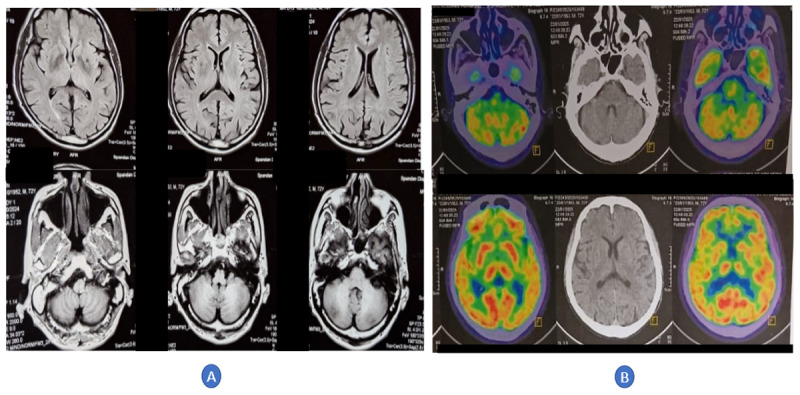 Figure 1
Peer Reviews
No public reviews on file for this paper yet. If you reviewed it on a platform where reviews are public (OpenReview, ICLR, NeurIPS, ICML), you can paste yours below so the community can read it here.
Videos
No videos yet. Explain this paper in a talk, walkthrough, or lecture? Add one.
Taxonomy
TopicsNeurological and metabolic disorders · Autoimmune Neurological Disorders and Treatments · Glycogen Storage Diseases and Myoclonus