Collision Integrals for Transport in Plasmas: The Phenomenological Approach
Fernando Pirani, Massimiliano Bartolomei, Gianpiero Colonna, Annarita Laricchiuta

TL;DR
This paper discusses a method for calculating plasma transport properties using collision integrals derived from a phenomenological approach.
Contribution
The paper introduces a recent generalization of correlation formulas impacting collision integrals involving silicon species.
Findings
The phenomenological approach provides a physics-based framework for deriving transport cross sections.
Recent generalizations of correlation formulas affect collision integrals involving silicon species.
The method's validation and features are reviewed for plasma transport characterization.
Abstract
The accuracy of transport properties, essential to the characterization of technological plasmas of interest in many fields, relies on the fundamental information about the collision integrals for the binary interactions in the system. The phenomenological approach has been demonstrated to provide a very useful theoretical framework for the derivation of transport cross sections, and in turn collision integrals, by a physics-sound description of the chemical species interaction. The features of the method and its validation are here briefly reviewed and the impact of the recent generalization of the correlation formulas on collision integrals for interactions involving Si species is estimated.
Genes, proteins, chemicals, diseases, species, mutations and cell lines named across the full text — each resolved to its canonical identifier and authoritative record.
Click any figure to enlarge with its caption.
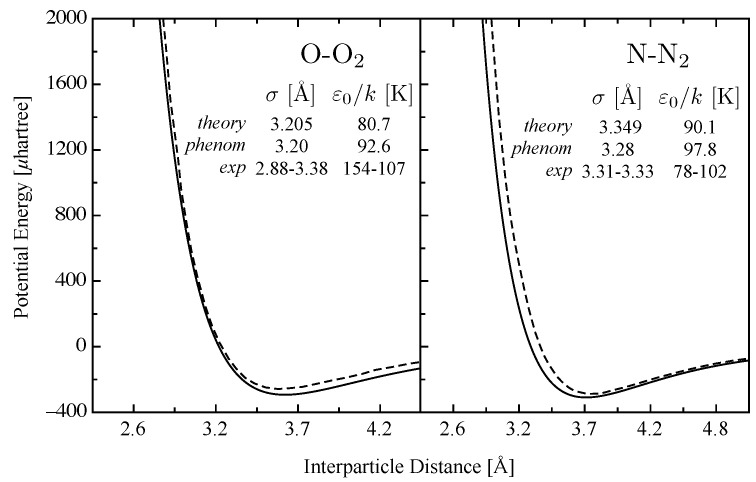 Figure 1
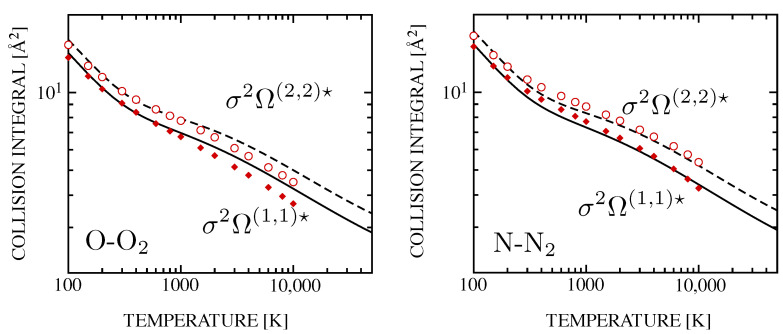 Figure 2
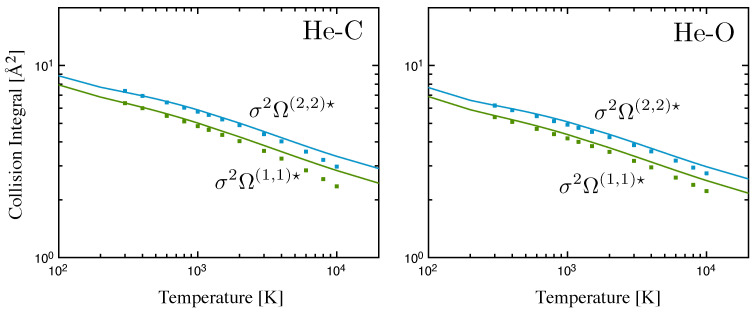 Figure 3
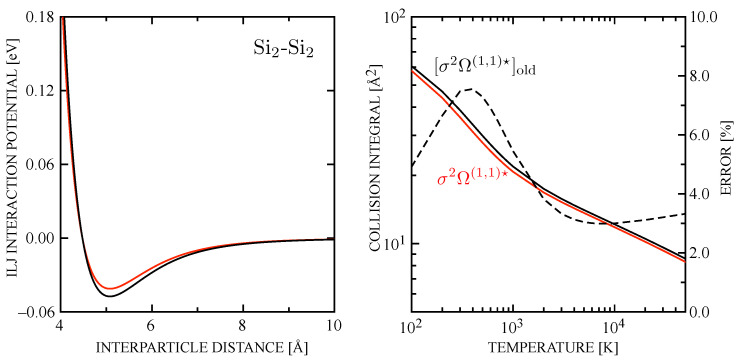 Figure 4
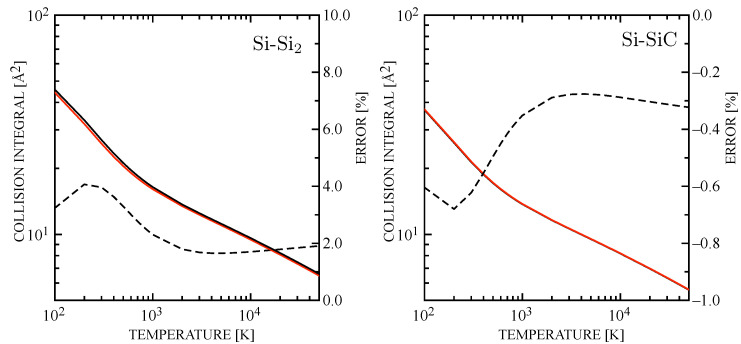 Figure 5
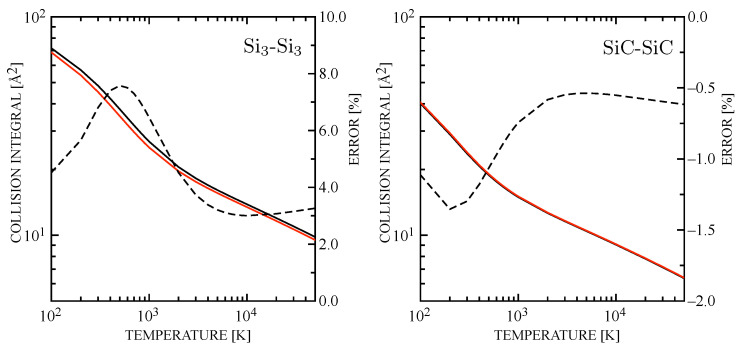 Figure 6
Peer Reviews
No public reviews on file for this paper yet. If you reviewed it on a platform where reviews are public (OpenReview, ICLR, NeurIPS, ICML), you can paste yours below so the community can read it here.
Videos
No videos yet. Explain this paper in a talk, walkthrough, or lecture? Add one.
Taxonomy
TopicsVacuum and Plasma Arcs · Plasma Diagnostics and Applications · Dust and Plasma Wave Phenomena