Paradoxes in the Ontological Classification of Glia—Evidence for an Important New Class of Brain Cells with Primary Functions in Iron Regulation
Adrienne E. Milward, Rebecca J. Hood, Chan-An Lin, Conceição Bettencourt, Elvis Acquah, Jake Brooks, Joanna F. Collingwood, Yoshiteru Kagawa, Samantha J. Richardson, Yuting Wu, Yi Lu, Mirella Dottori, Daniel M. Johnstone

TL;DR
This paper proposes a new class of brain cells called 'ferriglia' that primarily regulate iron, challenging existing classifications of glial cells.
Contribution
The paper introduces 'ferriglia' as a novel class of glial cells with primary functions in iron regulation.
Findings
Current glial paradigms show discrepancies in empirical, evolutionary, and pragmatic perspectives.
A subset of iron-rich glial cells may have primary functions in iron regulation rather than myelination.
Ferriglia may play a role in various neurological and psychiatric disorders.
Abstract
The ontological categorization of the cellular elements of the brain was proposed over a century ago by Santiago Ramón y Cajal (neurons, astroglia) and Pío del Río-Hortega (oligodendroglia, microglia). It combines histochemical observations of morphology with allied inferences about the specialized functions and origins (ectoderm or mesoderm) of each cellular element. This ontology shapes modern neuroscience, with the main non-neuronal cells—astroglia, oligodendroglia and microglia—viewed as having distinct primary roles relating respectively to the metabolic support, myelination and immunoprotection of neurons, the information signaling cells. Yet contemporary techniques, ranging from electrophysiology to single-cell transcriptomics and ultrahigh resolution spectroscopy, are revealing intersecting molecular profiles and functional capacities of these cell groups, for example metabolic…
Genes, proteins, chemicals, diseases, species, mutations and cell lines named across the full text — each resolved to its canonical identifier and authoritative record.
Click any figure to enlarge with its caption.
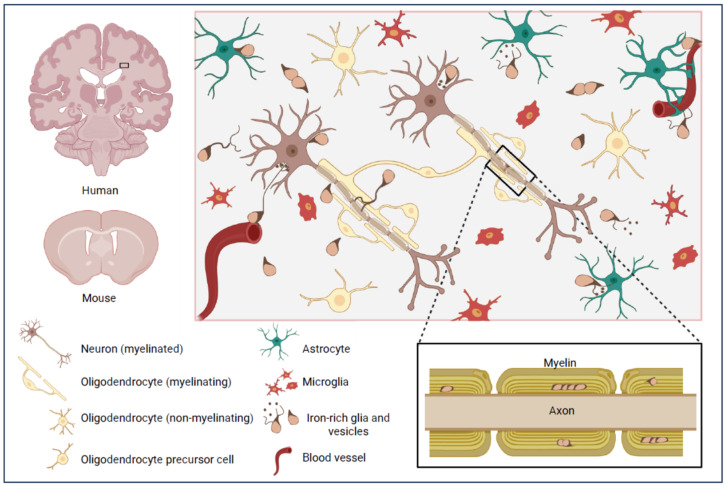 Figure 1
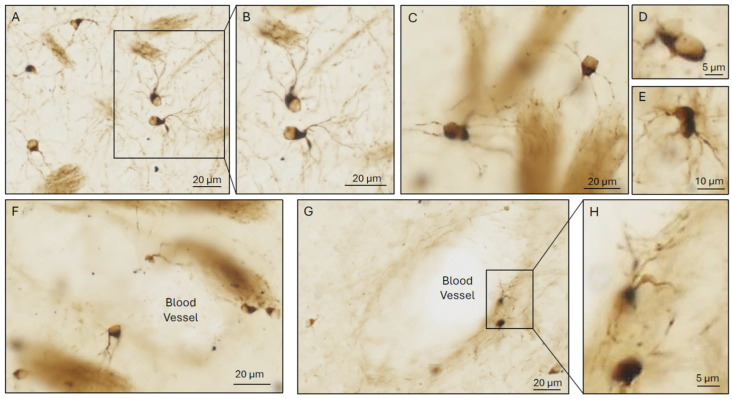 Figure 2
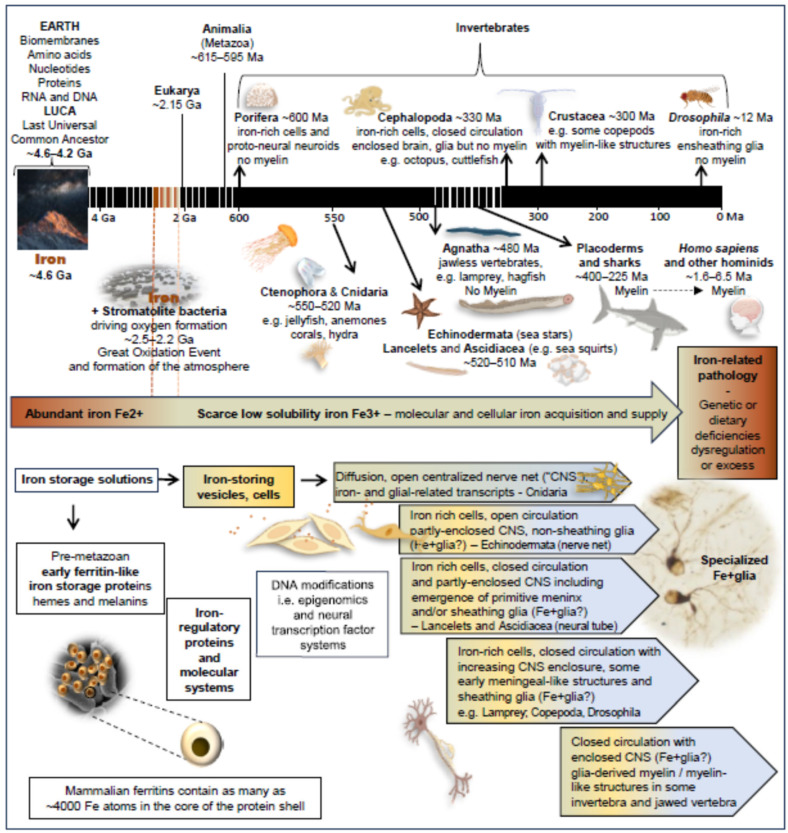 Figure 3
Peer Reviews
No public reviews on file for this paper yet. If you reviewed it on a platform where reviews are public (OpenReview, ICLR, NeurIPS, ICML), you can paste yours below so the community can read it here.
Videos
No videos yet. Explain this paper in a talk, walkthrough, or lecture? Add one.
Taxonomy
TopicsNeuroinflammation and Neurodegeneration Mechanisms · Neurogenesis and neuroplasticity mechanisms · Neurology and Historical Studies