Androgen Receptor Point Mutations: A Mechanism of Therapeutic Resistance and a Framework for Rational Drug Design
Avan Colah, Sára Ferková, Han Zhang, Glenn Liu, Leonard MacGillivray, Pierre-Luc Boudreault, William Ricke

TL;DR
This review explains how mutations in the androgen receptor lead to drug resistance in prostate cancer and highlights the need for new drug design strategies.
Contribution
The paper provides a structural and functional framework for understanding AR point mutations and their impact on drug resistance in prostate cancer.
Findings
Point mutations in the androgen receptor's ligand-binding domain cause resistance to therapeutics by altering ligand-receptor interactions.
Failure to inhibit the motility of the AF-2 region is a common mechanism of resistance across multiple drugs and mutations.
Combination therapies using orthosteric and allosteric inhibitors are being explored, but none have reached clinical trials.
Abstract
Point mutations in the androgen receptor ligand-binding domain are a clinical cause of drug resistance in castration resistant prostate cancer. This review examines how androgen receptor point mutations alter the structure of the ligand-binding domain and switch the function of some therapeutics from blocking receptor signaling to activating signaling. Structural studies demonstrate how point mutations change ligand–receptor interactions, with particular emphasis on changes that occur in the AF-2 region. Inability of ligands to inhibit the motility of the AF-2 region has been identified as the common cause of resistance across multiple clinical therapeutics and point mutations. To overcome resistance, researchers are exploring a combination of orthosteric and allosteric inhibitors and drugs targeting other receptor regions, although clinical translation has not been achieved.…
Genes, proteins, chemicals, diseases, species, mutations and cell lines named across the full text — each resolved to its canonical identifier and authoritative record.
Click any figure to enlarge with its caption.
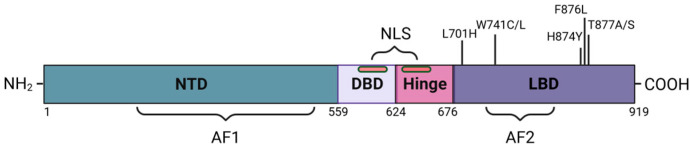 Figure 1
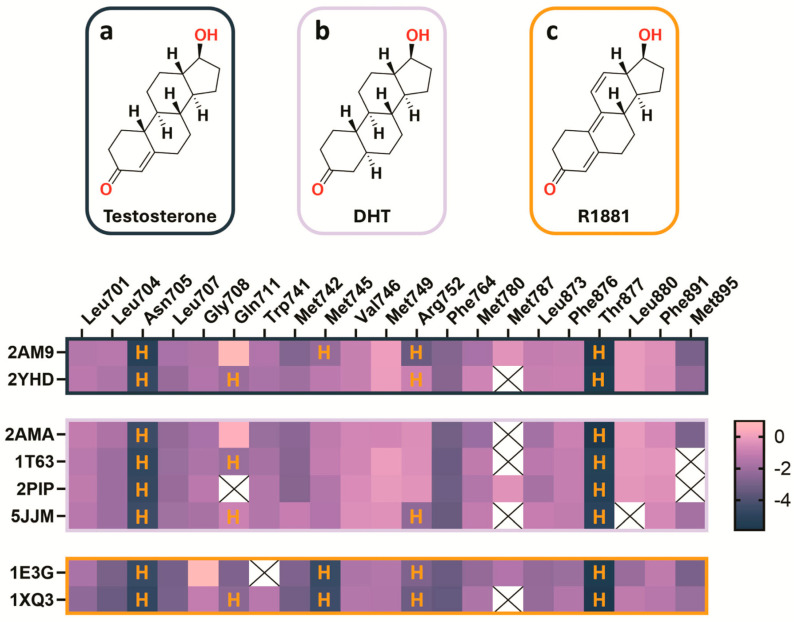 Figure 2
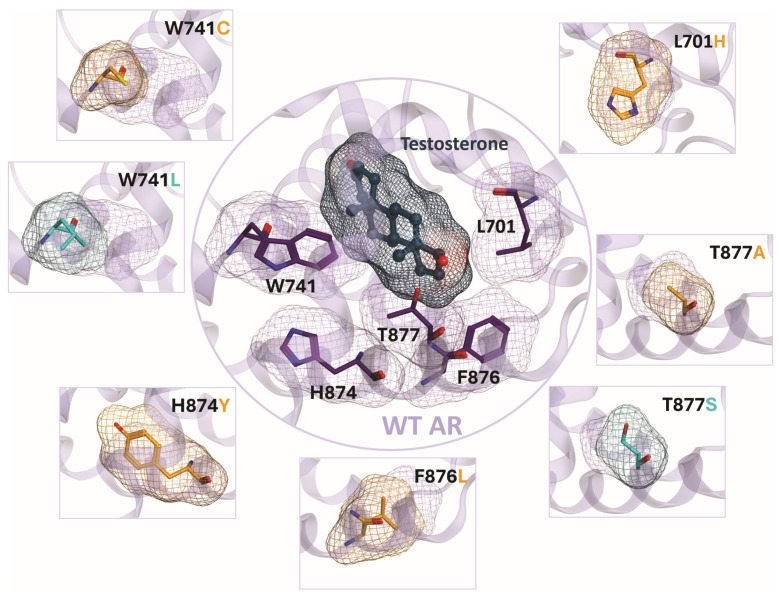 Figure 3
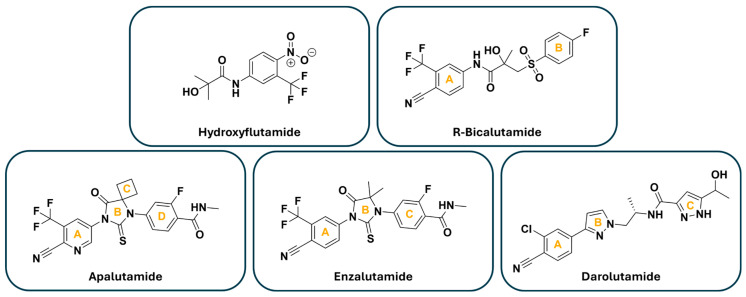 Figure 4
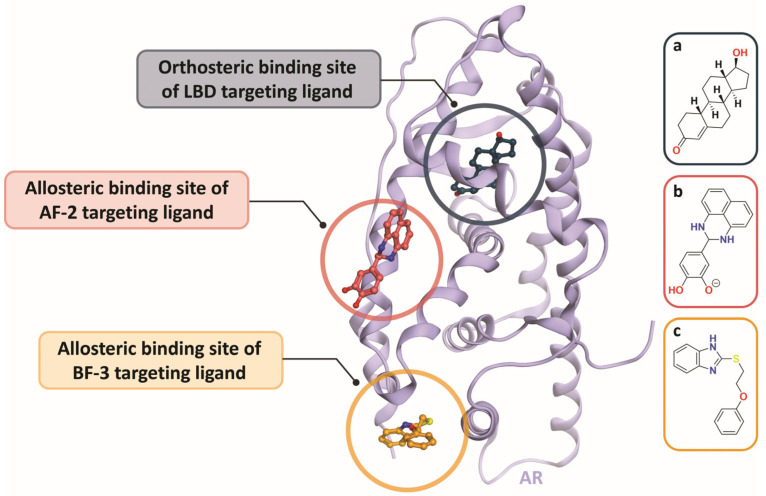 Figure 5
Peer Reviews
No public reviews on file for this paper yet. If you reviewed it on a platform where reviews are public (OpenReview, ICLR, NeurIPS, ICML), you can paste yours below so the community can read it here.
Videos
No videos yet. Explain this paper in a talk, walkthrough, or lecture? Add one.
Taxonomy
TopicsProstate Cancer Treatment and Research · Prostate Cancer Diagnosis and Treatment · Estrogen and related hormone effects