Diagnostic Accuracy and Clinical Utility of Salivary Biomarkers in Oral Squamous Cell Carcinoma: A Meta-Analysis
Arbi Wijaya, Vera Julia, Nurtami Soedarsono, Lilies D. Sulistyani, Moh Adhitya Latief, Turmidzi Fath, Bayu Brahma, Alif Rizqy Soeratman, Denni Joko Purwanto, Yutaro Higashi, Tsuyoshi Sugiura

TL;DR
Salivary biomarkers have moderate accuracy for diagnosing oral cancer but are best used in high-risk groups, not as general screening tools.
Contribution
This meta-analysis evaluates the diagnostic accuracy and clinical utility of salivary biomarkers for oral squamous cell carcinoma in different population settings.
Findings
Salivary biomarkers have pooled sensitivity of 0.64 and specificity of 0.71 for OSCC detection.
They are more effective at identifying positive cases than ruling out disease in high-prevalence settings.
Biomarkers show limited utility for general population screening but may aid in risk-stratified populations.
Abstract
Salivary biomarkers demonstrate moderate diagnostic accuracy and limited clinical utility when applied as complementary tools for OSCC classification in high-prevalence settings where the pre-test probability exceeds 10%. Their overall performance supports a role in their use as risk-stratification instruments in carefully selected patient populations, rather than as stand-alone diagnostics or screening tests for the general population. Notably, these biomarkers exhibit greater detection capacity. The test has greater inclusion than exclusion, meaning it is more effective at identifying potentially positive cases than at reliably ruling out disease. As a consequence, capacity and post-test probabilities remain clinically concerning even after a negative result, particularly in high-risk individuals and high-risk patients. Background: Oral squamous cell carcinoma (OSCC) remains a major…
Genes, proteins, chemicals, diseases, species, mutations and cell lines named across the full text — each resolved to its canonical identifier and authoritative record.
Click any figure to enlarge with its caption.
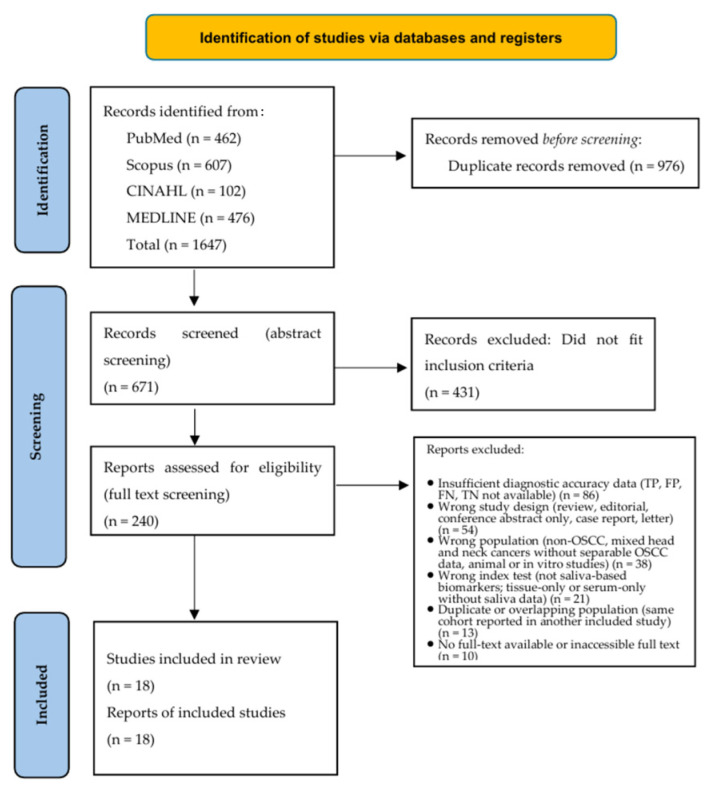 Figure 1
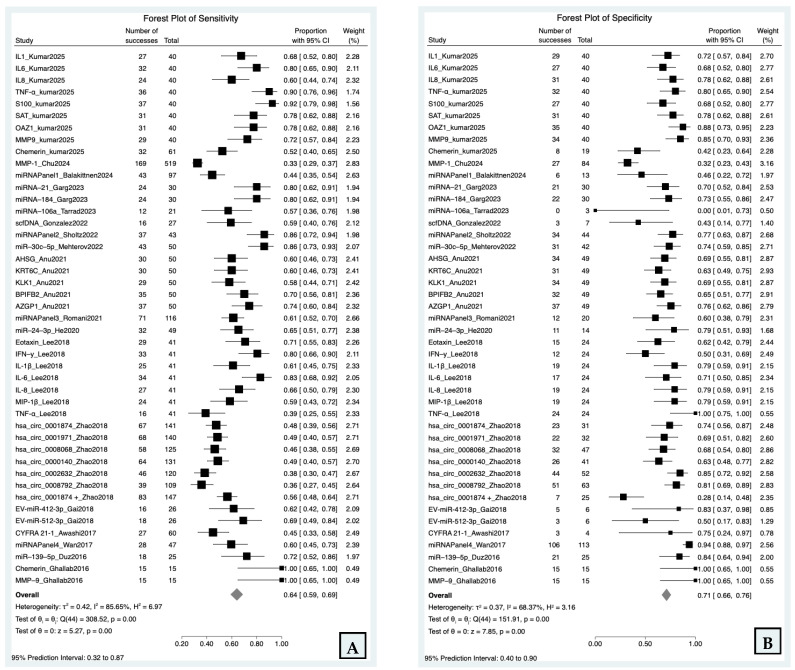 Figure 2
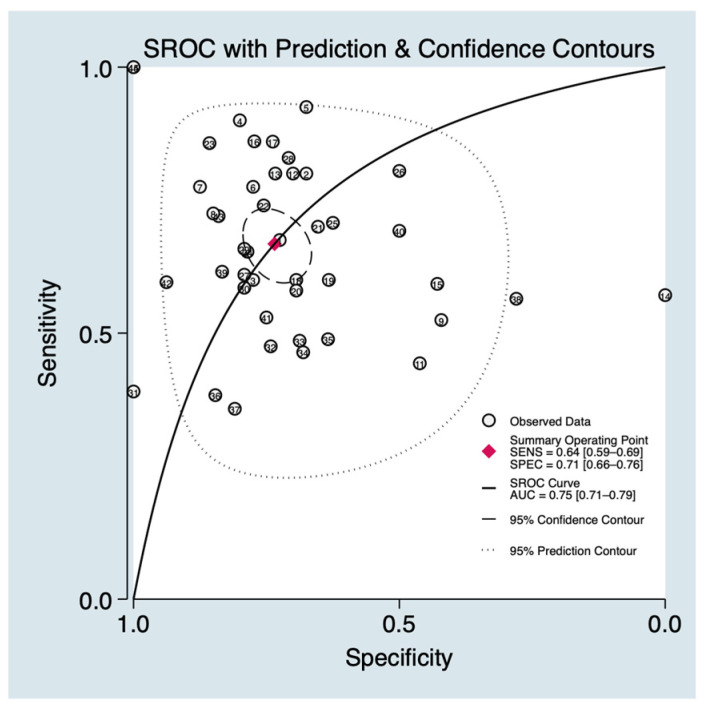 Figure 3
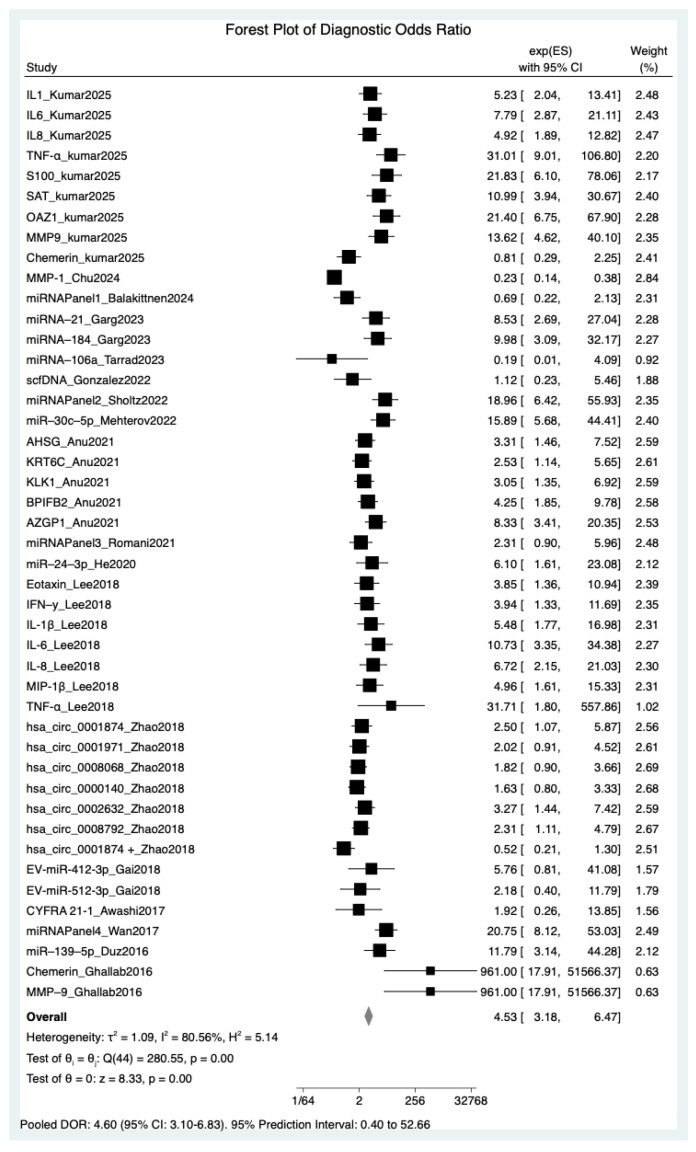 Figure 4
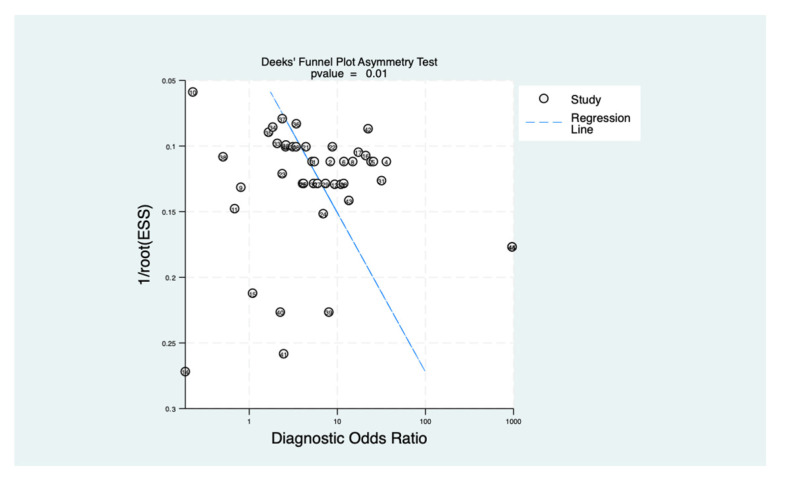 Figure 5
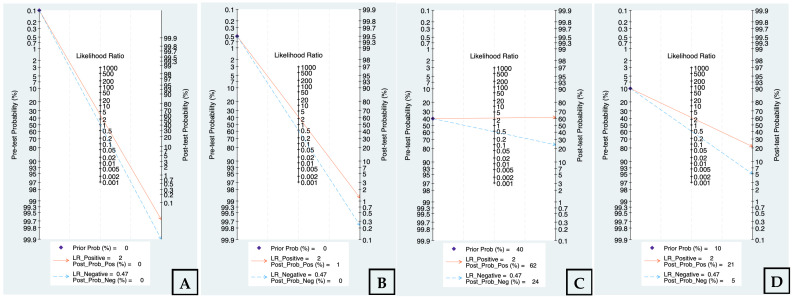 Figure 6
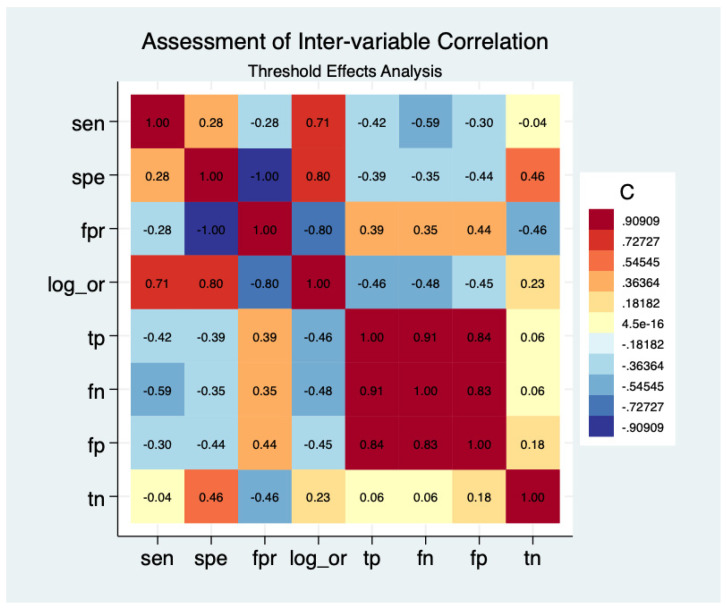 Figure 7
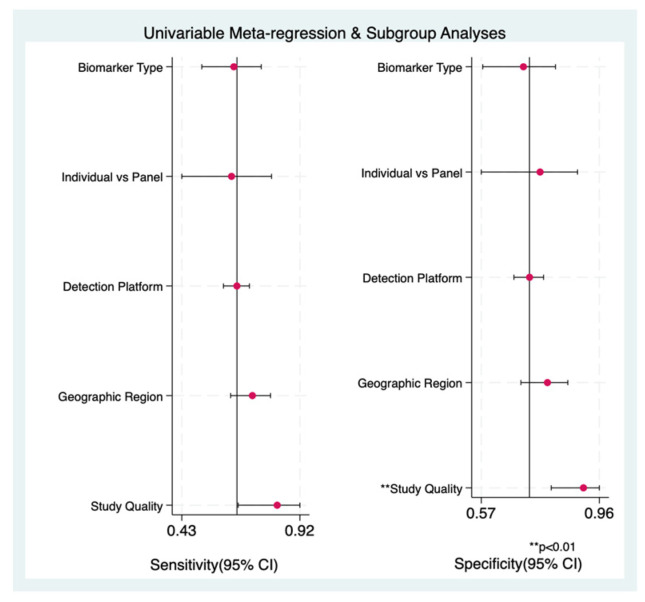 Figure 8
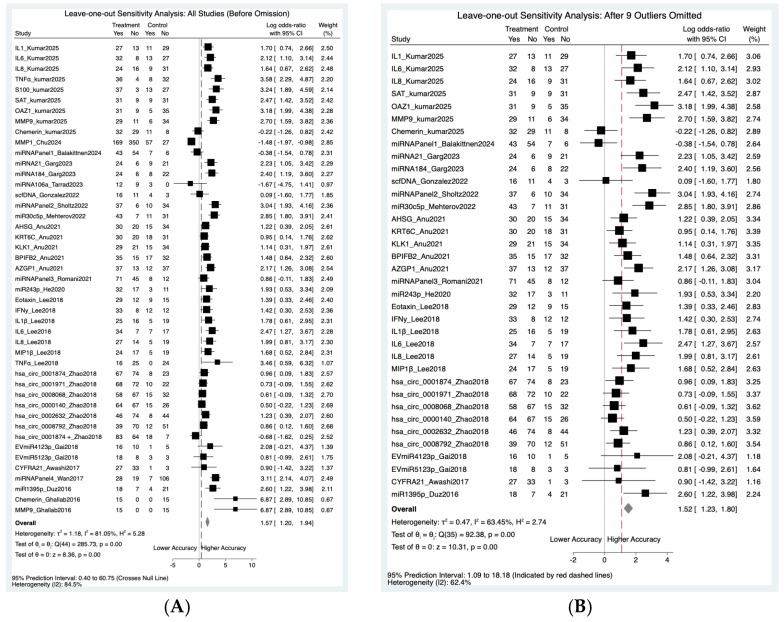 Figure 9
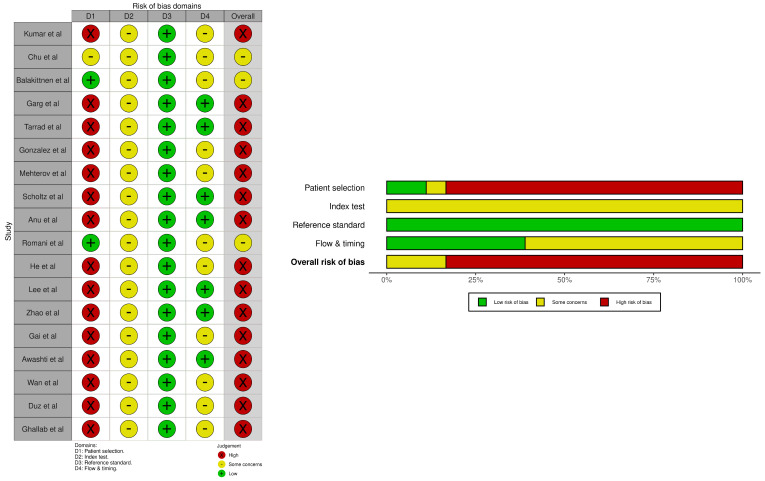 Figure 10
Peer Reviews
No public reviews on file for this paper yet. If you reviewed it on a platform where reviews are public (OpenReview, ICLR, NeurIPS, ICML), you can paste yours below so the community can read it here.
Videos
No videos yet. Explain this paper in a talk, walkthrough, or lecture? Add one.
Taxonomy
TopicsSalivary Gland Disorders and Functions · Head and Neck Cancer Studies · Oral Health Pathology and Treatment