Dual Roles of Ubiquitin-Specific Peptidase 10 (USP10) in Cancer
Yifei Zhai, Liming Zhou, Manhan Zhao, Qiong Lin

TL;DR
This paper reviews how USP10, an enzyme involved in cancer, can both suppress and promote tumor growth depending on the cancer type.
Contribution
The paper highlights the dual functional roles of USP10 in cancer and its potential as a therapeutic target.
Findings
USP10 deubiquitinates both tumor suppressor and oncogenic proteins.
Aberrant USP10 expression is linked to multiple cancer types.
USP10 inhibitors may serve as targeted cancer therapies.
Abstract
Ubiquitin-specific peptidase 10 (USP10) deubiquitinates multiple signaling proteins in cancer cells. These USP10 substrates contain both tumor suppressors and oncogenic proteins, thus conferring both inhibitory and promoting effects of USP10 on tumorigenesis and progression. This review focuses on the dual roles of USP10 in various cancer types and addresses the association of aberrant USP10 expression with the development of various types of cancers, including hepatocellular carcinoma, lung cancer, breast cancer, prostate cancer, gastric cancer, and acute and chronic myelogenous leukemia. In addition, this review discusses the potential applications of USP10 inhibitors as targeted drugs for cancer therapy.
Genes, proteins, chemicals, diseases, species, mutations and cell lines named across the full text — each resolved to its canonical identifier and authoritative record.
Click any figure to enlarge with its caption.
 Figure 1
 Figure 2
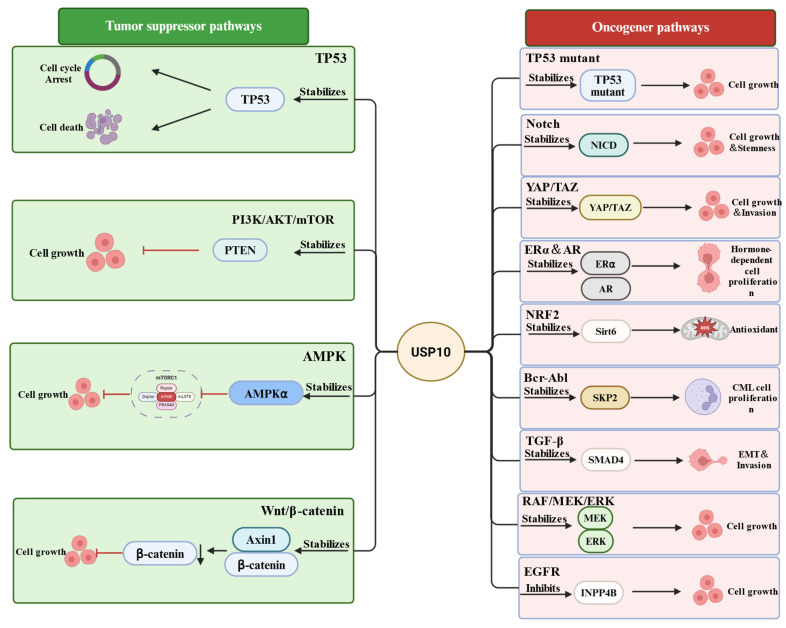 Figure 3
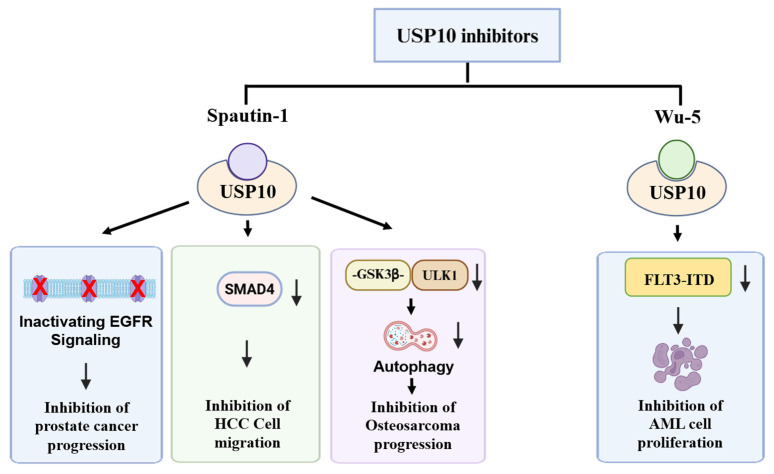 Figure 4
Peer Reviews
No public reviews on file for this paper yet. If you reviewed it on a platform where reviews are public (OpenReview, ICLR, NeurIPS, ICML), you can paste yours below so the community can read it here.
Videos
No videos yet. Explain this paper in a talk, walkthrough, or lecture? Add one.
Taxonomy
TopicsUbiquitin and proteasome pathways · Peptidase Inhibition and Analysis · 14-3-3 protein interactions