When Does a Spin Flip? Arrival Time Distributions and Information Propagation in Discrete Quantum Systems
Lionel Martellini

TL;DR
This paper compares different ways to calculate arrival times in quantum systems and explores their implications for information propagation.
Contribution
The paper clarifies that different time-of-arrival distributions correspond to distinct physical concepts rather than competing predictions.
Findings
Three TOA distributions are shown to represent fundamentally different physical notions.
The analysis is applied to XX spin chain systems to study information propagation.
The results suggest potential applications in quantum information science.
Abstract
We analyze three distinct approaches to time of arrival (TOA) distributions for discrete quantum systems using a spin-12 particle in a constant magnetic field as a paradigmatic example. We argue that these distributions should not be regarded as competing predictions for the same notion of arrival time, but rather relate to fundamentally different notions whose relevance depends on the physical context. These results are used to analyze information propagation arrival time distributions in XX spin chain systems, and discuss potential applications in quantum information science.
Genes, proteins, chemicals, diseases, species, mutations and cell lines named across the full text — each resolved to its canonical identifier and authoritative record.
Click any figure to enlarge with its caption.
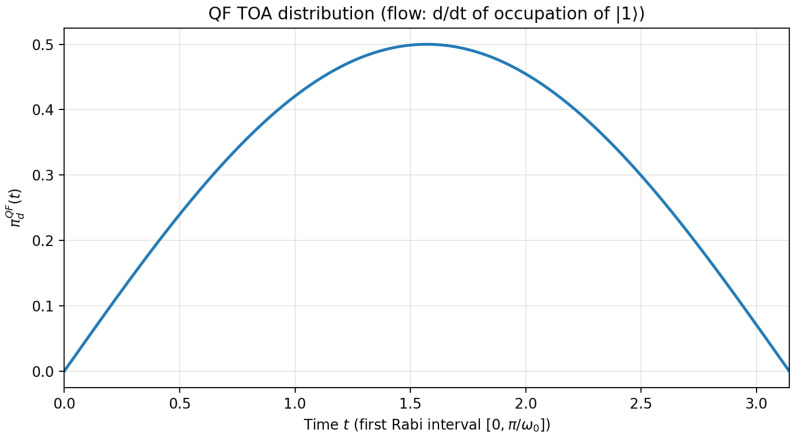 Figure 1
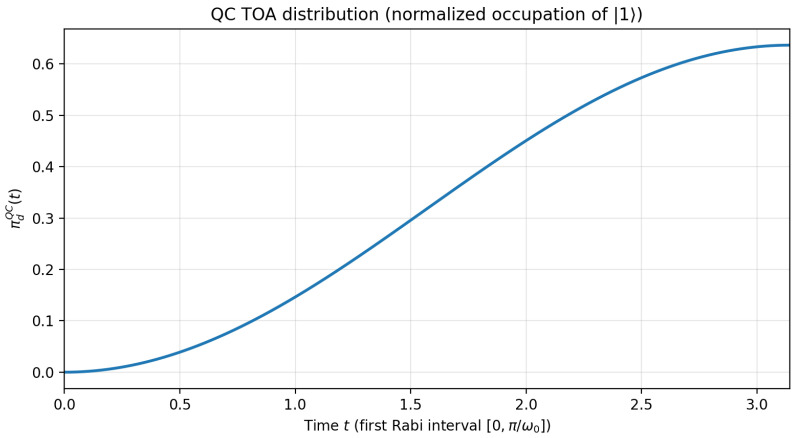 Figure 2
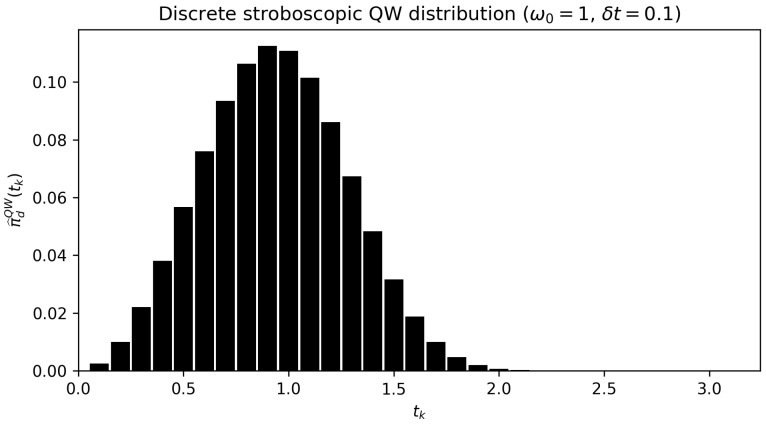 Figure 3
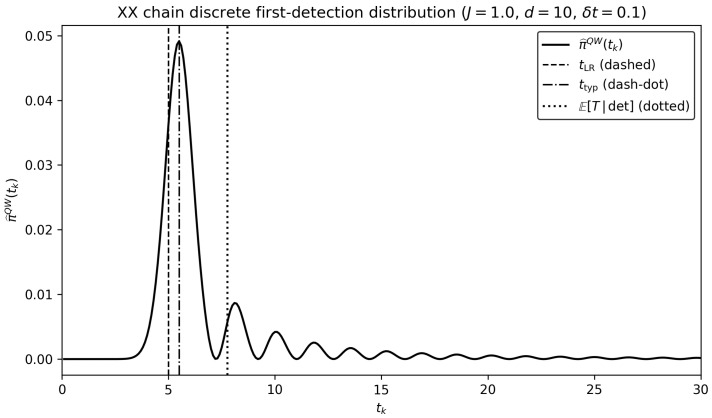 Figure 4
Peer Reviews
No public reviews on file for this paper yet. If you reviewed it on a platform where reviews are public (OpenReview, ICLR, NeurIPS, ICML), you can paste yours below so the community can read it here.
Videos
No videos yet. Explain this paper in a talk, walkthrough, or lecture? Add one.
Taxonomy
TopicsQuantum Mechanics and Applications · Statistical Mechanics and Entropy · Quantum chaos and dynamical systems