Poly(Ionic Liquids) and Ionogels for Electrochromic Devices: Material Design and Additive Manufacturing Strategies
Tatiana G. Statsenko, Ekaterina P. Baturina, Anna A. Nikitina, Sofia M. Morozova

TL;DR
This paper explores how combining poly(ionic liquids) and ionogels with 3D printing can improve electrochromic devices for smart energy management.
Contribution
The paper uniquely integrates structure–property–processing relationships of PILs, ionogels, and additive manufacturing for electrochromic devices.
Findings
PILs and ionogels offer high ionic conductivity and tunable properties suitable for 3D printing.
Design guidelines for ink rheology and printing modalities help optimize electrochromic device fabrication.
Integration of AM can reduce costs and enable complex structures in smart devices.
Abstract
Escalating requirements for smart energy management are driving advances in functional electrochromic devices (ECDs), which are pivotal for the regulation of light, heat, and reduction in energy consumption in buildings, transportation, and smart devices. However, the commercialization of ECDs is hindered by com plex designs, high fabrication costs, and slow switching speeds. Additive manufacturing (AM, 3D-printing) emerges as a promising approach to overcome these limitations, as it enables the creation of complex structures, enhances design flexibility, and can reduce production costs. For such printed devices, materials combining poly(ionic liquids) (PILs) with ionogels—an emerging and promising class of materials known for their high ionic conductivity, stability, and tunable properties—are particularly suitable for integration with 3D printing. Comparing previous reviews that…
Genes, proteins, chemicals, diseases, species, mutations and cell lines named across the full text — each resolved to its canonical identifier and authoritative record.
Click any figure to enlarge with its caption.
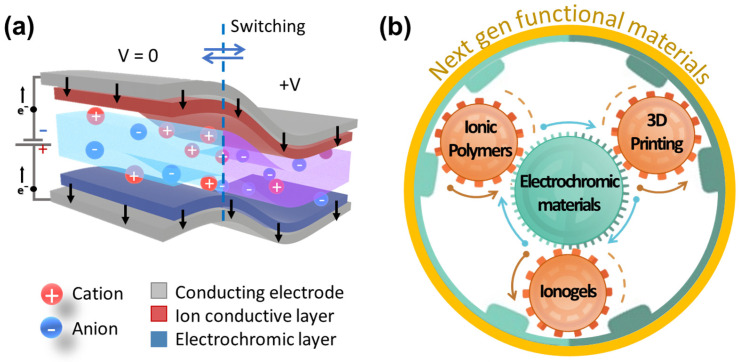 Figure 1
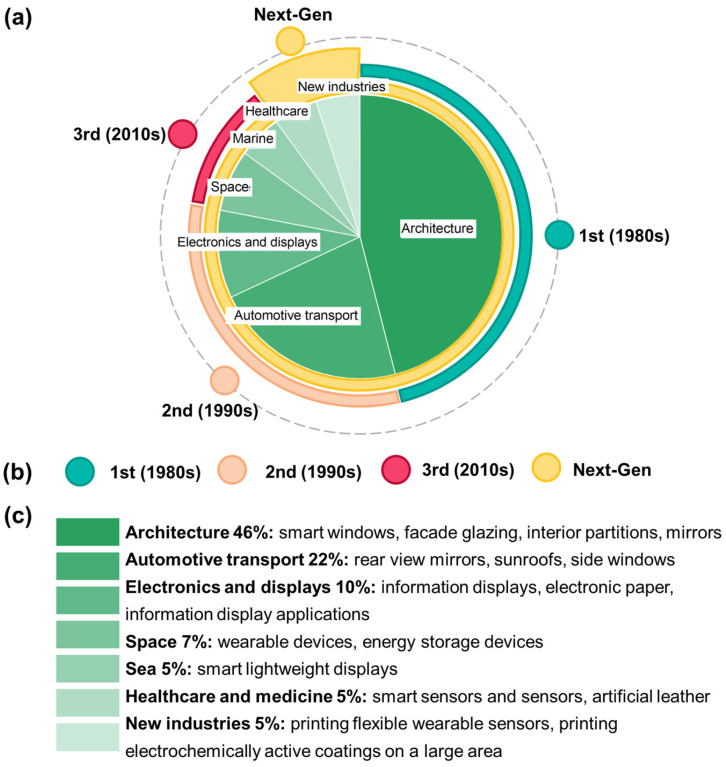 Figure 2
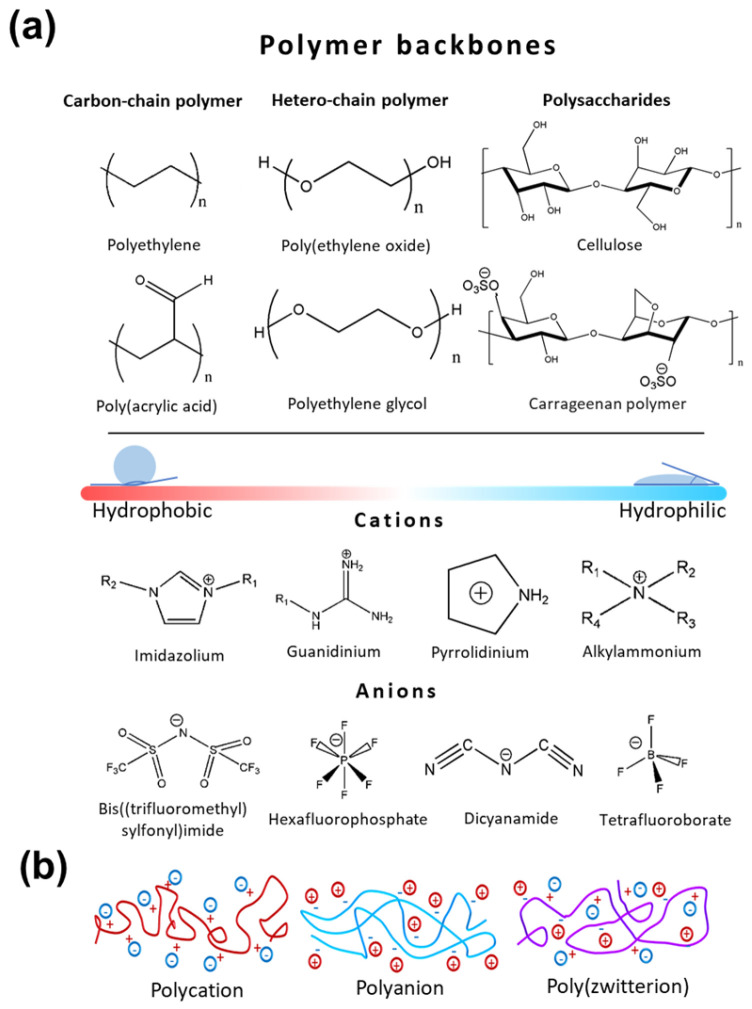 Figure 3
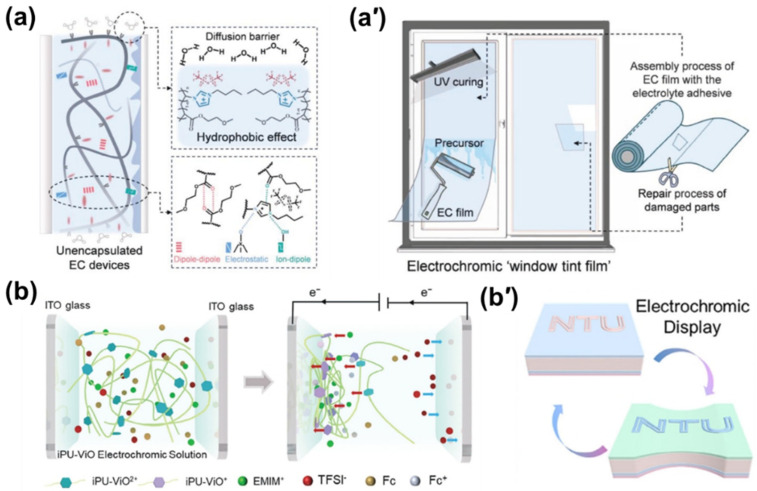 Figure 4
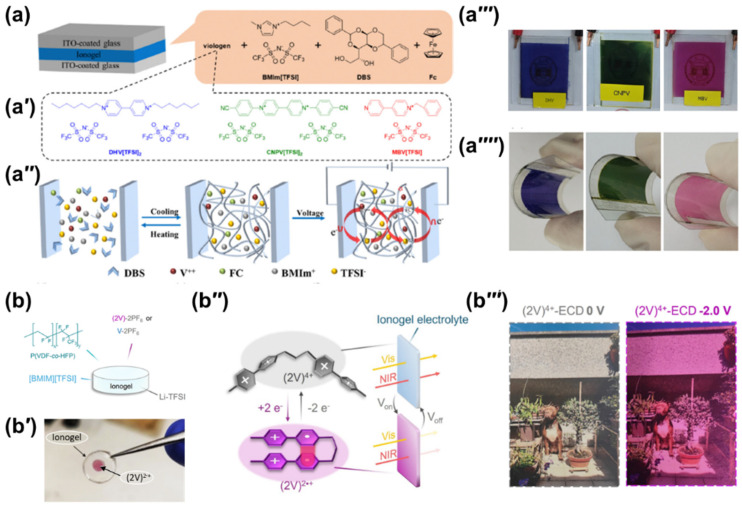 Figure 5
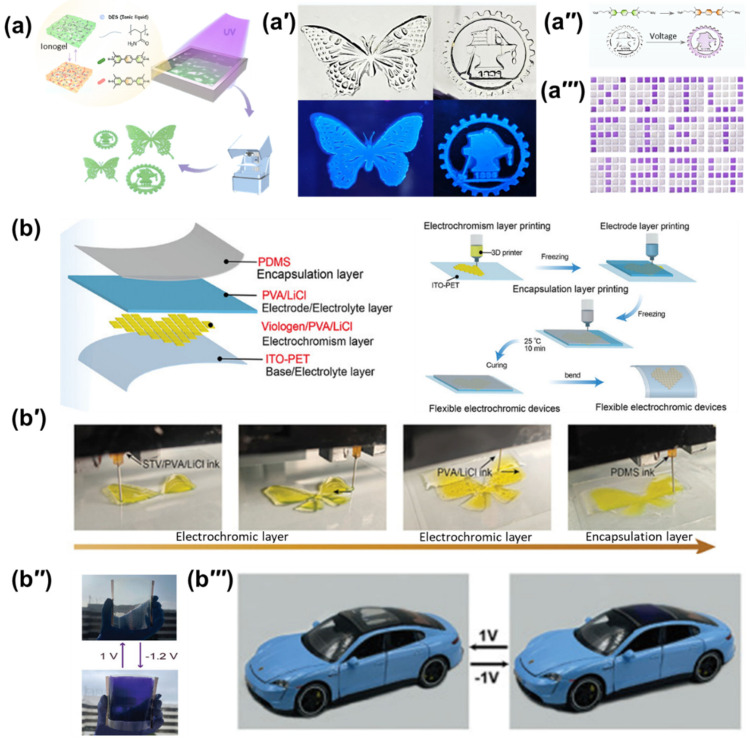 Figure 6
Peer Reviews
No public reviews on file for this paper yet. If you reviewed it on a platform where reviews are public (OpenReview, ICLR, NeurIPS, ICML), you can paste yours below so the community can read it here.
Videos
No videos yet. Explain this paper in a talk, walkthrough, or lecture? Add one.
Taxonomy
TopicsDielectric materials and actuators · Advanced Sensor and Energy Harvesting Materials · Ionic liquids properties and applications