Competing subclones and fitness diversity shape tumor evolution across cancer types
Hai Chen, Jingmin Shu, Rekha Mudappathi, Elaine Li, Panwen Wang, Leif Bergsagel, Ping Yang, Zhifu Sun, Logan Zhao, Changxin Shi, Jeffrey P Townsend, Carlo Maley, Li Liu

TL;DR
This paper introduces TEATIME, a computational tool that infers tumor evolution from single-timepoint data, revealing how competing subclones and fitness diversity shape cancer progression.
Contribution
TEATIME is a novel framework that models tumor evolution using single-timepoint data and introduces the concept of fitness diversity to quantify intratumor heterogeneity.
Findings
TEATIME estimates mutation rates, subclone emergence timing, and fitness diversity from bulk sequencing data.
Immune-hot microenvironments constrain subclonal expansion and reduce fitness diversity.
Early driver mutations in ancestral clones influence the fitness landscape and subclone selection.
Abstract
Intratumor heterogeneity arises from ongoing somatic evolution and complicates cancer diagnosis, prognosis, and treatment. Reconstructing evolutionary dynamics typically requires spatiotemporal samples, which are often unavailable in clinical settings. Computational approaches that can infer tumor evolutionary history from single-timepoint bulk sequencing data remain limited. We present estimating evolutionary events through single-timepoint sequencing (TEATIME), a novel computational framework that models tumors as mixtures of two competing cell populations: an ancestral clone with baseline fitness and a derived subclone with elevated fitness. Using cross-sectional bulk sequencing data, TEATIME estimates mutation rates, timing of subclone emergence, relative fitness, and number of generations of growth. To quantify intratumor fitness asymmetries, we introduce a novel metric—fitness…
Genes, proteins, chemicals, diseases, species, mutations and cell lines named across the full text — each resolved to its canonical identifier and authoritative record.
Click any figure to enlarge with its caption.
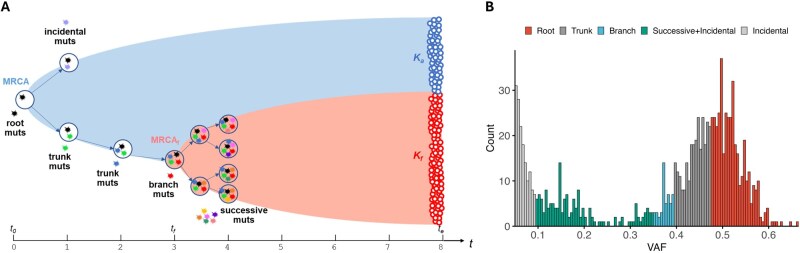 Figure 1
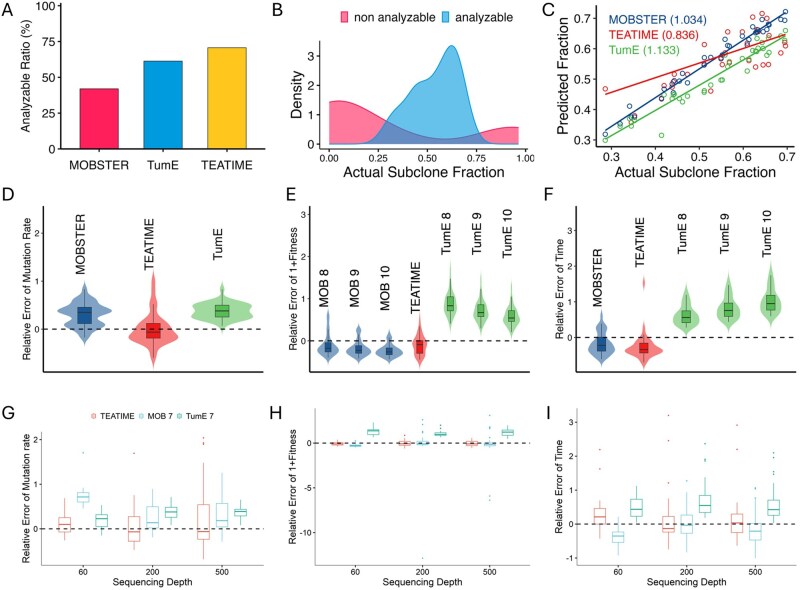 Figure 2
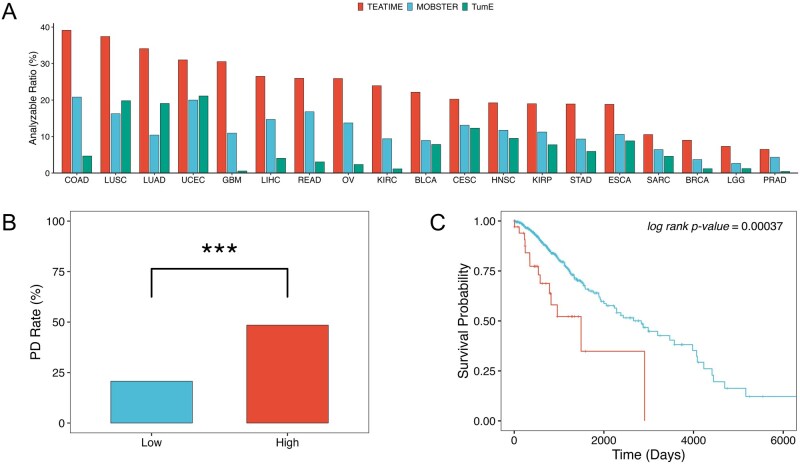 Figure 3
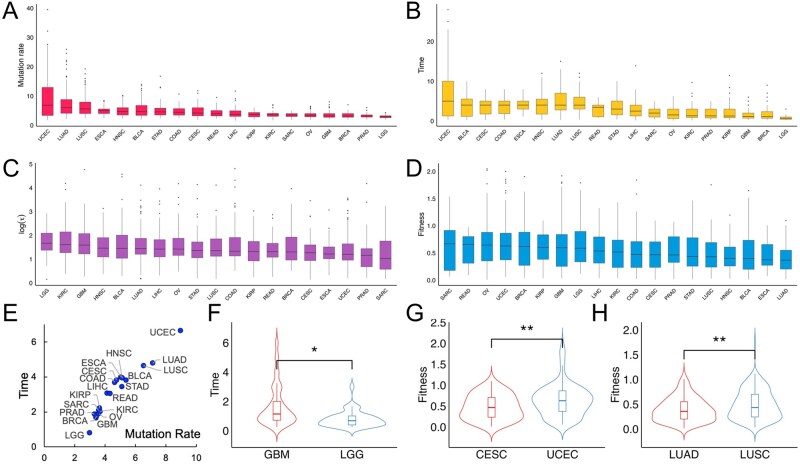 Figure 4
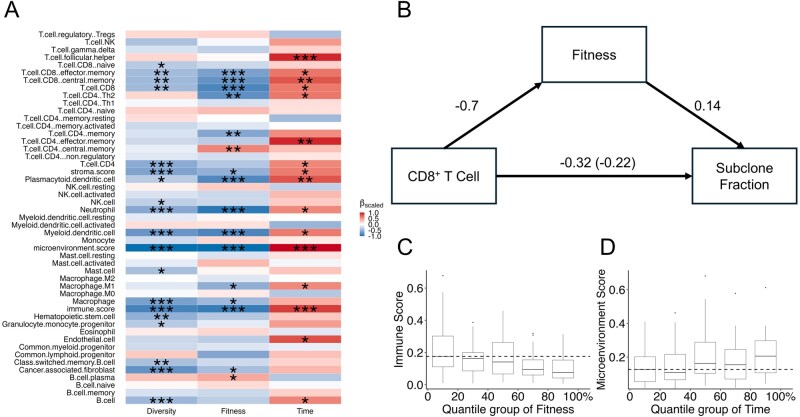 Figure 5
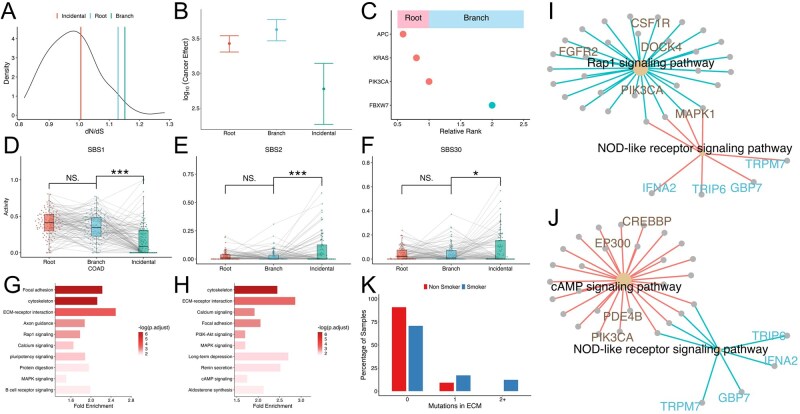 Figure 6
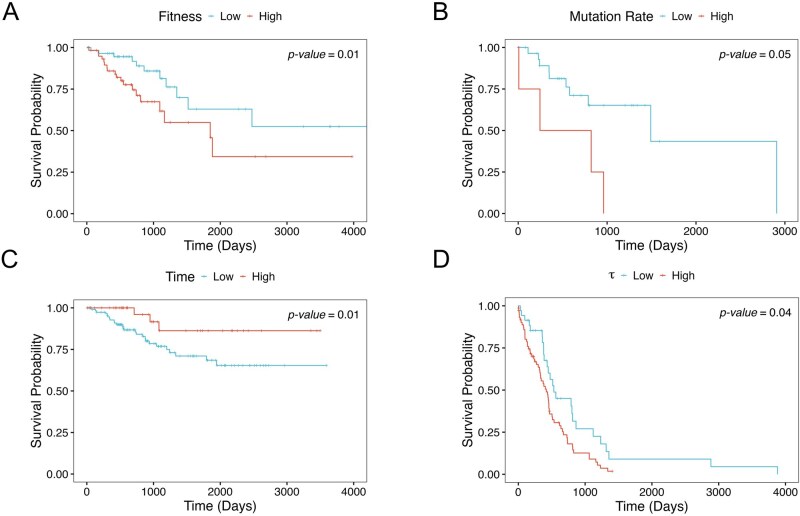 Figure 7
Peer Reviews
No public reviews on file for this paper yet. If you reviewed it on a platform where reviews are public (OpenReview, ICLR, NeurIPS, ICML), you can paste yours below so the community can read it here.
Videos
No videos yet. Explain this paper in a talk, walkthrough, or lecture? Add one.
Taxonomy
TopicsCancer Genomics and Diagnostics · Microtubule and mitosis dynamics · Genetic factors in colorectal cancer