Pressure Pain Threshold Cut-Off Points at Trigeminal and Extra-Trigeminal Nervous and Musculoskeletal Structures to Discriminate Patients with Migraine from Episodic Tension-Type Headache: A Diagnostic Accuracy Study
Leandro H. Caamaño-Barrios, Naiara Benítez-Aramburu, Alberto Nava-Varas, Fernando Galán-del-Río, Mónica López-Redondo, Jorge Buffet-García, Ricardo Ortega-Santiago

TL;DR
This study finds that pressure pain thresholds at specific body sites, especially the temporalis muscles, can help distinguish migraine patients from those with tension-type headaches, though the results are not strong enough for standalone diagnosis.
Contribution
The study identifies site-specific pressure pain threshold cut-off values for differentiating migraine from tension-type headache using ROC analysis.
Findings
Migraine patients had lower pressure pain thresholds than TTH patients, especially at the temporalis muscles.
Temporalis muscles showed the strongest discriminatory performance with AUCs of 0.733 (left) and 0.707 (right).
Overall, PPTs provide modest discriminatory utility and should be used as an adjunct to clinical evaluation.
Abstract
Background/Objectives: Pressure pain thresholds (PPTs) are commonly used to quantify mechanical hyperalgesia in migraine and tension-type headache (TTH), but the discriminatory performance of PPTs across neural and muscular sites remains unclear. This study compared nerve- and muscle-related PPTs between migraine and frequent episodic TTH and explored site-specific ROC-derived cut-off values as complementary classification markers. Methods: In this cross-sectional case-group discrimination study, participants with migraine (n = 33) and frequent episodic TTH (n = 31) underwent bilateral PPT assessment (electronic algometry) over the temporalis and tibialis anterior muscles, C5/C6 zygapophyseal joints, peripheral nerves (greater occipital, median, ulnar, radial, posterior tibial, common peroneal), and the second metacarpal region. Results: PPTs were generally lower in the migraine group…
Genes, proteins, chemicals, diseases, species, mutations and cell lines named across the full text — each resolved to its canonical identifier and authoritative record.
Click any figure to enlarge with its caption.
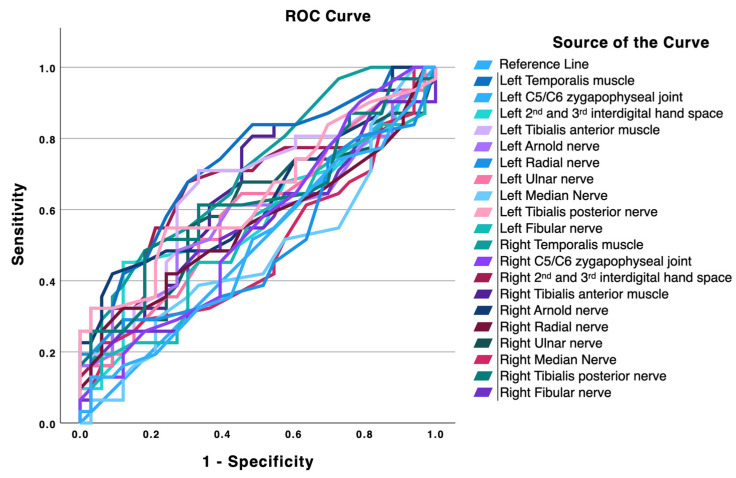 Figure 1
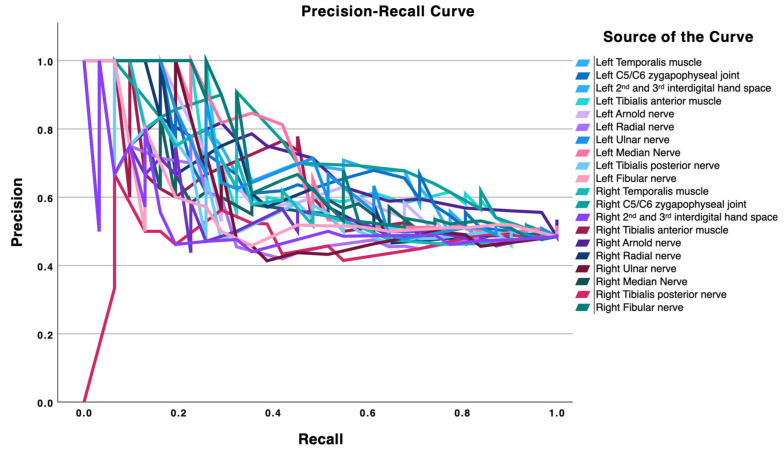 Figure 2
Peer Reviews
No public reviews on file for this paper yet. If you reviewed it on a platform where reviews are public (OpenReview, ICLR, NeurIPS, ICML), you can paste yours below so the community can read it here.
Videos
No videos yet. Explain this paper in a talk, walkthrough, or lecture? Add one.
Taxonomy
TopicsMigraine and Headache Studies · Pain Mechanisms and Treatments · Trigeminal Neuralgia and Treatments