A radio oval above Earth’s auroral oval
Siyuan Wu, Daniel K. Whiter, Laurent Lamy, Ulrich Taubenschuss, Philippe Zarka, Brieuc Collet, Xiangyu Wang, Georg Fischer, Hao Ning, Yao Chen, Mengmeng Wang, Shengyi Ye, Zhonghua Yao, William S. Kurth, Xiaoli Luan

TL;DR
Scientists discovered a radio oval above Earth's auroral oval, revealing that auroral radio emissions occur in diverse plasma environments.
Contribution
Identification of a radio oval spanning discrete and diffuse auroras, showing diverse electron precipitation features.
Findings
AKR emissions occur above both discrete and diffuse auroras.
AKR source electrons exhibit monoenergetic, broadband, low-energy, and diffuse types.
Cyclotron maser instability drives AKR in diverse plasma environments.
Abstract
Auroral kilometric radiation (AKR), Earth’s strongest radio emission, has long been associated with discrete auroras and electrons near a few kilo–electron volt (keV) range. However, auroras also occur in diffuse forms with broader electron energies, raising the question of why AKR has not been observed above diffuse auroras or linked to electrons outside the kilo–electron volt population. Comprehensive AKR source distributions have remained elusive because of observational limitations, and their local-time coverage remains largely unknown. Using spacecraft measurements, we identify a “radio oval” above the optical auroral oval, spanning the full local-time range, where AKR is emitted over both discrete and diffuse auroras. The AKR source electrons display diverse precipitation features, including monoenergetic (peak flux at 3.82 kilo–electron volts), broadband (1.34 kilo–electron…
Genes, proteins, chemicals, diseases, species, mutations and cell lines named across the full text — each resolved to its canonical identifier and authoritative record.
Click any figure to enlarge with its caption.
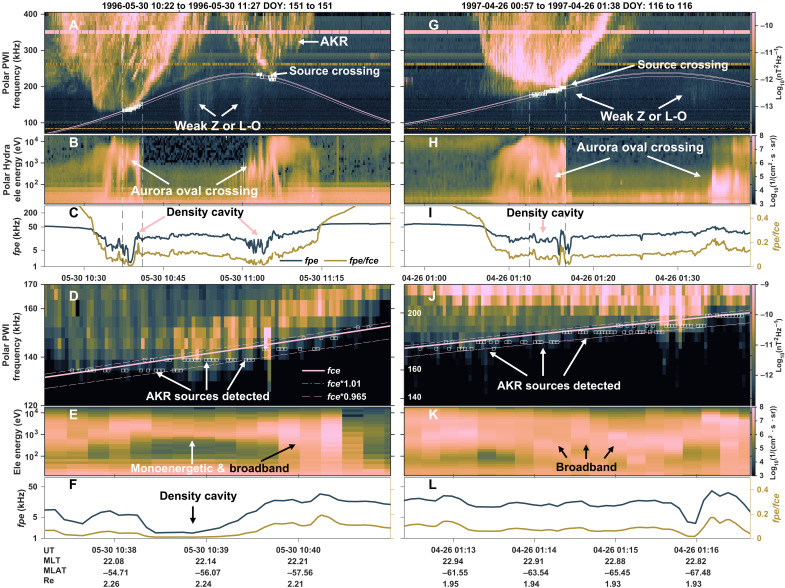 Figure 1
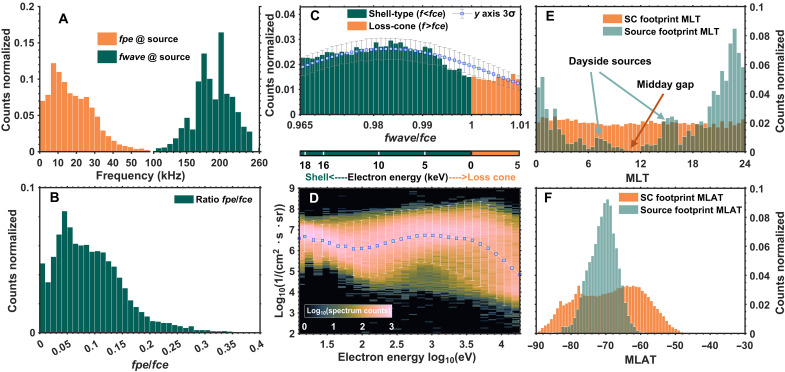 Figure 2
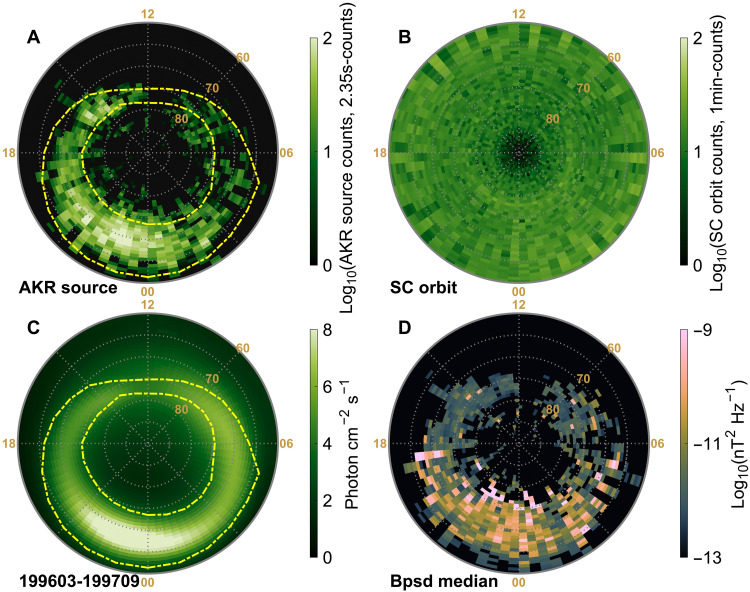 Figure 3
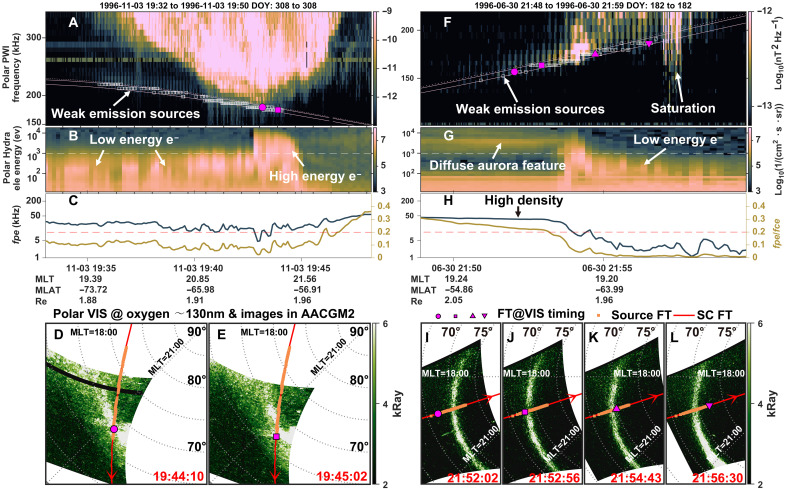 Figure 4
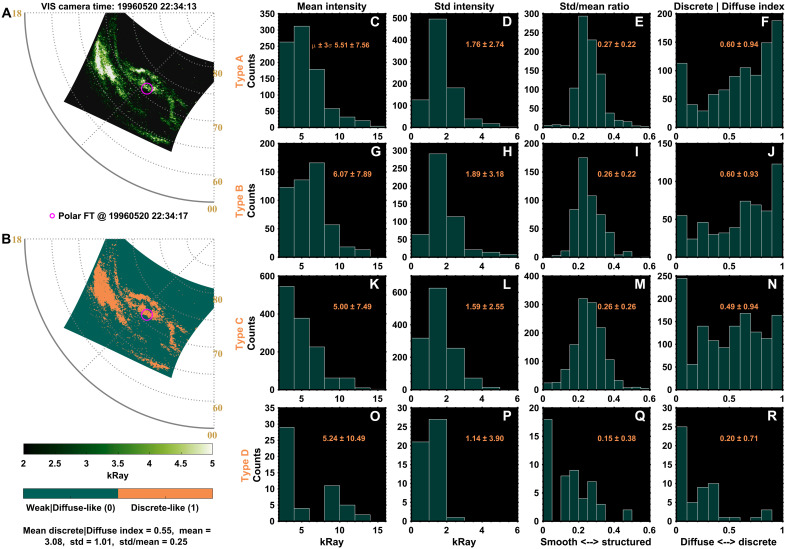 Figure 5
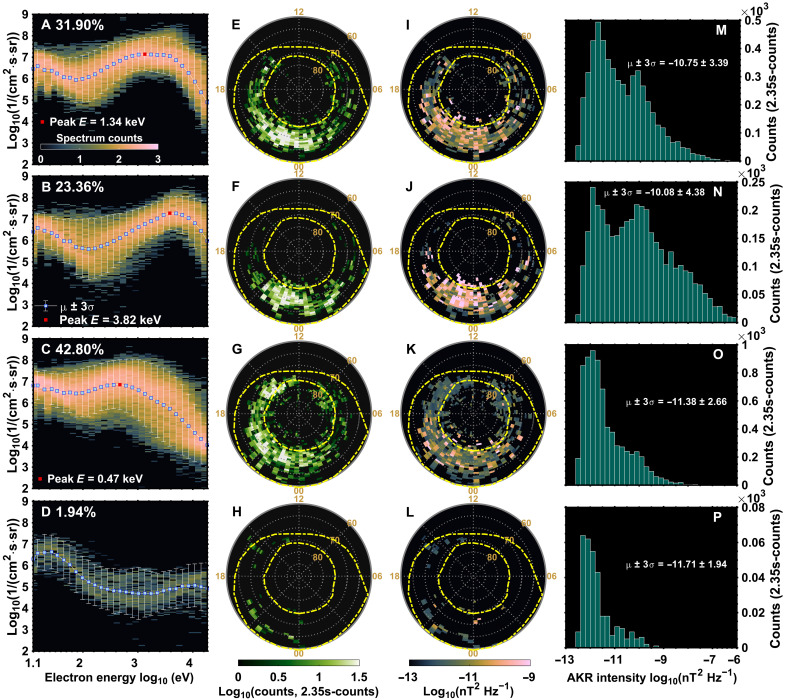 Figure 6
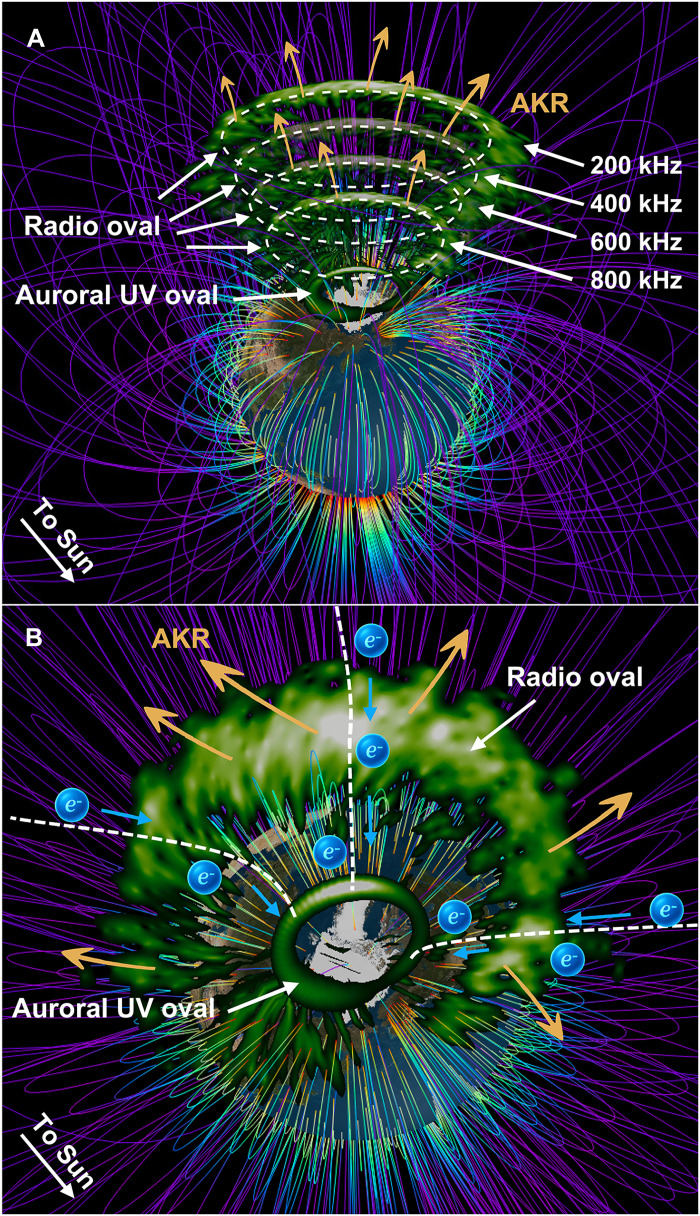 Figure 7
Peer Reviews
No public reviews on file for this paper yet. If you reviewed it on a platform where reviews are public (OpenReview, ICLR, NeurIPS, ICML), you can paste yours below so the community can read it here.
Videos
No videos yet. Explain this paper in a talk, walkthrough, or lecture? Add one.
Taxonomy
TopicsIonosphere and magnetosphere dynamics · Solar and Space Plasma Dynamics · Lightning and Electromagnetic Phenomena