Primary human intestinal organoids model enteric infection of monkeypox virus and enable scalable drug discovery
Pengfei Li, Xin Wang, Jiangrong Zhou, Yang Yao, Yining Wang, Guige Xu, Rick Schraauwen, Ana Maria Gonçalves da Silva, Charlotte de Henau, Roberto Incitti, Dewy Mae Offermans, Annemarie C. de Vries, Denis E. Kainov, Intikhab Alam, Karine Raymond, Amaro Nunes Duarte-Neto

TL;DR
Human intestinal organoids can model monkeypox virus infection and help discover effective antiviral drugs.
Contribution
A scalable organoid model for monkeypox virus infection and a drug discovery pipeline using primary human intestinal organoids.
Findings
Primary intestinal organoids support productive infections by multiple monkeypox virus clades.
Clofarabine, a clinically used drug, shows potent antiviral activity against monkeypox virus in organoid models.
A drug screening pipeline identified 12 safe-in-human antiviral candidates effective against monkeypox.
Abstract
Monkeypox virus (MPXV) infection-associated intestinal manifestations, including diarrhea and proctitis, have been frequently reported during mpox outbreaks. Here, we present clinical evidence that MPXV can directly infect the human intestine and induce lesions. Intriguingly, primary organoids cultured from human ileum and rectum support productive infections by MPXV strains from clade IIb, Ia, and Ib, which are responsible for the 2022–2023 global outbreak and concurrent outbreaks in Africa. Given that primary intestinal organoids can be rapidly expanded at large scale, we were able to screen a broad-spectrum antiviral drug library. We identified 12 leading candidates of safe-in-human agents, including clinically used drugs such as clofarabine. We extensively validated the anti-MPXV activity of clofarabine in human intestinal and skin organoids, consistently demonstrating potent…
Genes, proteins, chemicals, diseases, species, mutations and cell lines named across the full text — each resolved to its canonical identifier and authoritative record.
Click any figure to enlarge with its caption.
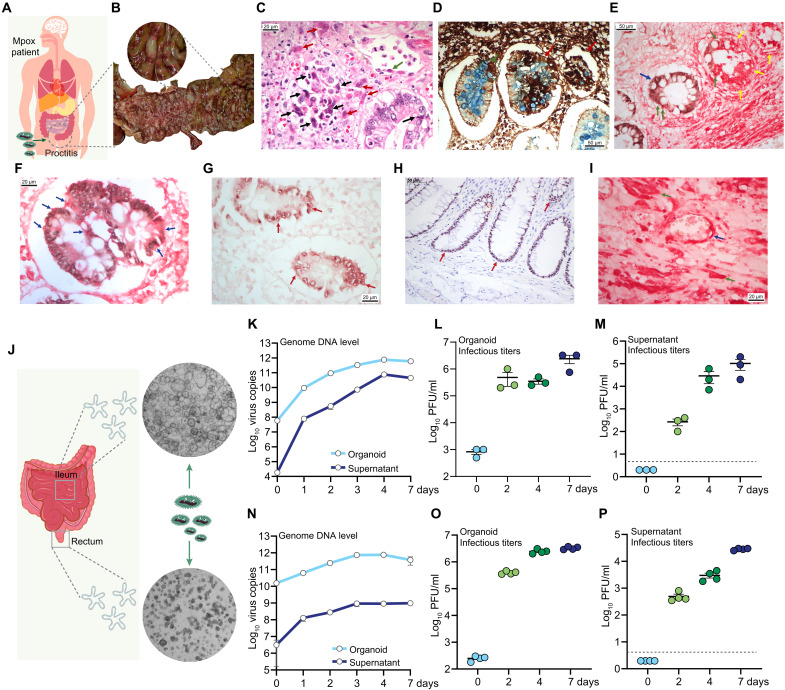 Figure 1
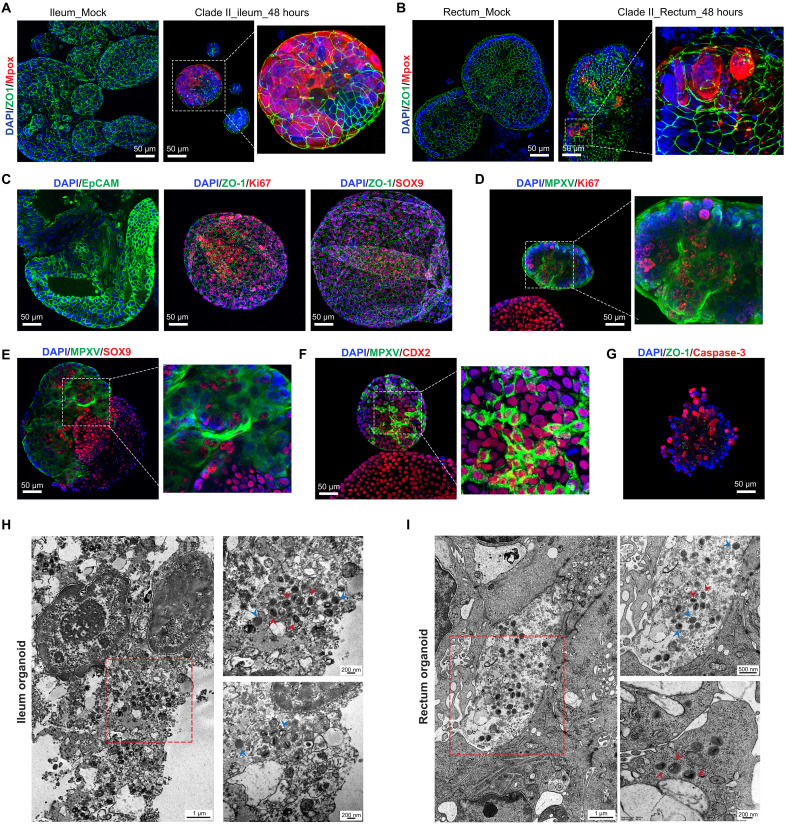 Figure 2
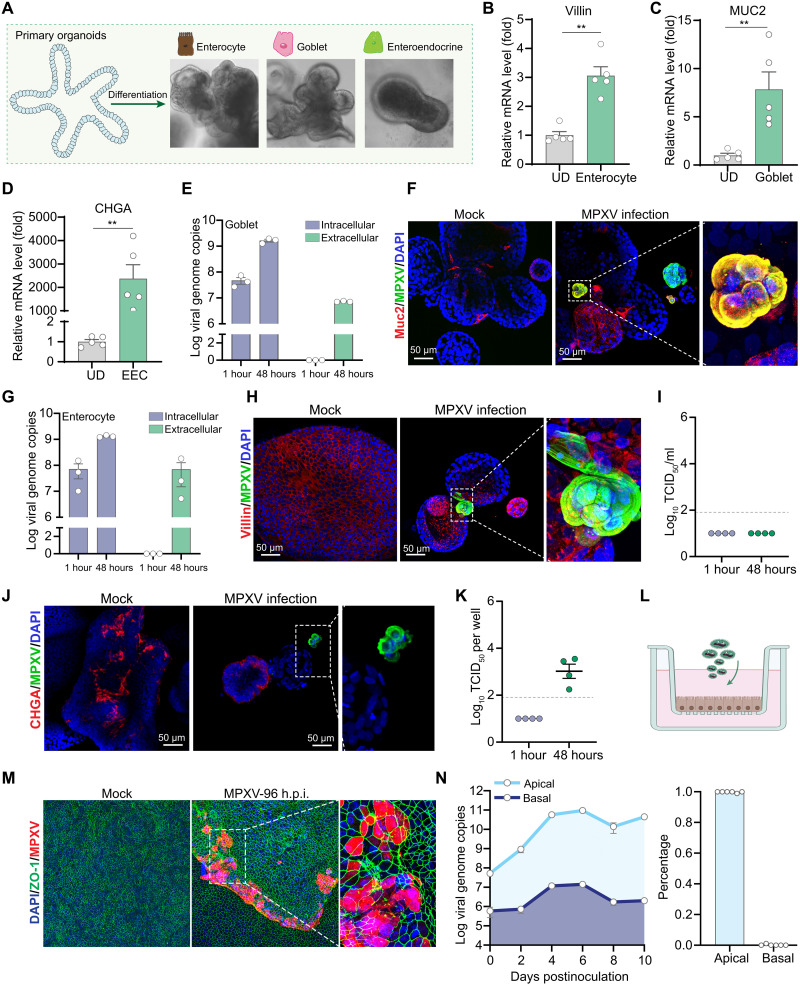 Figure 3
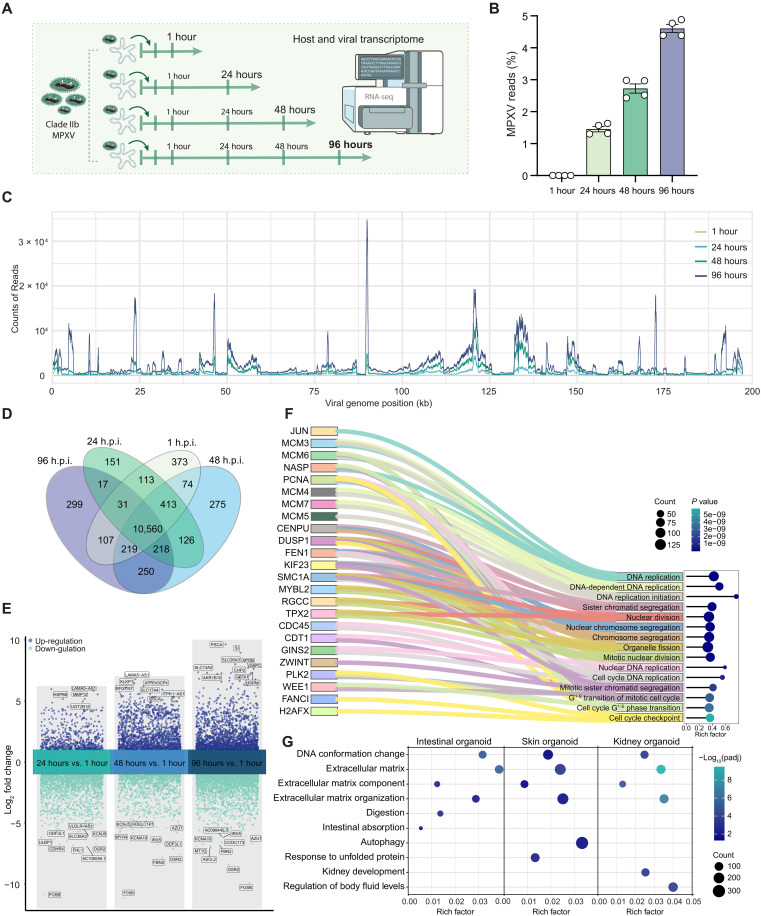 Figure 4
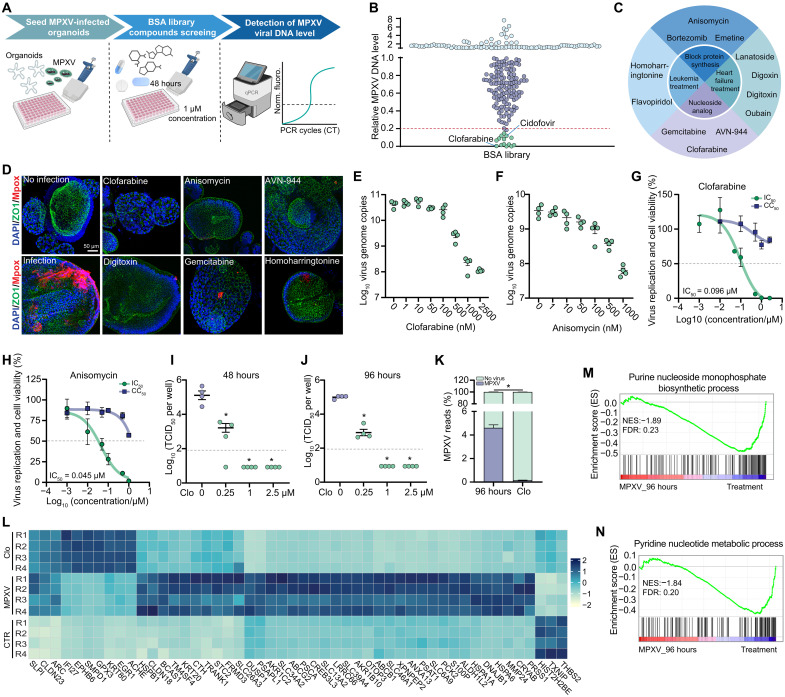 Figure 5
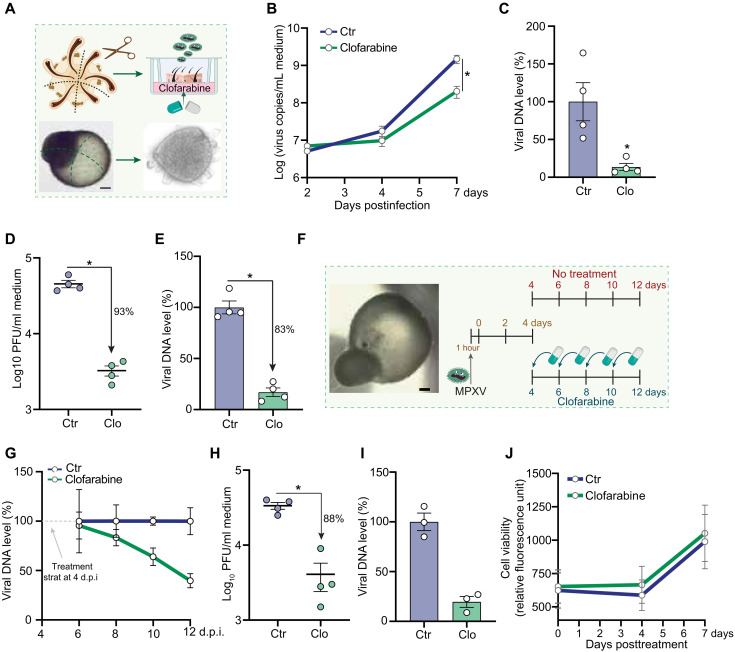 Figure 6
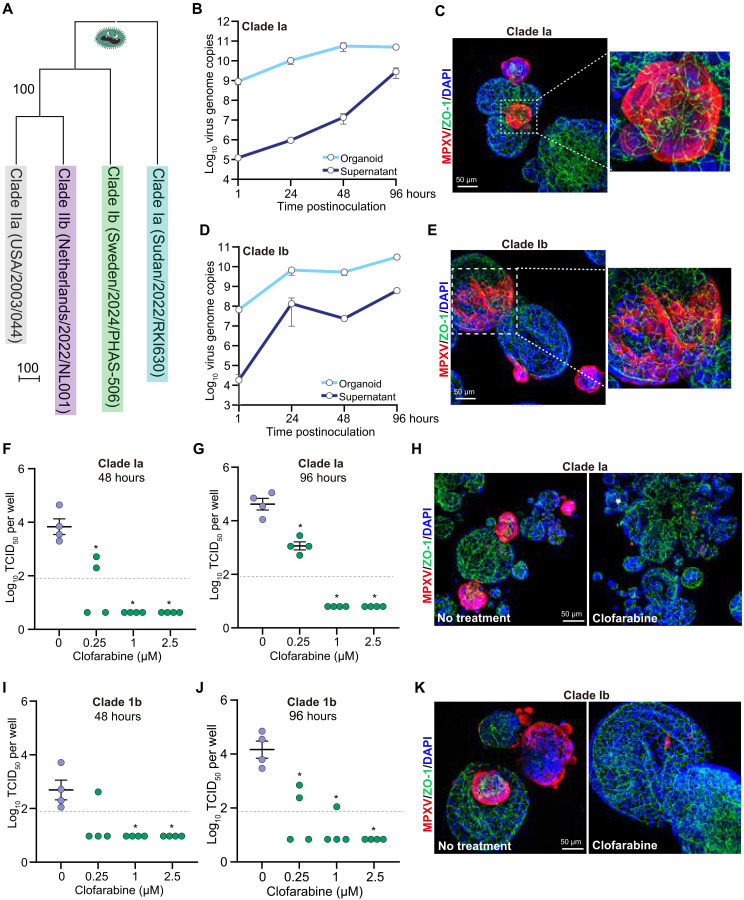 Figure 7
Peer Reviews
No public reviews on file for this paper yet. If you reviewed it on a platform where reviews are public (OpenReview, ICLR, NeurIPS, ICML), you can paste yours below so the community can read it here.
Videos
No videos yet. Explain this paper in a talk, walkthrough, or lecture? Add one.
Taxonomy
TopicsPoxvirus research and outbreaks · SARS-CoV-2 and COVID-19 Research · Viral Infections and Outbreaks Research