Pediatric Shock Across Acute Emergencies: Age Patterns, Etiologic Subtypes, and Bedside Clinical Indicators in a Single-Centre Cohort
Cristina Elena Singer, Ion Dorin Pluta, Ștefănița Bianca Vintilescu, Popescu Elena Madalina, George Alin Stoica, Renata-Maria Varut, Pirscoveanu Denisa Floriana Vasilica, Virginia Radulescu, Nuica Valentina Geanina, Denisa Preoteasa, Mocanu Andreea Gabriela, Carmen Sirbulet

TL;DR
This study examines how shock affects children in emergency settings, identifying age patterns and clinical signs that can help detect shock early.
Contribution
The study provides new insights into the age-related vulnerability and clinical indicators of shock in pediatric emergency cases outside intensive care units.
Findings
Shock occurred in 28.1% of children across various emergency groups, with the highest proportion in heart failure and meningitis.
Children with shock were younger, with clusters in infants under 1 year and those aged 5–9 years, and had longer hospital stays.
Clinical features like cardiac comorbidity, dehydration, and altered consciousness were strongly associated with shock.
Abstract
Background/Objectives: Pediatric shock is a final common pathway of cardiovascular failure across diverse emergencies, yet data from mixed emergency cohorts outside intensive care units remain limited. This study aimed to describe the distribution, etiologic subtypes, and clinical correlates of shock in children presenting within a diagnosis-based emergency cohort. Methods: A retrospective single-centre study was conducted in children aged 0–16 years presenting with selected acute pediatric emergencies, among whom cases with and without shock were compared. Shock was defined using documented diagnoses and compatible hemodynamic features, and multiple etiologic types of shock were analyzed, including hypovolemic, septic, cardiogenic, and anaphylactic shock. Demographic and diagnostic variables—age, length of stay, organ support, age strata, and selected comorbidities—and baseline…
Genes, proteins, chemicals, diseases, species, mutations and cell lines named across the full text — each resolved to its canonical identifier and authoritative record.
Click any figure to enlarge with its caption.
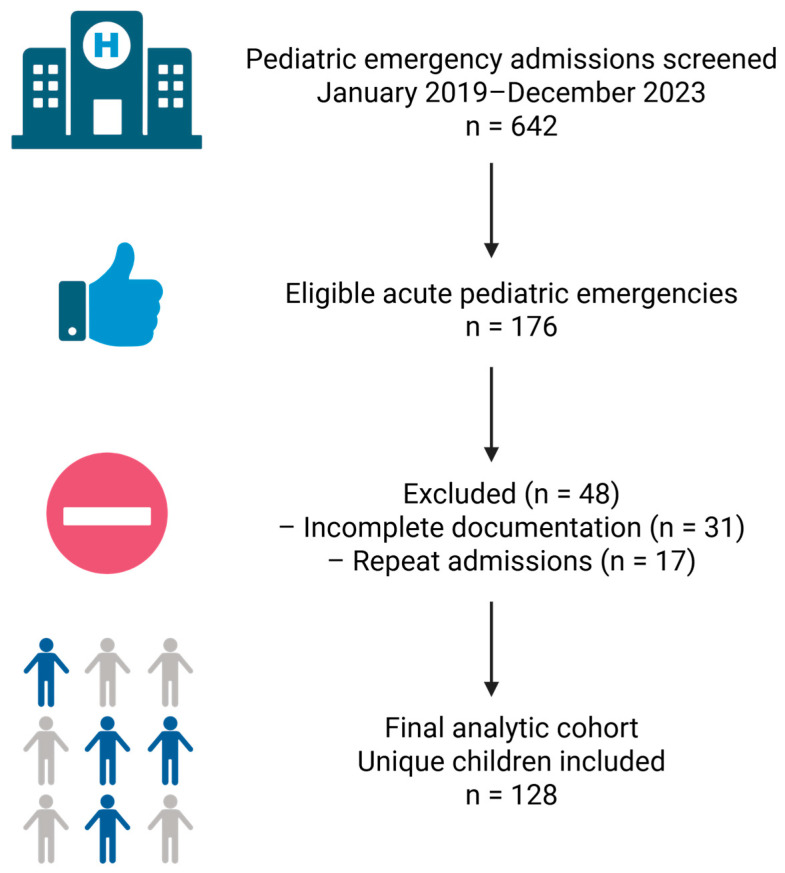 Figure 1
Peer Reviews
No public reviews on file for this paper yet. If you reviewed it on a platform where reviews are public (OpenReview, ICLR, NeurIPS, ICML), you can paste yours below so the community can read it here.
Videos
No videos yet. Explain this paper in a talk, walkthrough, or lecture? Add one.
Taxonomy
TopicsSepsis Diagnosis and Treatment · Cardiac Arrest and Resuscitation · Clinical Reasoning and Diagnostic Skills