The Role of the Ecto-Nucleotidases CD73 and CD39 in Chemo- and Immunotherapy
Patryk T. Mucha, Ankita Brahmachari, Marika A. Frańczak, Marta Tomczyk, Barbara Kutryb-Zając, Patrycja Koszałka, Elisa Giovannetti, Godefridus J. Peters

TL;DR
This paper reviews how CD73 and CD39 proteins affect cancer immunotherapy and chemotherapy effectiveness, and how blocking them may improve treatment outcomes.
Contribution
The paper highlights the novel role of CD73 and CD39 in modulating immunotherapy and chemotherapy responses and the potential of their inhibitors in cancer treatment.
Findings
CD73 and CD39 produce adenosine, which suppresses immune responses and may reduce cancer therapy efficacy.
Chemotherapy can increase CD73 and CD39 levels, potentially contributing to treatment resistance.
Inhibitors of CD73 and CD39 show early promise in clinical trials for improving cancer treatment outcomes.
Abstract
Immunotherapy has become an important treatment option for cancers with many genetic changes, such as melanoma and non-small cell lung cancer, and is often combined with chemotherapy. While these treatments can be effective, not all patients respond equally well. This review focuses on two proteins, CD73 and CD39, that are found on cancer cells and surrounding cells in the tumor environment. These proteins produce adenosine, a substance that weakens the immune response against tumors and may reduce the efficacy of cancer therapies. Chemotherapy can further increase the levels of these proteins, potentially contributing to treatment resistance. New drugs that block CD73 and CD39 are currently being tested and show promising early results. Understanding how these proteins influence combined cancer treatments may help improve future therapies and lead to better outcomes for patients.…
Genes, proteins, chemicals, diseases, species, mutations and cell lines named across the full text — each resolved to its canonical identifier and authoritative record.
Click any figure to enlarge with its caption.
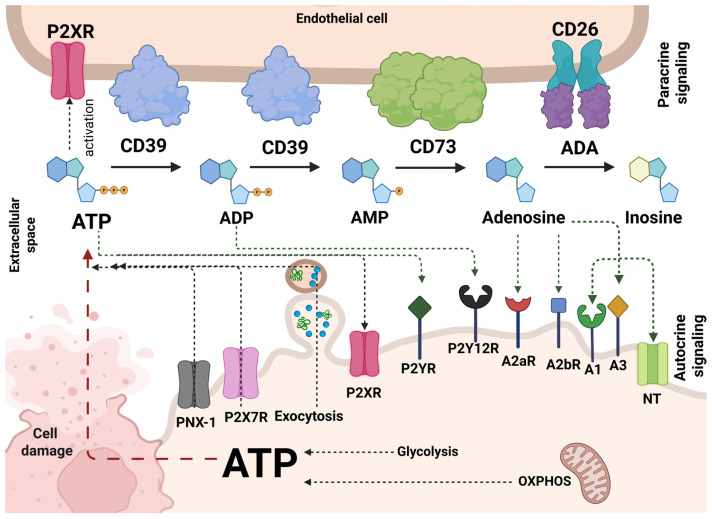 Figure 1
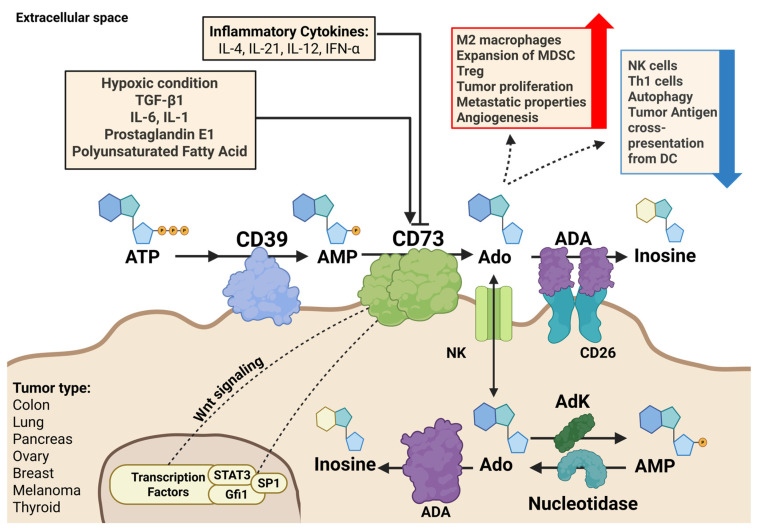 Figure 2
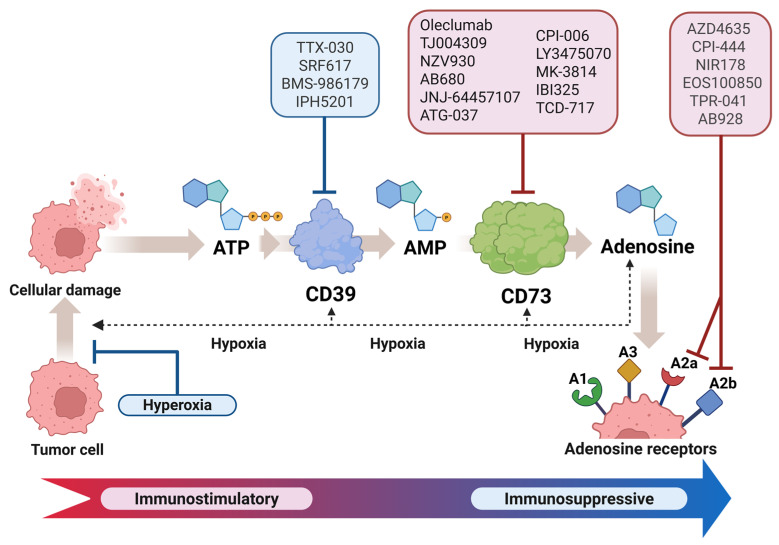 Figure 3
Peer Reviews
No public reviews on file for this paper yet. If you reviewed it on a platform where reviews are public (OpenReview, ICLR, NeurIPS, ICML), you can paste yours below so the community can read it here.
Videos
No videos yet. Explain this paper in a talk, walkthrough, or lecture? Add one.
Taxonomy
TopicsAdenosine and Purinergic Signaling · ATP Synthase and ATPases Research · Cancer Research and Treatments