Mitochondrial Dynamic Proteins MiD49 and MiD51 as Novel Targets of Cardioprotection
Parisa Samangouei, Gustavo E. Crespo-Avilan, Andrew R. Hall, Sauri Hernandez-Resendiz, J. Maeve Elder, Laura D. Osellame, Nicole G. Z. Tee, Khairunnisa Katwadi, Sang-Bing Ong, Xiu-Yi Kwek, Siavash Beikoghli Kalkhoran, Niall Burke, Derek M. Yellon, Derek J. Hausenloy

TL;DR
This study explores how blocking two mitochondrial proteins, MiD49 and MiD51, together can protect heart cells from injury during heart attacks.
Contribution
The study identifies MiD49 and MiD51 as potential new targets for cardioprotection when inhibited together.
Findings
Dual knockdown of MiD49 and MiD51 reduced cell death and inhibited mitochondrial fission in cardiac cells.
Individual knockdown of MiD49 or MiD51 did not protect mitochondria or prevent MPTP opening.
Genetic ablation of MiD49 in mice did not significantly affect heart function or infarct size after AMI.
Abstract
Novel therapeutic strategies are required to protect the heart from acute ischaemia-reperfusion injury (IRI) and improve outcomes in patients with acute myocardial infarction (AMI). Mitochondria play a critical role in determining cardiomyocyte fate following acute IRI, with genetic and pharmacological inhibition of Drp1-mediated mitochondrial fission limiting cardiomyocyte death. We investigated the role of the mitochondrial Drp1 receptors, MiD49 and MiD51, as novel targets for cardioprotection. In cardiac cell lines subjected to simulated IRI, dual genetic knockdown of both MiD49 and MiD51 reduced cell death, inhibited mitochondrial fission, prevented mitochondrial permeability transition pore opening, and attenuated mitochondrial calcium overload compared with wild-type cells. However, individual knockdown of either MiD49 or MiD51 did not induce mitochondrial elongation or inhibit…
Genes, proteins, chemicals, diseases, species, mutations and cell lines named across the full text — each resolved to its canonical identifier and authoritative record.
Click any figure to enlarge with its caption.
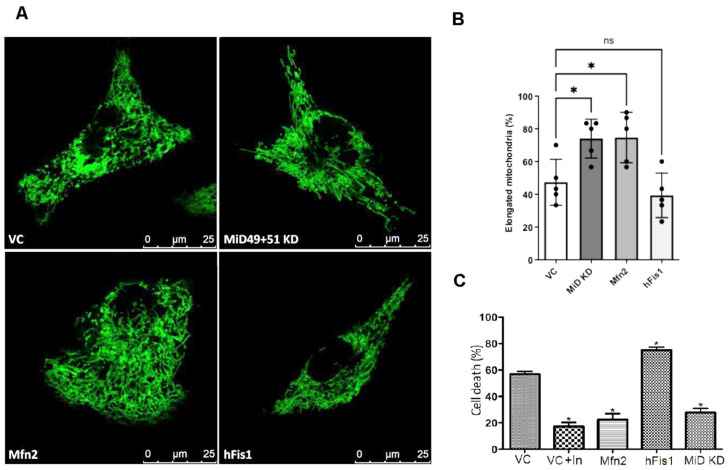 Figure 1
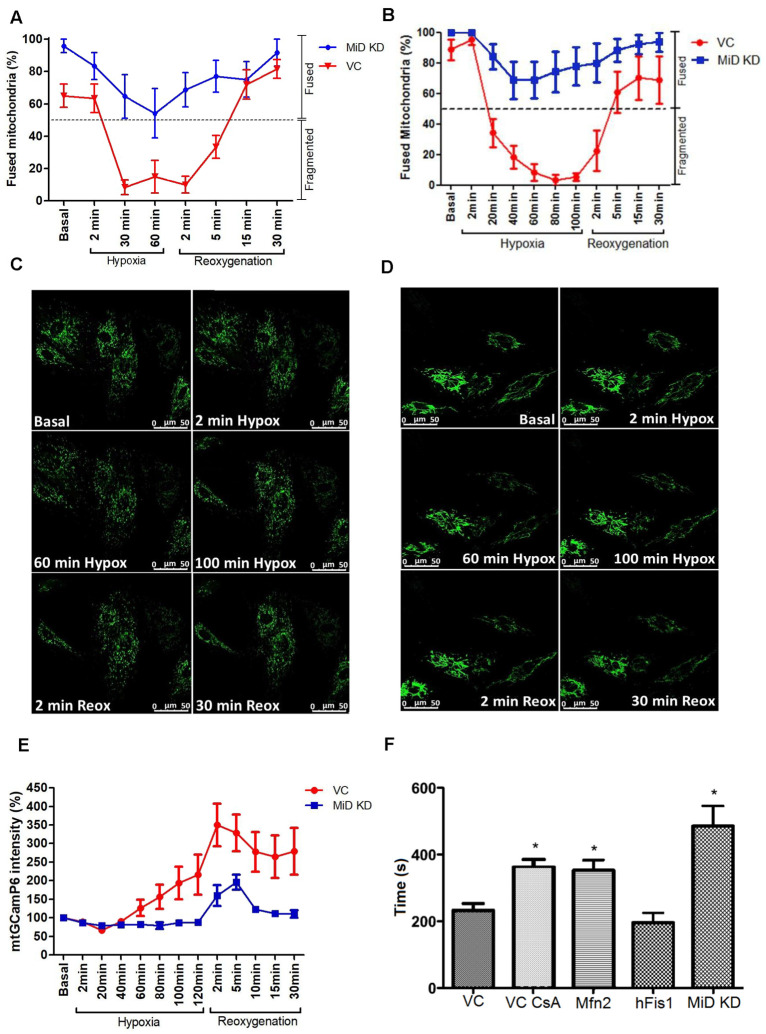 Figure 2
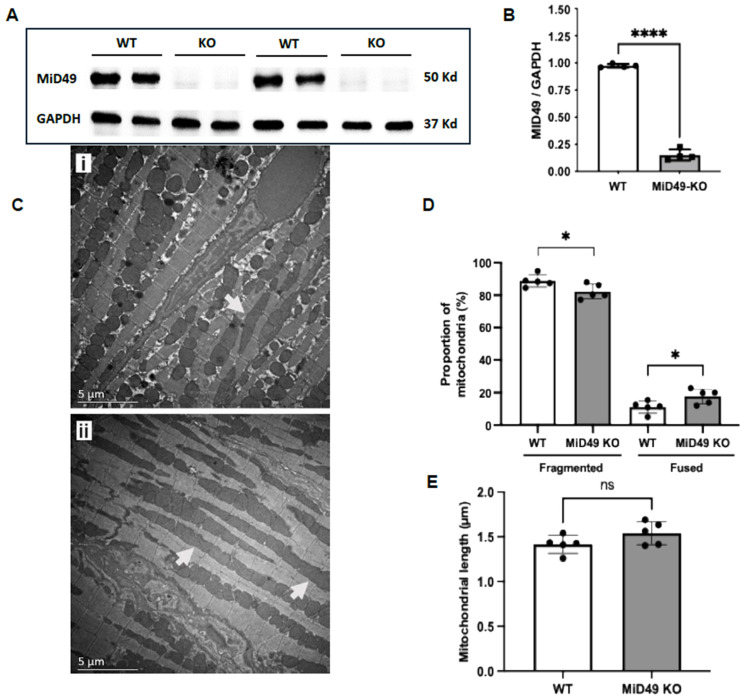 Figure 3
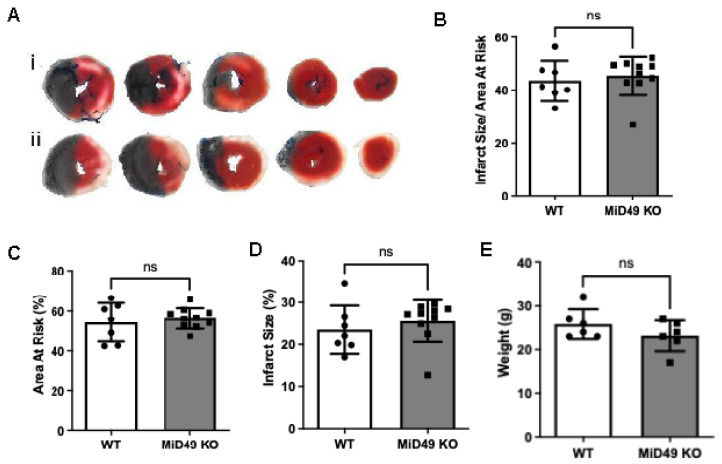 Figure 4
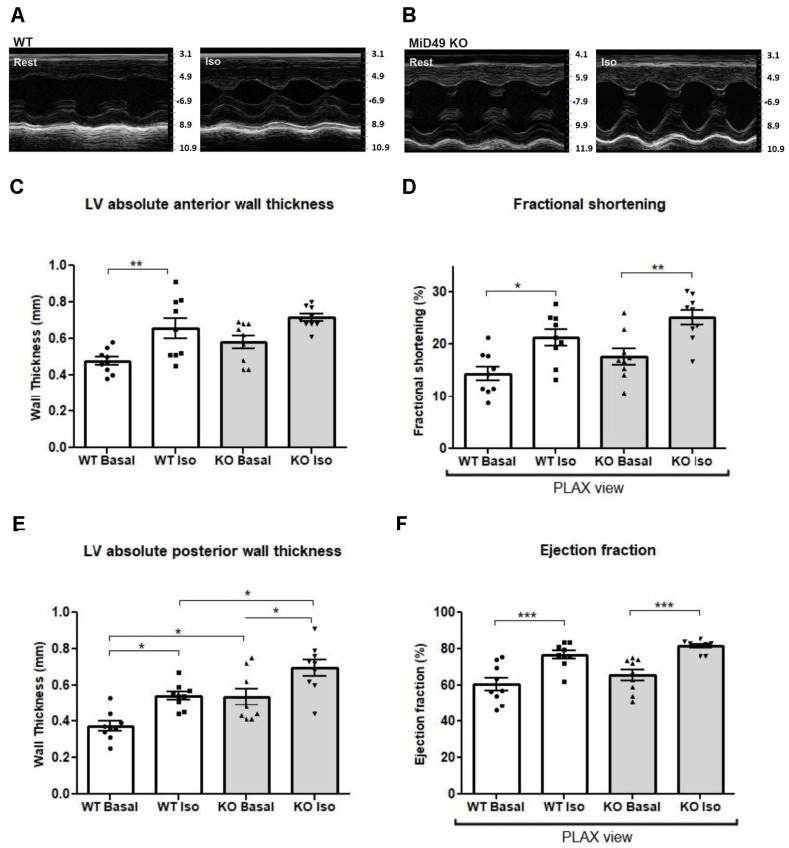 Figure 5
Peer Reviews
No public reviews on file for this paper yet. If you reviewed it on a platform where reviews are public (OpenReview, ICLR, NeurIPS, ICML), you can paste yours below so the community can read it here.
Videos
No videos yet. Explain this paper in a talk, walkthrough, or lecture? Add one.
Taxonomy
TopicsMitochondrial Function and Pathology · Cardiac Ischemia and Reperfusion · Adipose Tissue and Metabolism