Reversible Causes of Transitory Motor Evoked Potential Decrease During Posterior Spine Fusion in Rapidly Progressive Scoliosis Treatment: A Case Report
Vladimir Djan, Vladimir Galić, Nemanja Galetić, Rastislava Krasnik, Stanislava Bodonji, Ivana Fratrić, Anna Uram Benka, Izabela Fabri Galamboš, Nikola Bošković, Jelena Mačar Novaković

TL;DR
A teenage girl with severe scoliosis experienced temporary spinal cord monitoring changes during surgery, but recovered fully thanks to careful monitoring.
Contribution
This case report highlights reversible causes of motor evoked potential decreases during scoliosis surgery and the importance of multimodal neuromonitoring.
Findings
Intraoperative motor evoked potential (MEP) loss was observed during posterior spinal fusion but recovered fully or partially by the end of surgery.
Multimodal neuromonitoring detected reversible spinal cord dysfunction without permanent neurological damage.
Possible causes included temporary venous congestion or vasospasm from surgical manipulation.
Abstract
Introduction: Idiopathic adolescent scoliosis (IAS) is commonly managed non-surgically; however, patients with a Cobb angle >45° before skeletal maturity often require posterior spinal fusion. Because this procedure carries a risk of neurological complications, intraoperative neurophysiological monitoring (IONM) is essential for early detection of spinal cord compromise. Case report: We present a 13-year-old girl with rapidly progressing scoliosis (Cobb angle 78°) who developed intraoperative changes in motor evoked potentials (MEPs) during posterior fusion from L4 to Th2. Total intravenous anesthesia without muscle relaxants was used, and standard multimodal IONM with somatosensory evoked potentials (SSEPs), MEPs, and spontaneous/triggered electromyography was applied. After induction of general anesthesia and surgical exposure, pedicle preparation at Th8–Th9 was followed by increased…
Genes, proteins, chemicals, diseases, species, mutations and cell lines named across the full text — each resolved to its canonical identifier and authoritative record.
Click any figure to enlarge with its caption.
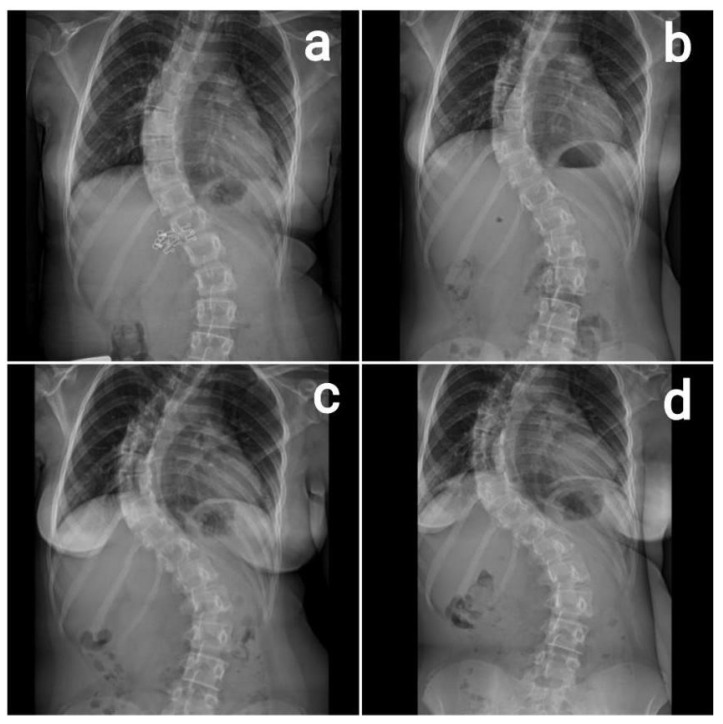 Figure 1
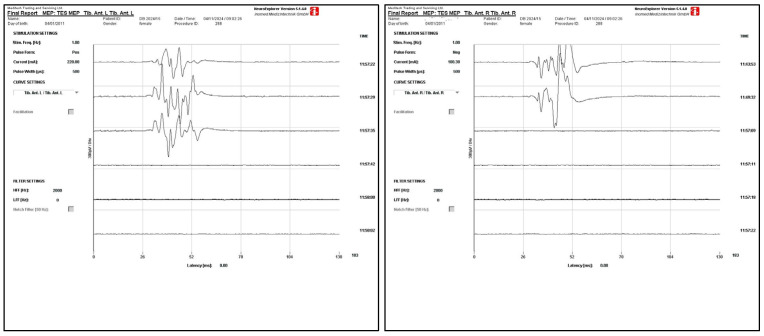 Figure 2
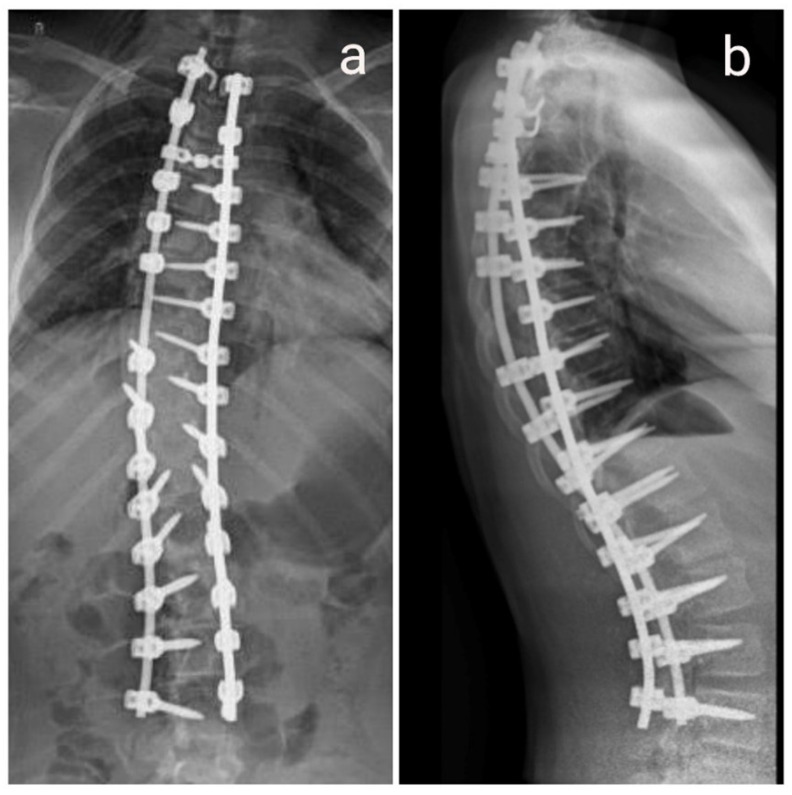 Figure 3
Peer Reviews
No public reviews on file for this paper yet. If you reviewed it on a platform where reviews are public (OpenReview, ICLR, NeurIPS, ICML), you can paste yours below so the community can read it here.
Videos
No videos yet. Explain this paper in a talk, walkthrough, or lecture? Add one.
Taxonomy
TopicsIntraoperative Neuromonitoring and Anesthetic Effects · Scoliosis diagnosis and treatment · Anesthesia and Pain Management