Lamin A/C as a Molecular Link Between Nuclear Organization, Chromatin Dynamics, and Tumor Progression
Cecilia Foglini, Katia Scotlandi, Michela Pasello

TL;DR
Lamin A/C connects nuclear structure and function, influencing cancer progression in complex, context-dependent ways.
Contribution
Lamin A/C is redefined as a dynamic regulator linking nuclear mechanics, chromatin dynamics, and tumor progression.
Findings
Lamin A/C regulates chromatin organization and transcription by linking nuclear mechanics and epigenetics.
Its role in cancer is context-dependent, leading to varied prognostic associations across tumor types.
Lamin A/C functions as a nuclear rheostat, balancing cell deformability and genome stability in tumor progression.
Abstract
What are the main findings? Lamin A/C is a dynamic mechano-epigenetic regulator that links nuclear mechanics with chromatin organization and transcription.In cancer, lamin A/C functions in a strongly context-dependent manner, yielding heterogeneous and sometimes opposing prognostic associations across tumor types. Lamin A/C is a dynamic mechano-epigenetic regulator that links nuclear mechanics with chromatin organization and transcription. In cancer, lamin A/C functions in a strongly context-dependent manner, yielding heterogeneous and sometimes opposing prognostic associations across tumor types. What are the implications of the main findings? Lamin A/C might be viewed as a nuclear rheostat that regulates tumor cell behavior along a spectrum from deformability and plasticity to mechanical robustness and genome stability.Clinical translation requires context-dependent strategies that…
Genes, proteins, chemicals, diseases, species, mutations and cell lines named across the full text — each resolved to its canonical identifier and authoritative record.
Click any figure to enlarge with its caption.
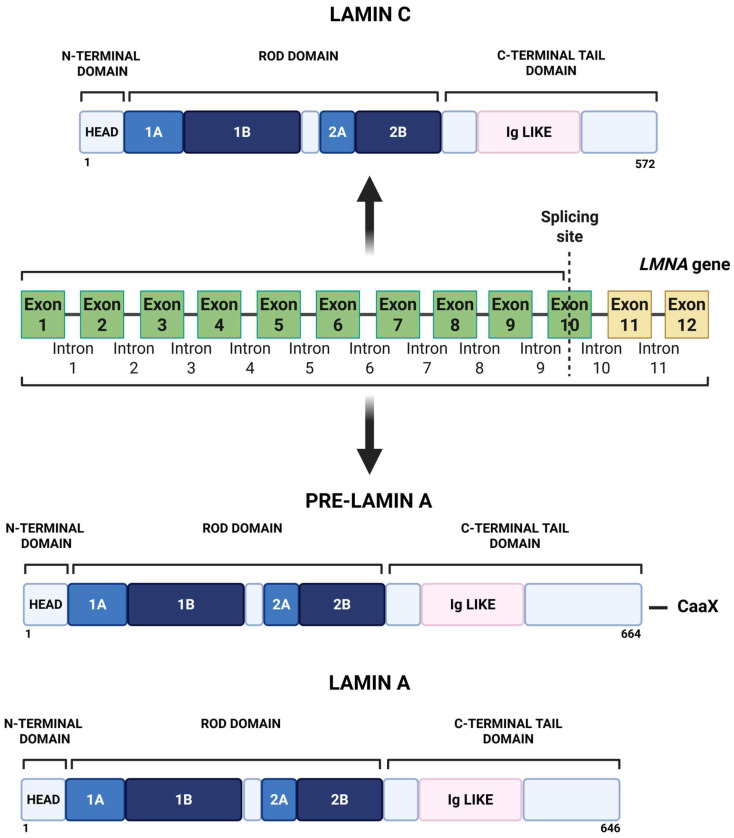 Figure 1
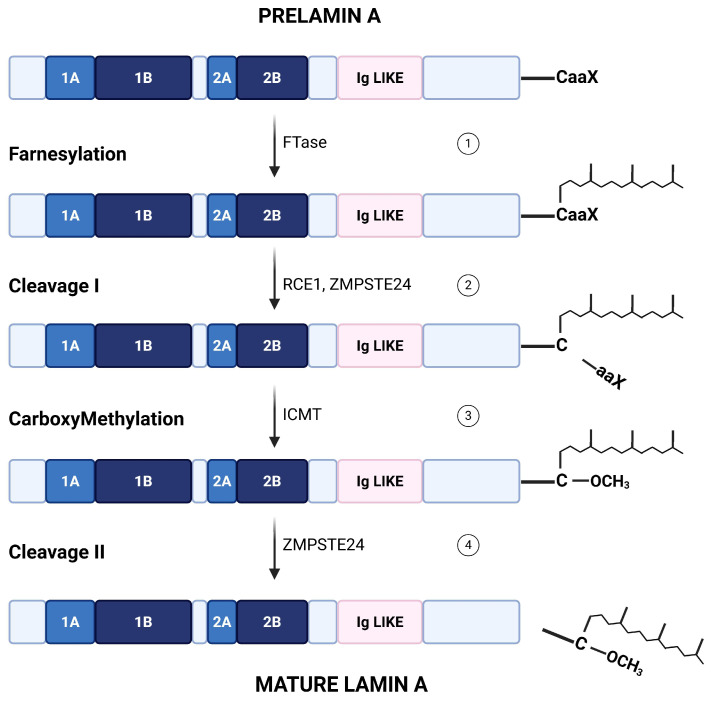 Figure 2
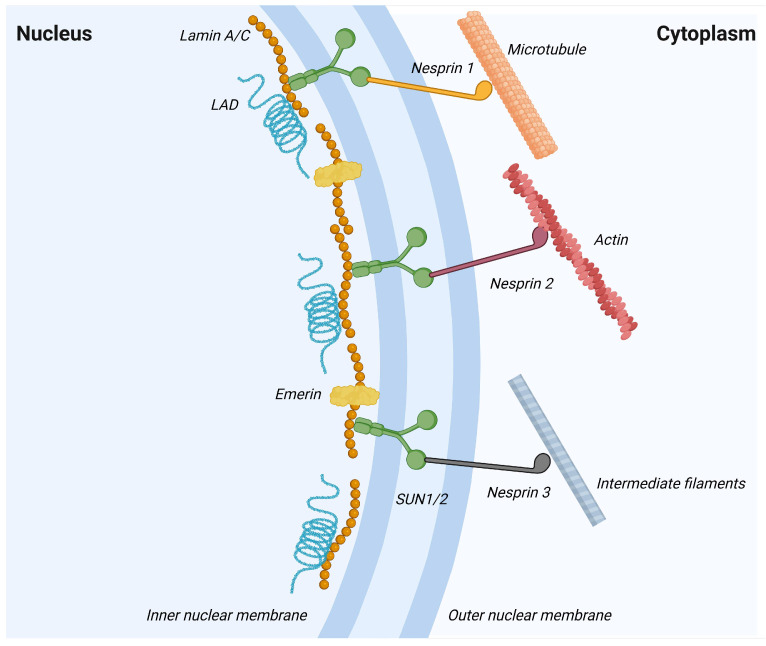 Figure 3
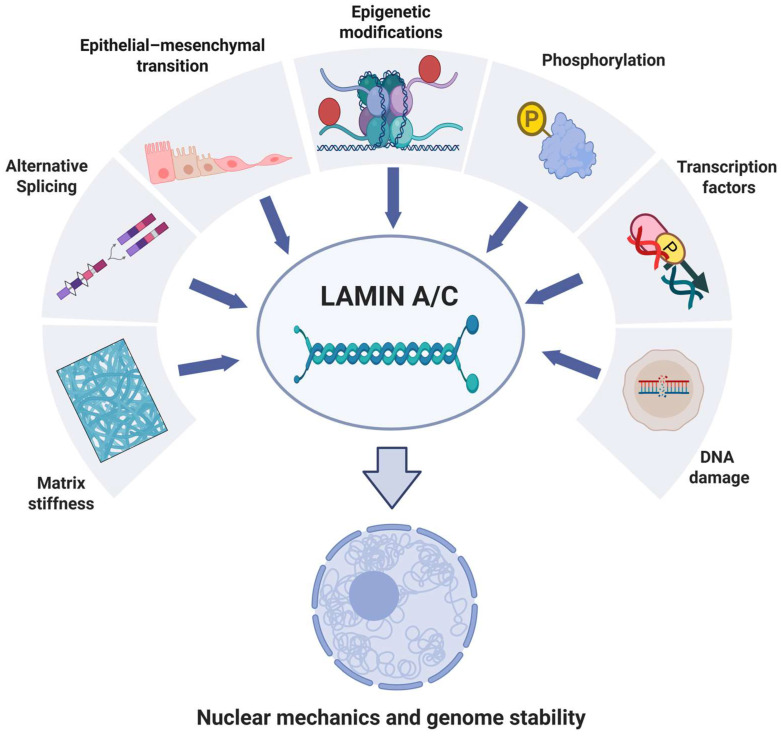 Figure 4
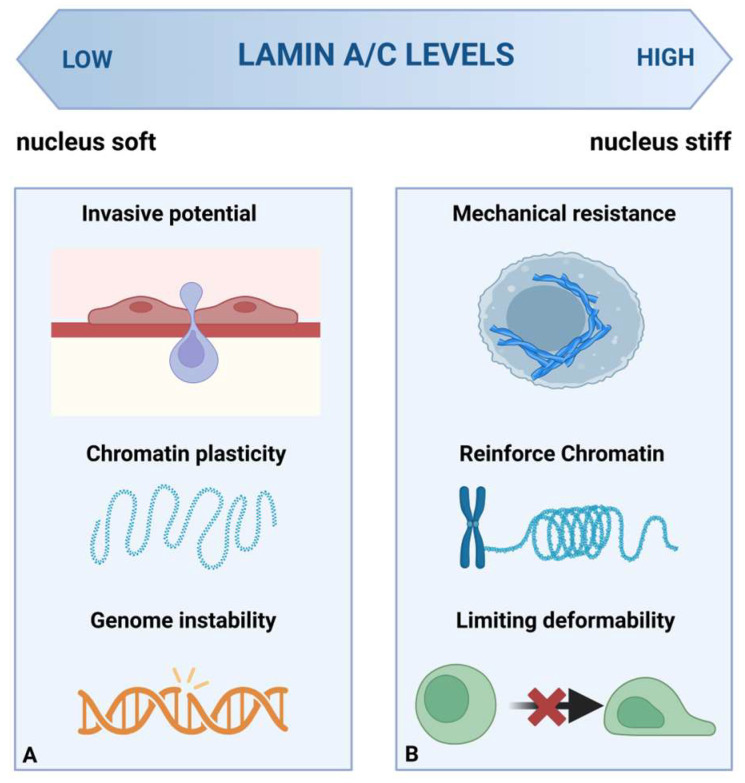 Figure 5
Peer Reviews
No public reviews on file for this paper yet. If you reviewed it on a platform where reviews are public (OpenReview, ICLR, NeurIPS, ICML), you can paste yours below so the community can read it here.
Videos
No videos yet. Explain this paper in a talk, walkthrough, or lecture? Add one.
Taxonomy
TopicsNuclear Structure and Function · Skin and Cellular Biology Research · RNA Research and Splicing