Age-Related Changes in Virtual Pivot Point Position and Variability During Pediatric Gait Development
Lucas Schreff, Katharina Nirmaier, Christian Blank, Rainer Abel, Roy Müller

TL;DR
This study shows how the position and stability of a key point in walking mechanics, the virtual pivot point, change as children grow, offering insights into gait development.
Contribution
The study reveals age-related changes in virtual pivot point (VPP) position and variability during pediatric gait development.
Findings
GRFs are strongly focused toward a VPP in all age groups, with R2 values exceeding 0.95.
Normalized vertical VPP position increases significantly from toddlers to adolescents.
VPP variability decreases with age, indicating improved gait control and trunk stabilization.
Abstract
What are the main findings? Even in pediatric walking, ground reaction forces focus towards a virtual pivot point.VPP position and variability change with age, reflecting maturation of gait control. Even in pediatric walking, ground reaction forces focus towards a virtual pivot point. VPP position and variability change with age, reflecting maturation of gait control. What are the implications of the main findings? Age-related VPP changes indicate developmental shifts in trunk stabilization strategies.Understanding VPP development may support early identification of atypical gait patterns. Age-related VPP changes indicate developmental shifts in trunk stabilization strategies. Understanding VPP development may support early identification of atypical gait patterns. Background/Objectives: During adult walking, ground reaction forces (GRFs) consistently intersect near a point above…
Click any figure to enlarge with its caption.
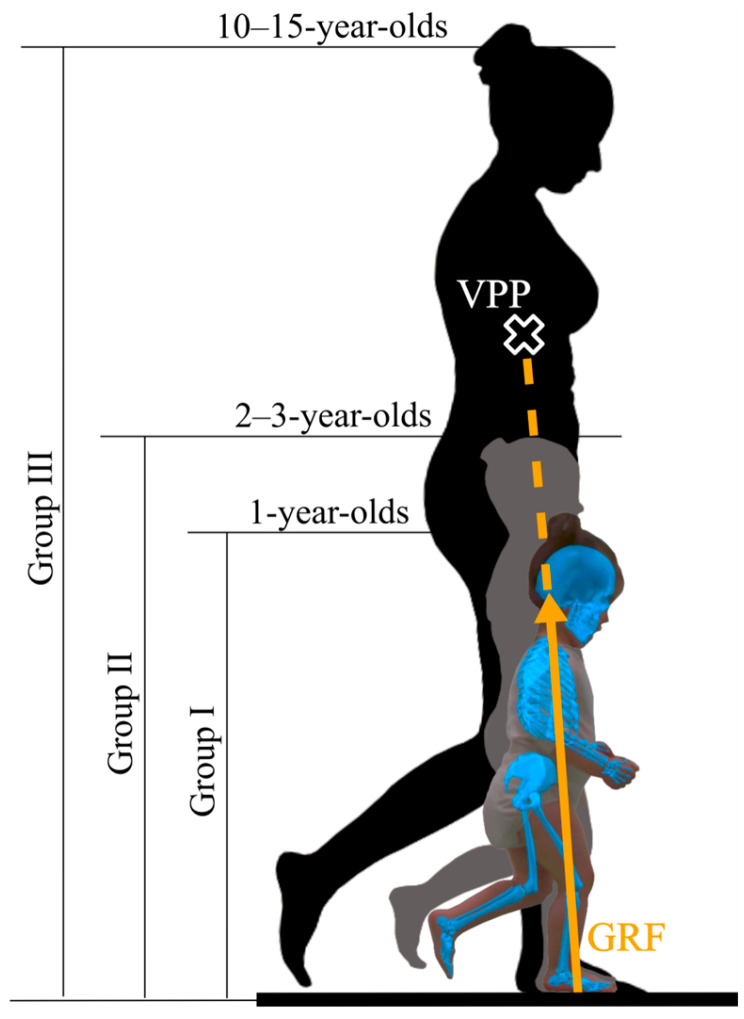 Figure 1
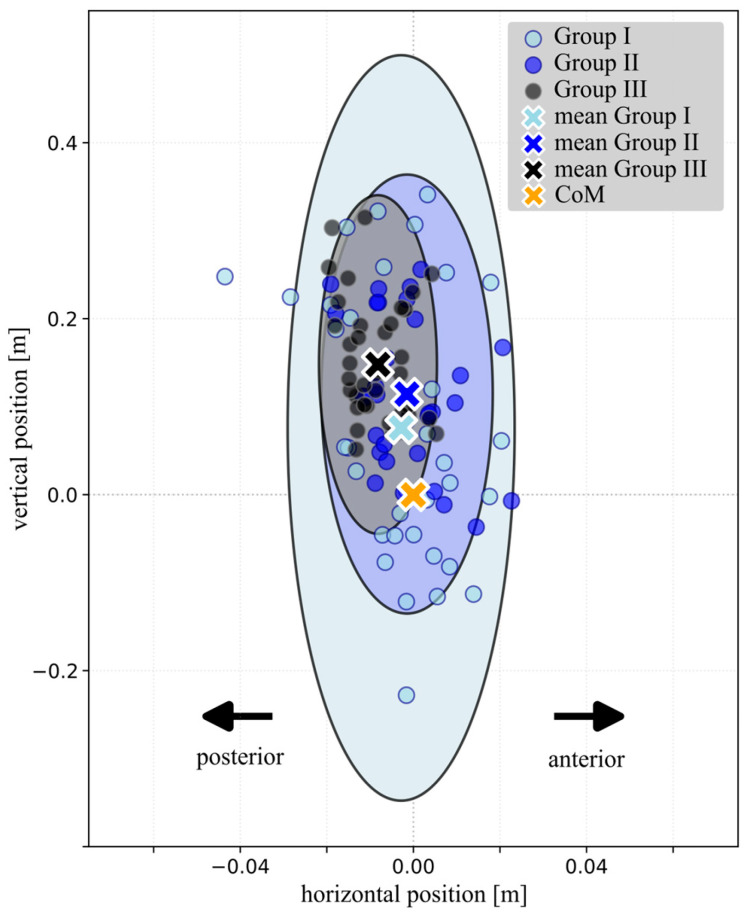 Figure 2
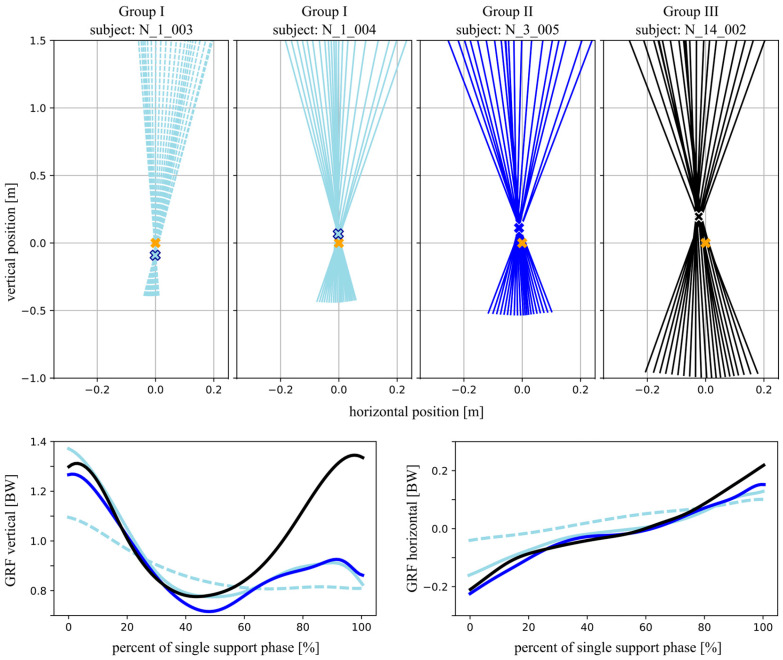 Figure 3
Peer Reviews
No public reviews on file for this paper yet. If you reviewed it on a platform where reviews are public (OpenReview, ICLR, NeurIPS, ICML), you can paste yours below so the community can read it here.
Videos
No videos yet. Explain this paper in a talk, walkthrough, or lecture? Add one.
Taxonomy
TopicsBalance, Gait, and Falls Prevention · Cerebral Palsy and Movement Disorders · Automotive and Human Injury Biomechanics