Planar Black Holes and Entanglement Entropy in Analog Gravity Models
Neven Bilic, Tobias Zingg

TL;DR
The paper shows how planar black holes can be modeled using analog gravity and introduces a new way to calculate entanglement entropy for these models.
Contribution
The paper introduces a novel method to calculate holographic entanglement entropy for planar black holes using analog gravity.
Findings
Planar black holes conformal to a Painlevé–Gullstrand-type line element can be realized as analog metrics.
Holographic entanglement entropy is introduced for planar black-hole space–times with arbitrary conformal and blackening factors.
Abstract
Via constructing an explicit Lagrangian for which the perturbation equations are analogs of a scalar field propagating in a planar black-hole space–time, it is found that all planar black holes conformal to a Painlevé–Gullstrand-type line element can be realized as analog metrics. We also introduce the concept of holographic entanglement entropy for planar black-hole space–times. This is valid for an arbitrary choice of conformal and blackening factor, thereby vastly extending the number of known examples of explicitly known analog metrics.
Click any figure to enlarge with its caption.
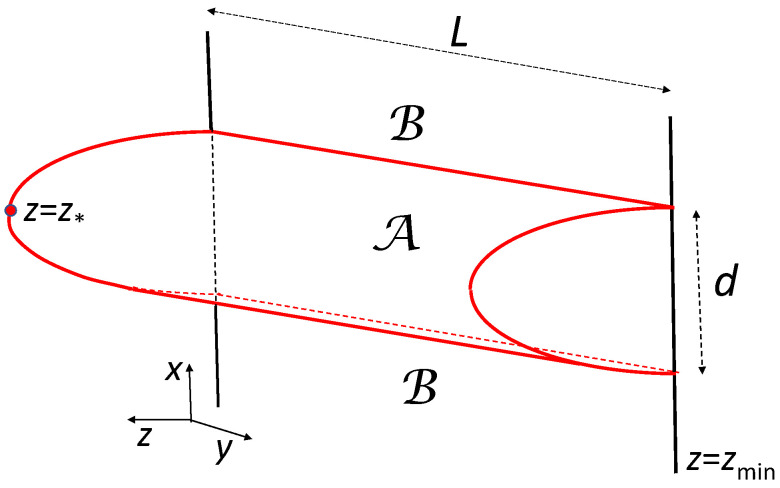 Figure 1
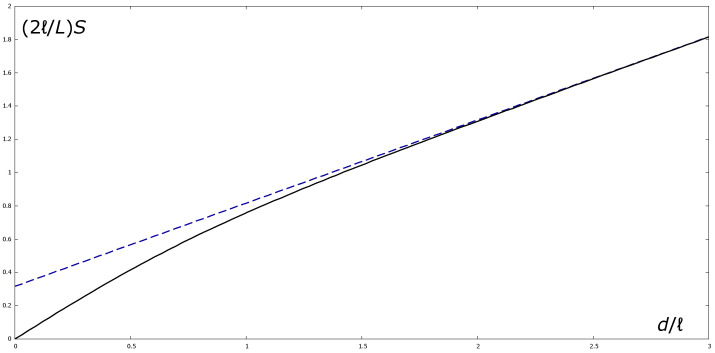 Figure 2
Peer Reviews
No public reviews on file for this paper yet. If you reviewed it on a platform where reviews are public (OpenReview, ICLR, NeurIPS, ICML), you can paste yours below so the community can read it here.
Videos
No videos yet. Explain this paper in a talk, walkthrough, or lecture? Add one.
Taxonomy
TopicsBlack Holes and Theoretical Physics · Cosmology and Gravitation Theories · Noncommutative and Quantum Gravity Theories