Virtual Reality Versus Monitor-Based Distraction in Children with Mild Intellectual Disability: A Preliminary Comparative Observational Study
Antonio Fallea, Simone Treccarichi, Simona L’Episcopo, Massimiliano Bartolone, Luigi Vetri, Mirella Vinci, Raffaele Ferri, Francesco Calì

TL;DR
Virtual reality helps children with mild intellectual disability complete dental treatments more successfully than traditional screen-based distractions.
Contribution
This study is among the first to compare VR and monitor-based distraction for dental treatment in children with mild intellectual disability.
Findings
VR distraction led to a 78.6% treatment success rate compared to 46.4% with monitor-based distraction.
The odds of successful treatment were over four times higher with VR than with monitor distraction.
Gender differences in treatment success were observed but require further investigation due to small sample size.
Abstract
Background/Objectives: Dental anxiety represents a significant barrier to oral care in children with neurodevelopmental disorders (NDDs), whose sensory sensitivities and behavioral challenges often complicate clinical management and limit access to treatment. Virtual reality (VR) has emerged as a supportive tool to improve the feasibility of dental procedures in this vulnerable population. This study aims to evaluate whether a VR-based distraction approach could facilitate the completion of dental treatment in children with mild intellectual disability (ID). Methods: A prospective comparative observational study was conducted between February and September 2025 involving 56 children aged 11–15 years with mild ID and moderate dental anxiety (Corah Dental Anxiety Scale, DAS: 9–12). Participants were allocated to two groups of distraction approaches—VR distraction (n = 28) using the Oculus…
Genes, proteins, chemicals, diseases, species, mutations and cell lines named across the full text — each resolved to its canonical identifier and authoritative record.
Click any figure to enlarge with its caption.
 Figure 1
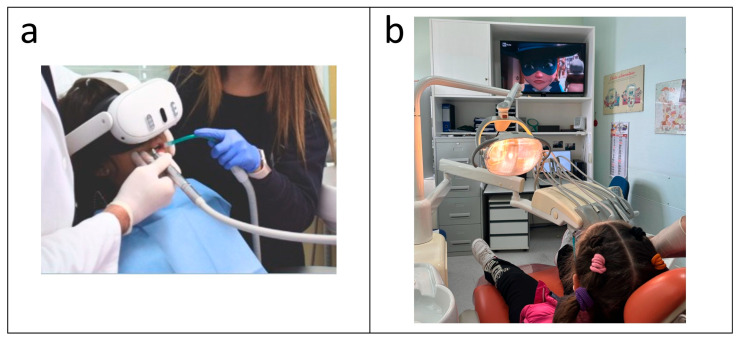 Figure 2
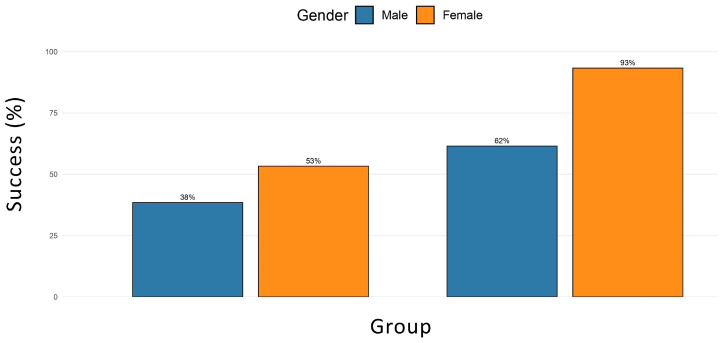 Figure 3
Peer Reviews
No public reviews on file for this paper yet. If you reviewed it on a platform where reviews are public (OpenReview, ICLR, NeurIPS, ICML), you can paste yours below so the community can read it here.
Videos
No videos yet. Explain this paper in a talk, walkthrough, or lecture? Add one.
Taxonomy
TopicsDental Anxiety and Anesthesia Techniques · Dental Research and COVID-19 · Pediatric Pain Management Techniques