Diversity of Mycotoxigenic Penicillium and Associated Mycobiota in Dry-Cured Meat (Cecina, León, Spain) Revealed by a Polyphasic Approach
Daniela Cristina Solo de Zaldivar Ribeiro, Alberto Pintor-Cora, Ángel Alegría, Jesús A. Santos, Jose M. Rodríguez-Calleja, Teresa M. López-Díaz

TL;DR
This study identifies fungi, especially mycotoxin-producing Penicillium species, on a Spanish dry-cured beef product and its environment.
Contribution
A polyphasic approach combining morphology, molecular markers, and MALDI-TOF MS is proposed for fungal and mycotoxin surveillance in meat processing.
Findings
Penicillium species accounted for 88% of molds, with 16 species identified.
51% of Penicillium isolates produced mycotoxins, primarily P. commune.
MALDI-TOF MS proved useful as a rapid tool for fungal identification.
Abstract
Cecina de León is a traditional Spanish dry-cured beef product whose surface, as in other similar meat products, becomes heavily colonised by fungi during ripening, raising concerns related to possible mycotoxin contamination. This study aimed to characterise the mycobiota associated with cecina and its production environment, with particular emphasis on mycotoxigenic Penicillium species. Seventy-eight cecina samples and 26 air samples were collected from meat-processing plants and local markets in the province of León (Spain) and analysed for fungal counts, water activity and pH. A total of 101 mould isolates and 16 yeasts were recovered, with Penicillium accounting for 88% of all moulds. Sixteen Penicillium species were identified using a polyphasic approach integrating macro- and micromorphological analysis, extrolite production, molecular markers (BenA, CaM and ITS), and MALDI-TOF…
Genes, proteins, chemicals, diseases, species, mutations and cell lines named across the full text — each resolved to its canonical identifier and authoritative record.
Click any figure to enlarge with its caption.
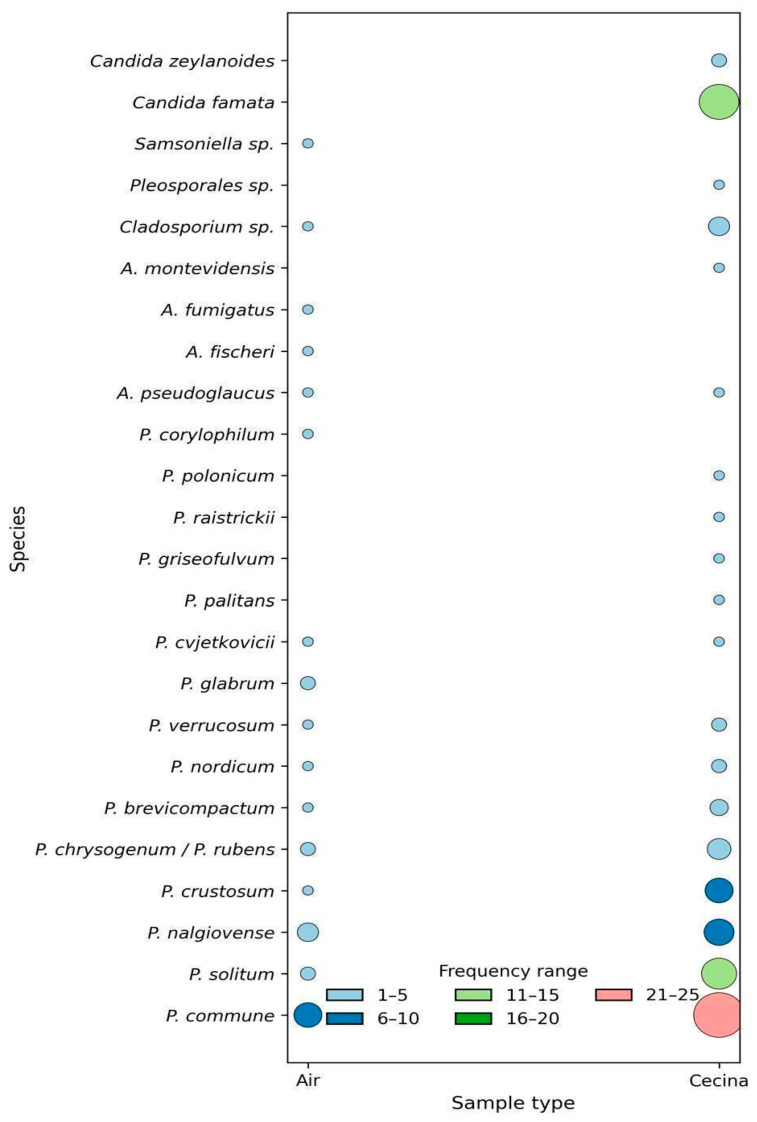 Figure 1
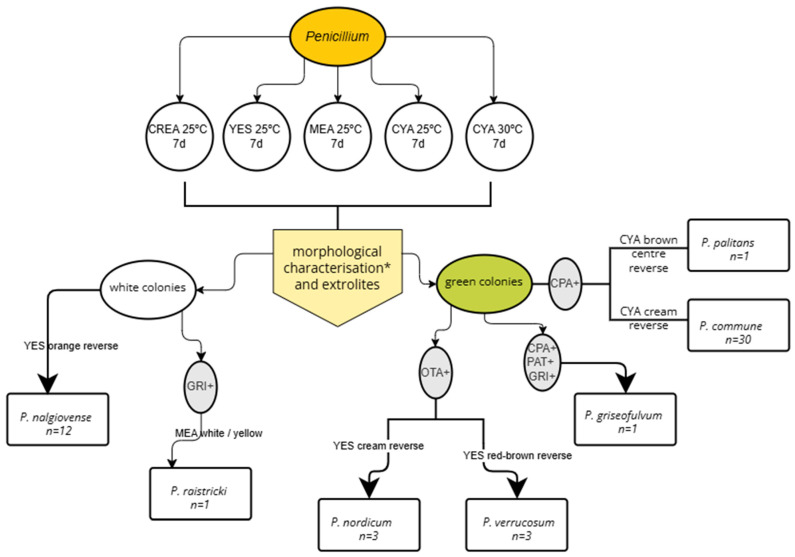 Figure 2
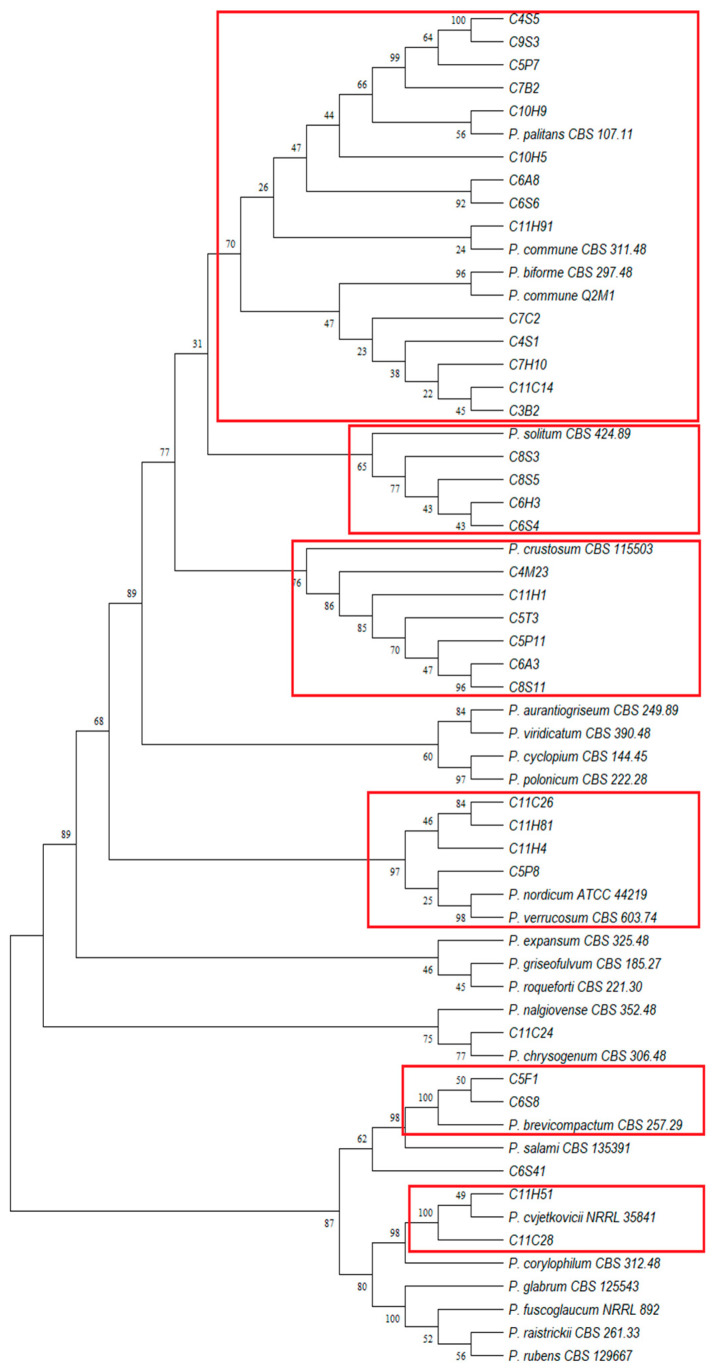 Figure 3
Peer Reviews
No public reviews on file for this paper yet. If you reviewed it on a platform where reviews are public (OpenReview, ICLR, NeurIPS, ICML), you can paste yours below so the community can read it here.
Videos
No videos yet. Explain this paper in a talk, walkthrough, or lecture? Add one.
Taxonomy
TopicsMycotoxins in Agriculture and Food · Fungal Biology and Applications · Plant and fungal interactions