Evaluating Honey Adulteration Through Physicochemical Characterization and Liquid Chromatography–Mass Spectrometry-Based Sugar Profiling
Entesar Al-Hetlani, Bessy D’Cruz, Mohammed Hayssam, Bedraya Mandekar, Mohamed O. Amin

TL;DR
This study evaluates how different sugar syrups affect the properties of Sidr honey, using tests and advanced sugar analysis to detect adulteration and ensure authenticity.
Contribution
The paper introduces an integrated method combining physicochemical tests and LC–MS sugar profiling to detect honey adulteration.
Findings
Corn syrup adulteration significantly reduced fructose/glucose ratio and total sugar content.
Agave syrup significantly increased both fructose/glucose ratio and total sugar content.
Electrical conductivity varied significantly with the type of syrup used for adulteration.
Abstract
The high market demand for Sidr honey, known for its nutritional and therapeutic properties, makes it susceptible to adulteration with sugar syrups, compromising authenticity and consumer safety. This study employed physicochemical tests and liquid chromatography–mass spectrometry (LC–MS) sugar profiling to analyze the impact of adulteration with corn, date, and agave syrups (5–35% w/w) on Kuwaiti Ziziphus spina-christi (Sidr) honey samples. Authentic Sidr honey exhibited pH values within 3.4–6.1, free acidity (FA) of <50 mEq kg−1, high electrical conductivity (mean EC: 1066.21 ± 353 µS cm−1), and moisture content <20%. Adulteration did not significantly affect pH or moisture (p > 0.05). FA significantly changed only in corn syrup-adulterated samples (p < 0.05). Electrical conductivity varied significantly with syrup type (p < 0.05). LC–MS was used to quantify the fructose (F) and…
Genes, proteins, chemicals, diseases, species, mutations and cell lines named across the full text — each resolved to its canonical identifier and authoritative record.
Click any figure to enlarge with its caption.
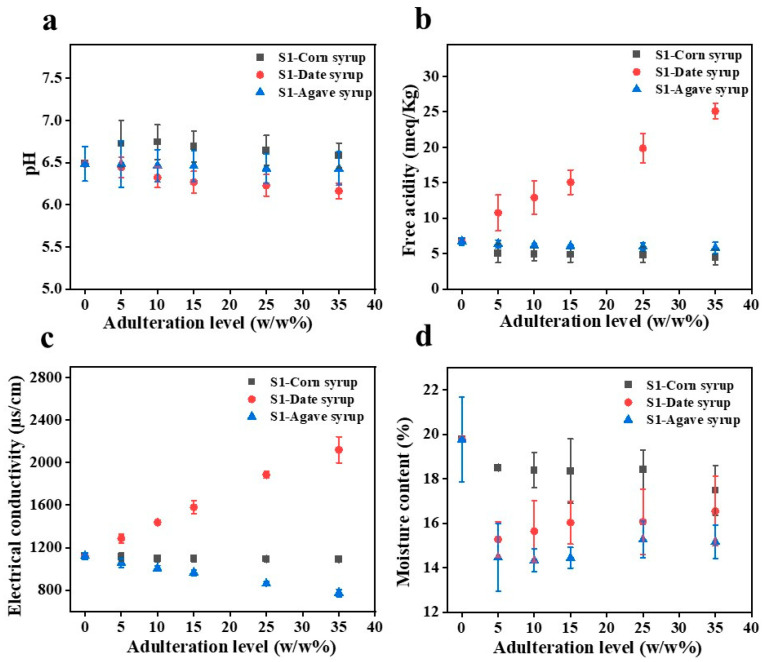 Figure 1
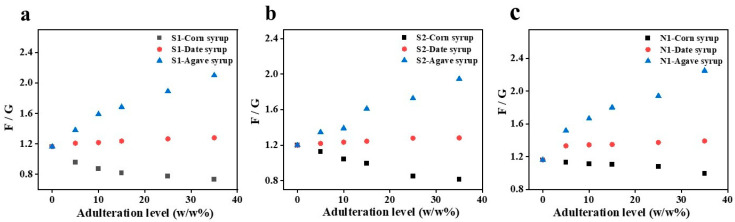 Figure 2
Peer Reviews
No public reviews on file for this paper yet. If you reviewed it on a platform where reviews are public (OpenReview, ICLR, NeurIPS, ICML), you can paste yours below so the community can read it here.
Videos
No videos yet. Explain this paper in a talk, walkthrough, or lecture? Add one.
Taxonomy
TopicsBee Products Chemical Analysis · Microencapsulation and Drying Processes · Heavy Metals in Plants