Dynamic Intraligamentary Stabilization (DIS) Repair for ACL Ruptures in Pediatric and Adolescent Patients: An Initial Pilot Study with Long-Term Follow Up
Niklaus Schoepke, Tobias Tjalf Krause, Nadine Kaiser, Thorsten Müller, Sandro Kohl, Kai Ziebarth

TL;DR
A pilot study on 22 children with ACL ruptures found that dynamic intraligamentary stabilization (DIS) had mixed results, with good short-term outcomes but a high failure rate requiring revision surgery.
Contribution
This study is among the first to evaluate DIS for ACL repair in skeletally immature patients and reports long-term follow-up data.
Findings
DIS showed potential for ACL healing with satisfactory short-term functional outcomes in skeletally immature patients.
A 55% failure rate was observed, with reruptures or revision surgeries needed in most patients.
Long-term follow-up showed no significant difference in knee function compared to the uninjured knee three years post-surgery.
Abstract
What are the main findings? In this pilot series of 22 skeletally immature patients with ACL rupture, dynamic intraligamentary stabilization (DIS) showed potential facilitation of ACL healing with good clinical short term outcomes and satisfactory patient reported outcomes after 11 years.There was a high rate of rerupture and patients needing a revision surgery of 55%. In this pilot series of 22 skeletally immature patients with ACL rupture, dynamic intraligamentary stabilization (DIS) showed potential facilitation of ACL healing with good clinical short term outcomes and satisfactory patient reported outcomes after 11 years. There was a high rate of rerupture and patients needing a revision surgery of 55%. What are the implications of the main finding? DIS in children carries a substantial risk of failure and should be considered with caution in this population.Preservation of the…
Genes, proteins, chemicals, diseases, species, mutations and cell lines named across the full text — each resolved to its canonical identifier and authoritative record.
Click any figure to enlarge with its caption.
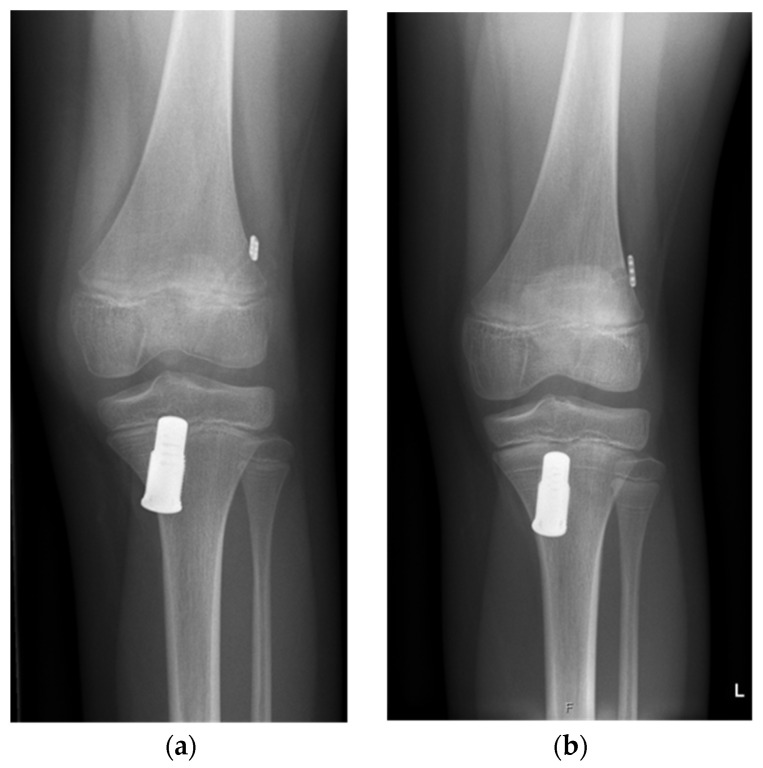 Figure 1
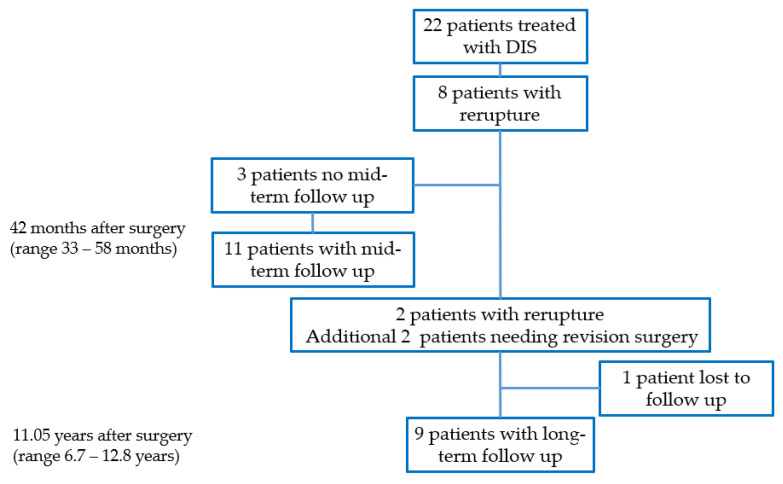 Figure 2
Peer Reviews
No public reviews on file for this paper yet. If you reviewed it on a platform where reviews are public (OpenReview, ICLR, NeurIPS, ICML), you can paste yours below so the community can read it here.
Videos
No videos yet. Explain this paper in a talk, walkthrough, or lecture? Add one.
Taxonomy
TopicsKnee injuries and reconstruction techniques · Lower Extremity Biomechanics and Pathologies · Foot and Ankle Surgery