Development and Internal Multicenter Validation of a Deep Learning Model for Predicting Post-Hepatectomy Liver Failure in Patients with Hepatocellular Carcinoma: A Multicenter Study
Qian Chen, Feng Xia, Bin Guo, Zhicheng Liu, Xulin Liu, Chang Shu, Jing Yan, Zhancheng Qiu, Qiao Zhang, Zhenheng Wu, Zhiyuan Huang, Xiaoping Chen, Bixiang Zhang, Peng Zhu

TL;DR
A deep learning model was developed and validated across multiple hospitals to better predict liver failure after liver cancer surgery, potentially improving patient outcomes.
Contribution
A deep learning model was developed and internally validated across multiple centers to predict post-hepatectomy liver failure with higher accuracy than traditional methods.
Findings
The deep learning model achieved AUCs of 0.914, 0.892, and 0.906 in training, validation, and test sets.
Key predictors included ALBI and MELD scores, prothrombin time, intraoperative blood loss, and resection extent.
The model outperformed logistic regression and showed strong calibration and clinical utility.
Abstract
Post-hepatectomy liver failure is a serious complication that can occur after liver surgery for liver cancer and may lead to poor recovery or even death. Predicting which patients are at high risk before surgery remains difficult using traditional clinical tools. In this study, we developed a deep learning model that analyzes many clinical and surgical factors at the same time to provide a more accurate prediction of liver failure after surgery. The model was tested in patients from multiple hospitals and showed strong and consistent performance. By helping surgeons identify high-risk patients earlier, this model may support safer surgical planning and improve postoperative care. Background/Objectives: Post-hepatectomy liver failure is one of the most serious complications after liver resection for hepatocellular carcinoma and is associated with high morbidity and mortality.…
Genes, proteins, chemicals, diseases, species, mutations and cell lines named across the full text — each resolved to its canonical identifier and authoritative record.
Click any figure to enlarge with its caption.
 Figure 1
 Figure 2
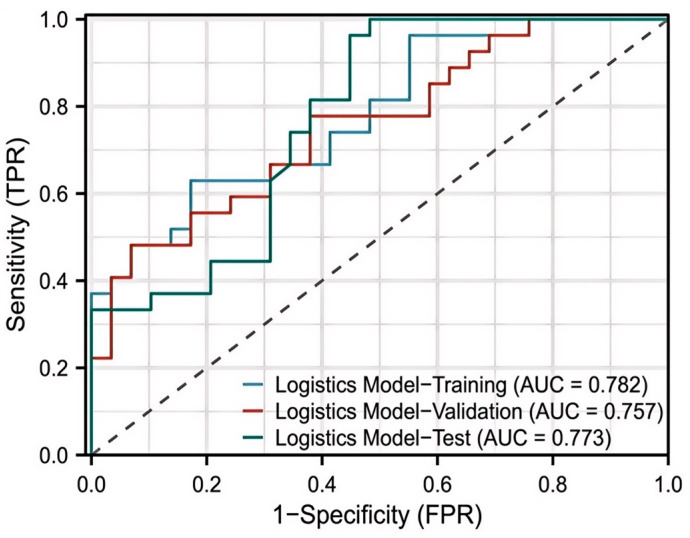 Figure 3
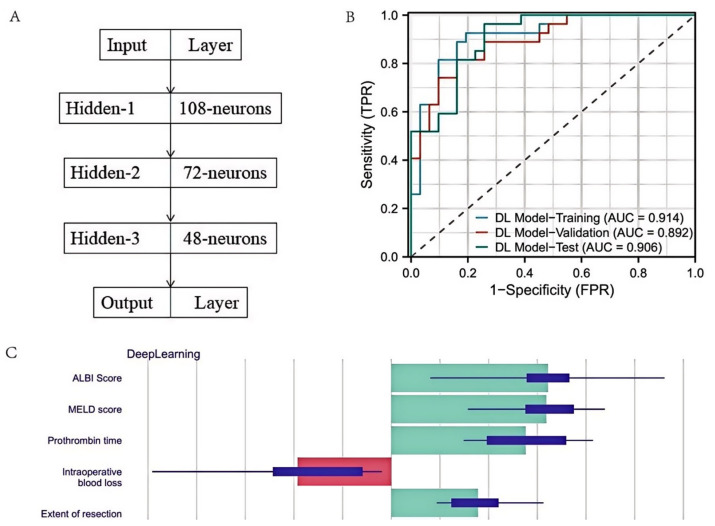 Figure 4
Peer Reviews
No public reviews on file for this paper yet. If you reviewed it on a platform where reviews are public (OpenReview, ICLR, NeurIPS, ICML), you can paste yours below so the community can read it here.
Videos
No videos yet. Explain this paper in a talk, walkthrough, or lecture? Add one.
Taxonomy
TopicsHepatocellular Carcinoma Treatment and Prognosis · Radiomics and Machine Learning in Medical Imaging · Ferroptosis and cancer prognosis